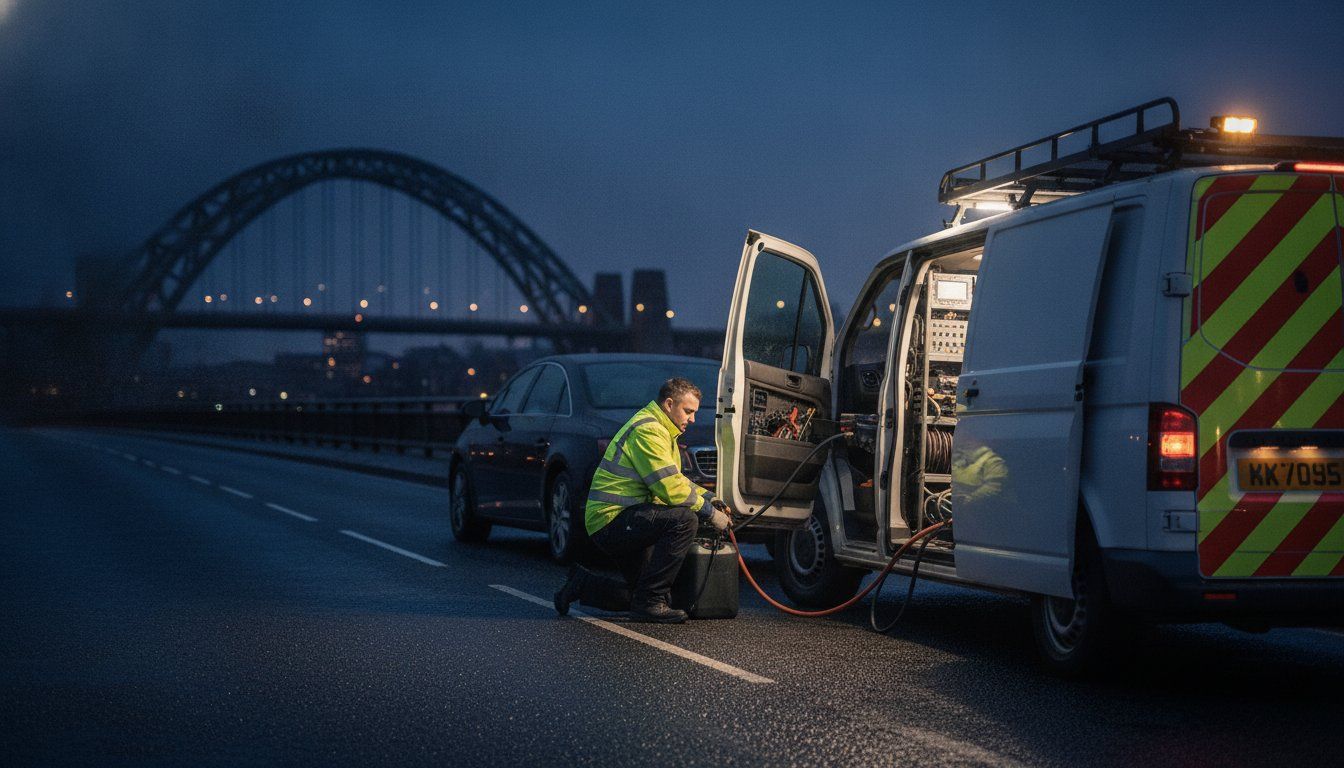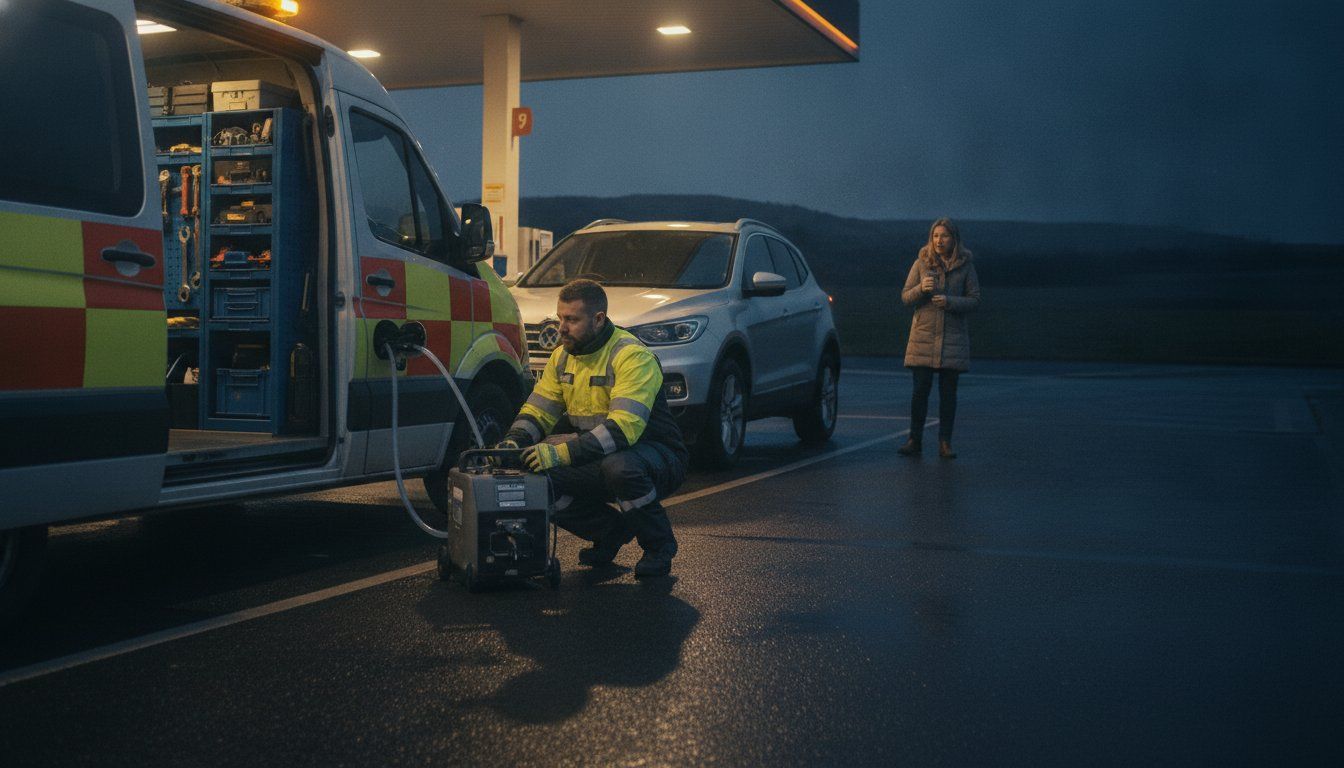
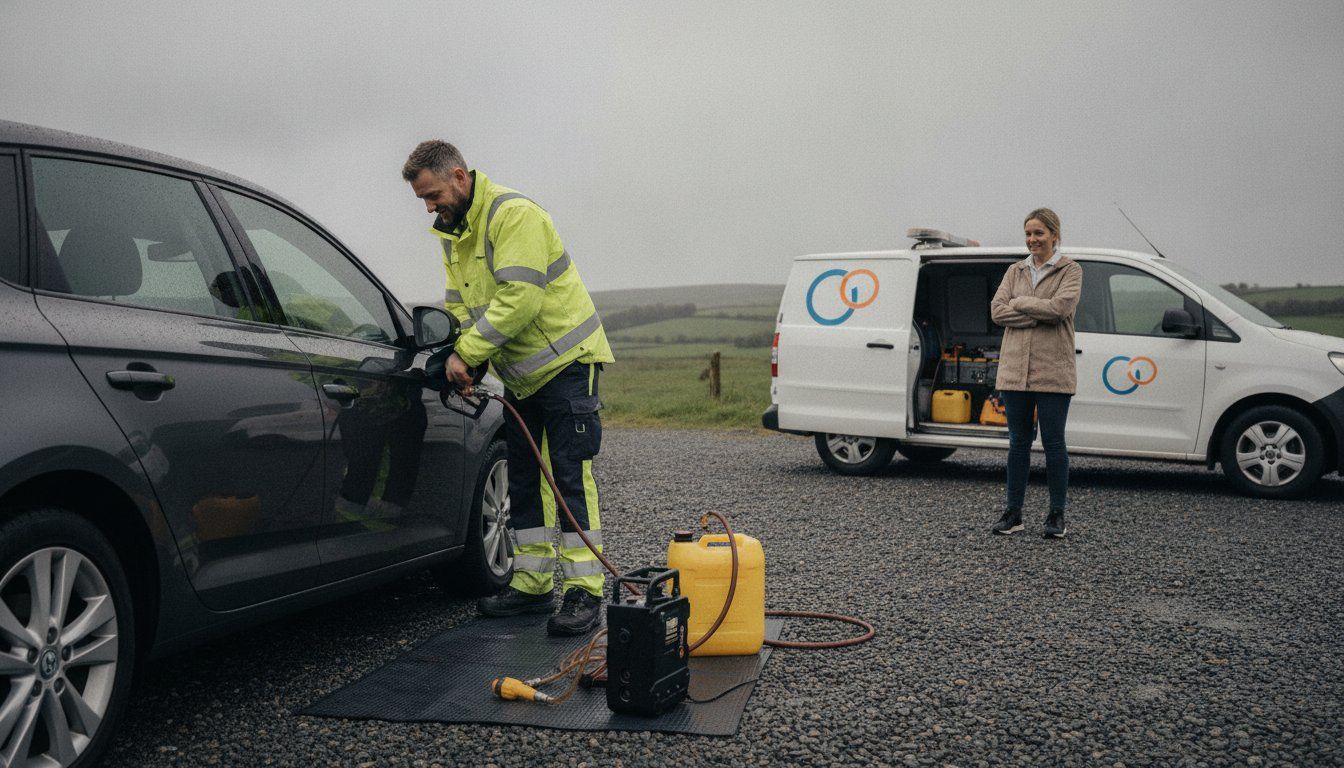
Every three minutes, a driver in the UK reaches for the wrong pump nozzle and experiences that sudden, sickening jolt of realisation. If you have just discovered there is diesel in petrol, what to do in the next few seconds is critical for protecting your engine from a significant repair bill. It is an incredibly common mistake, especially whilst you are in a rush or navigating a busy forecourt; there is no need to feel foolish. The priority now is composed, technical action to ensure a simple error does not turn into a mechanical disaster.
We understand the immediate fear of being stranded or facing a massive invoice from a main dealer. You are likely looking for a way to fix this quickly and affordably so you can get on with your day. This guide provides the immediate steps to take to stop contamination in its tracks and explains how professional roadside decontamination works. You will discover how to manage the technical risks to your fuel system and why a specialist mobile drain is often the safest, most cost-effective way to get back behind the wheel without a trip to the garage.
Key Takeaways
- Do not turn the ignition or start the engine. Preventing the circulation of diesel is the single most important step in protecting your fuel system from technical damage.
- Discover the specific technical steps for diesel in petrol what to do to bypass the need for a costly, time-consuming garage visit.
- Learn why diesel acts as a clogging agent in petrol engines, potentially fouling spark plugs and damaging the catalytic converter if not professionally drained.
- Recognise the critical symptoms of misfuelling, such as excessive exhaust smoke and engine misfires, which indicate the need for immediate intervention.
- Save time and money by choosing a mobile fuel drain specialist who can safely decontaminate your tank at the roadside in under 40 minutes.
Table of Contents
- Immediate Actions: What to Do the Moment You Realise the Mistake
- The Science of Misfuelling: How Diesel Affects a Petrol Engine
- Mobile Fuel Drain vs. Towing to a Garage: Which is Better?
- Recognising the Symptoms: What Happens if You Have Already Driven?
- Professional Wrong Fuel Recovery in the North East and North Yorkshire
Immediate Actions: What to Do the Moment You Realise the Mistake
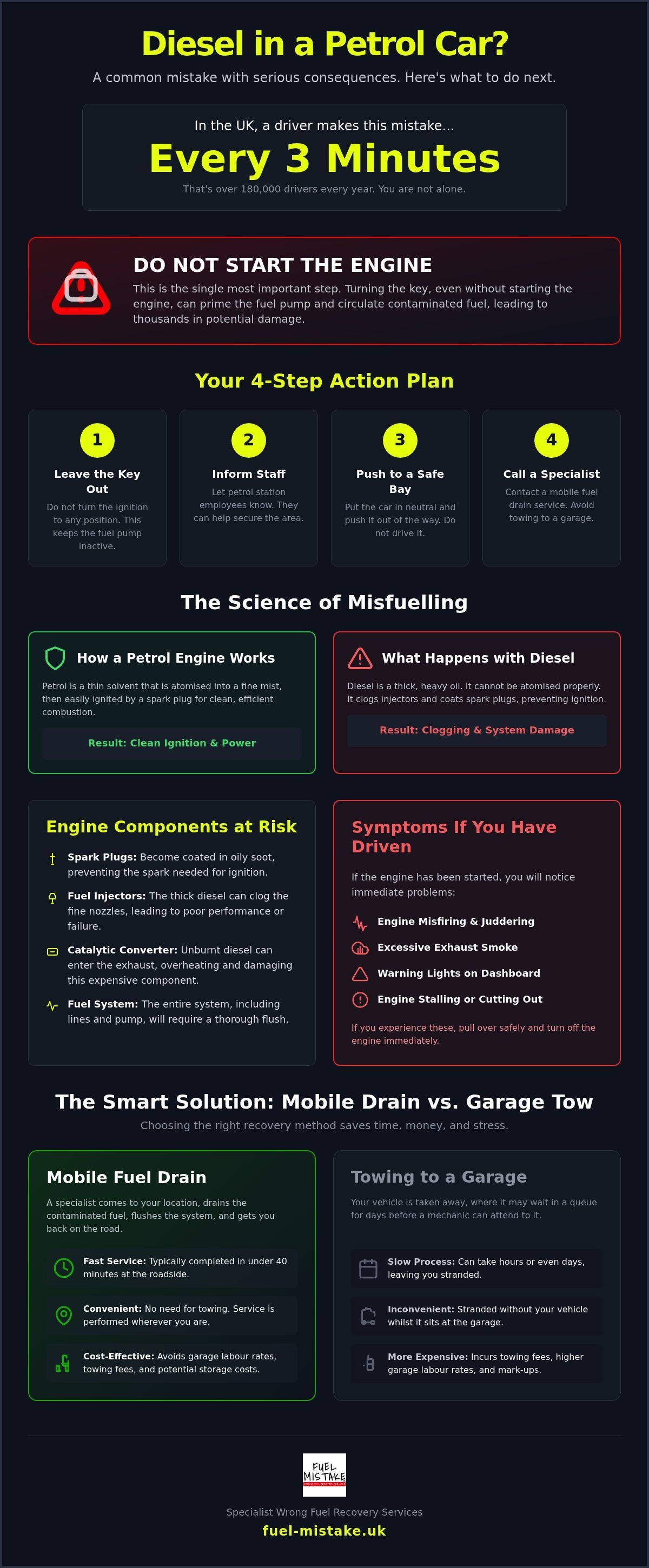
Realising you have just put the wrong fuel in your car is a gut-wrenching moment. Your pulse quickens, and the instinct to drive away and hide the error is strong. Resist it. When you are faced with diesel in petrol what to do first is simple: leave the key out of the ignition. Modern vehicles are highly sensitive; even a small amount of diesel can cause issues if it reaches the fuel lines. Knowing exactly diesel in petrol what to do in these first few seconds can save your engine from permanent damage.
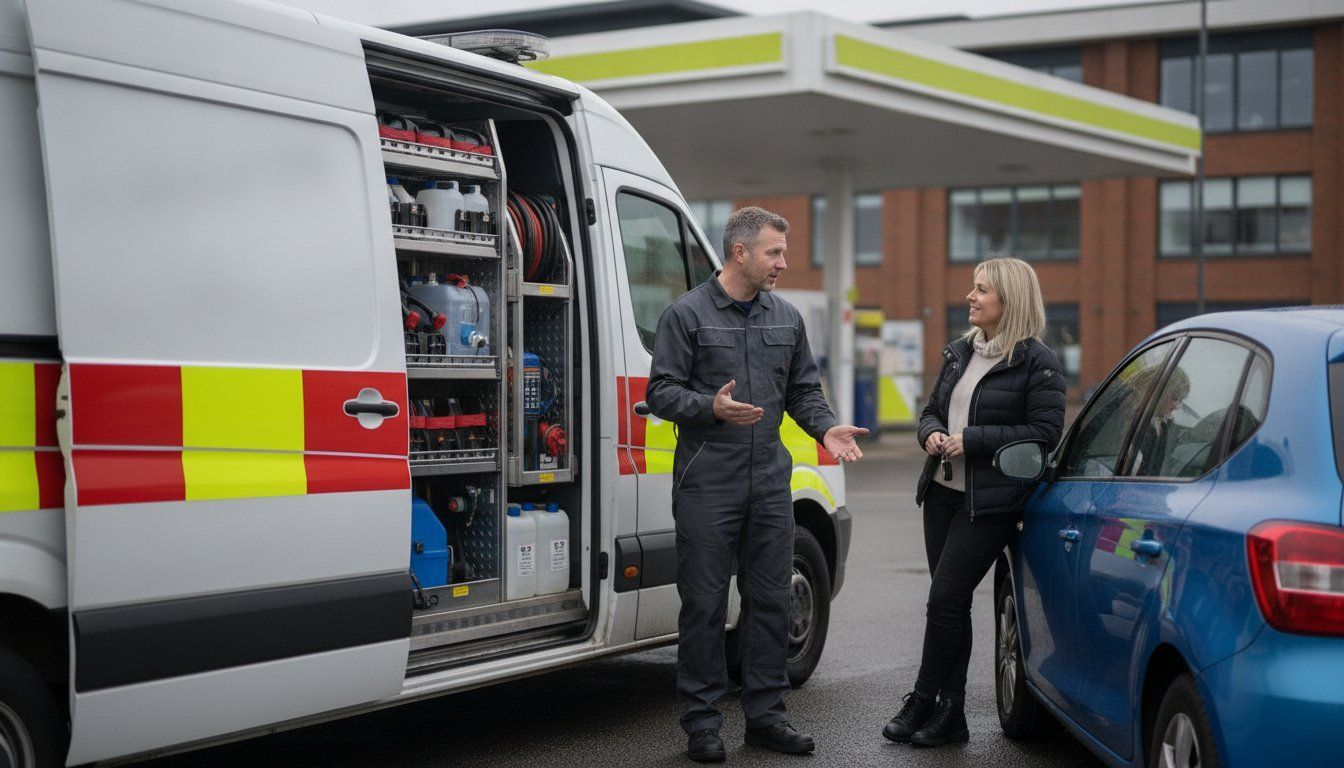
Inform the petrol station staff immediately. They see this happen every day and are trained to help manage the forecourt safely. They can provide "out of order" signs for the pump and help you move your vehicle. Put the car in neutral and, with assistance, push it to a safe parking bay. This keeps the pump free for other motorists and removes you from the immediate pressure of the queue. Taking this step helps you manage the emotional stress of the situation whilst keeping the environment safe for everyone.
Why the Ignition Key is Your Biggest Risk
The moment you turn the ignition key to the first position, your car begins to prepare for a journey. In many modern vehicles, the fuel pump primes the system instantly. This means the contaminated mixture is pulled from the tank and sent directly into the fuel lines and towards the engine. There is a massive difference between fuel sitting harmlessly in the tank and fuel that has been sucked into the delicate components of your fuel system.
Understanding The Science of Misfuelling is vital here. Diesel is a heavier, oily substance compared to petrol, which acts as a solvent. If you keep the fuel confined to the tank, a specialist can perform a clean drain and refill. If you start the engine, you are forcing that oily residue into components like fuel injectors and the catalytic converter. A "quick start" to move the car just a few yards can easily double your eventual repair costs by necessitating a full system flush and potential part replacements.
Safety at the Forecourt
Managing a fuel mistake in public is stressful, but you aren't alone. Statistics show that over 180,000 drivers in the UK make this same mistake every year. Focus on the logistics rather than the embarrassment. Ask the station manager for a cone or a sign to mark your car as stationary so other drivers don't get frustrated behind you.
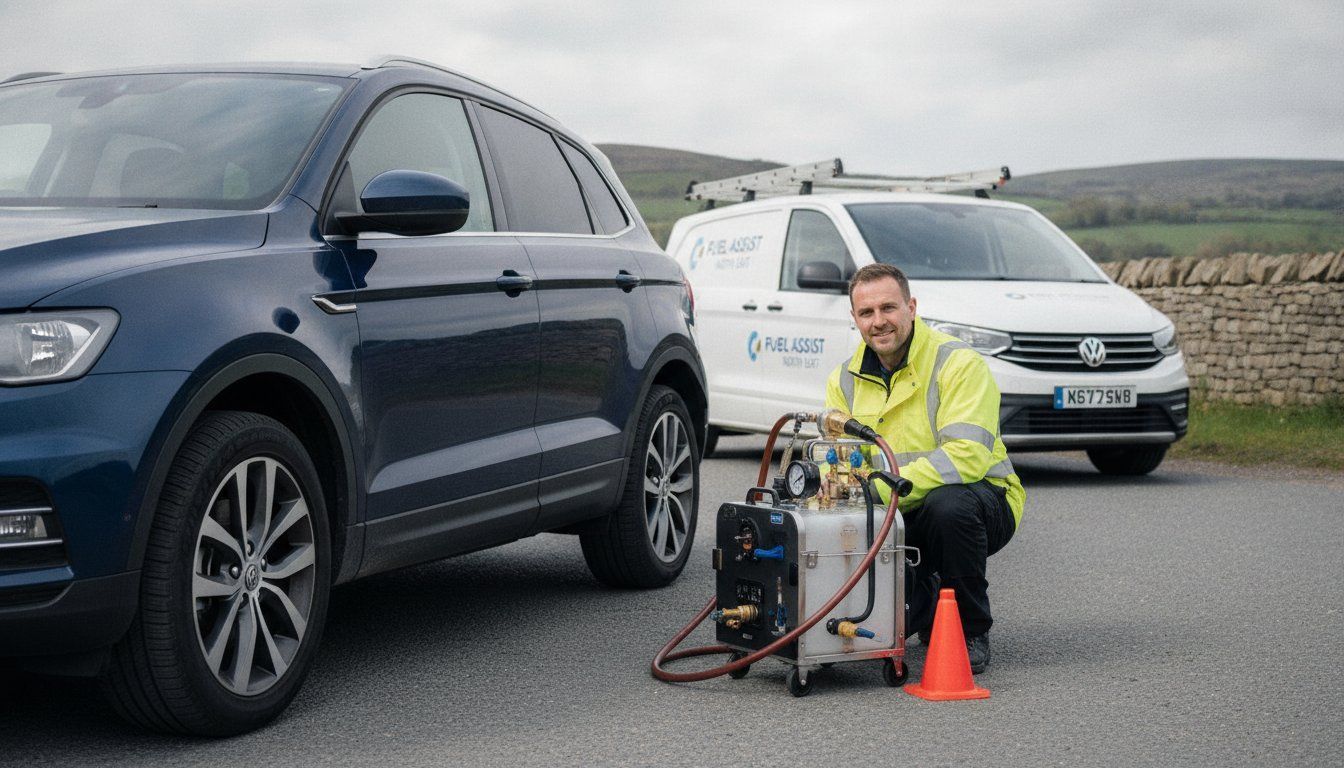
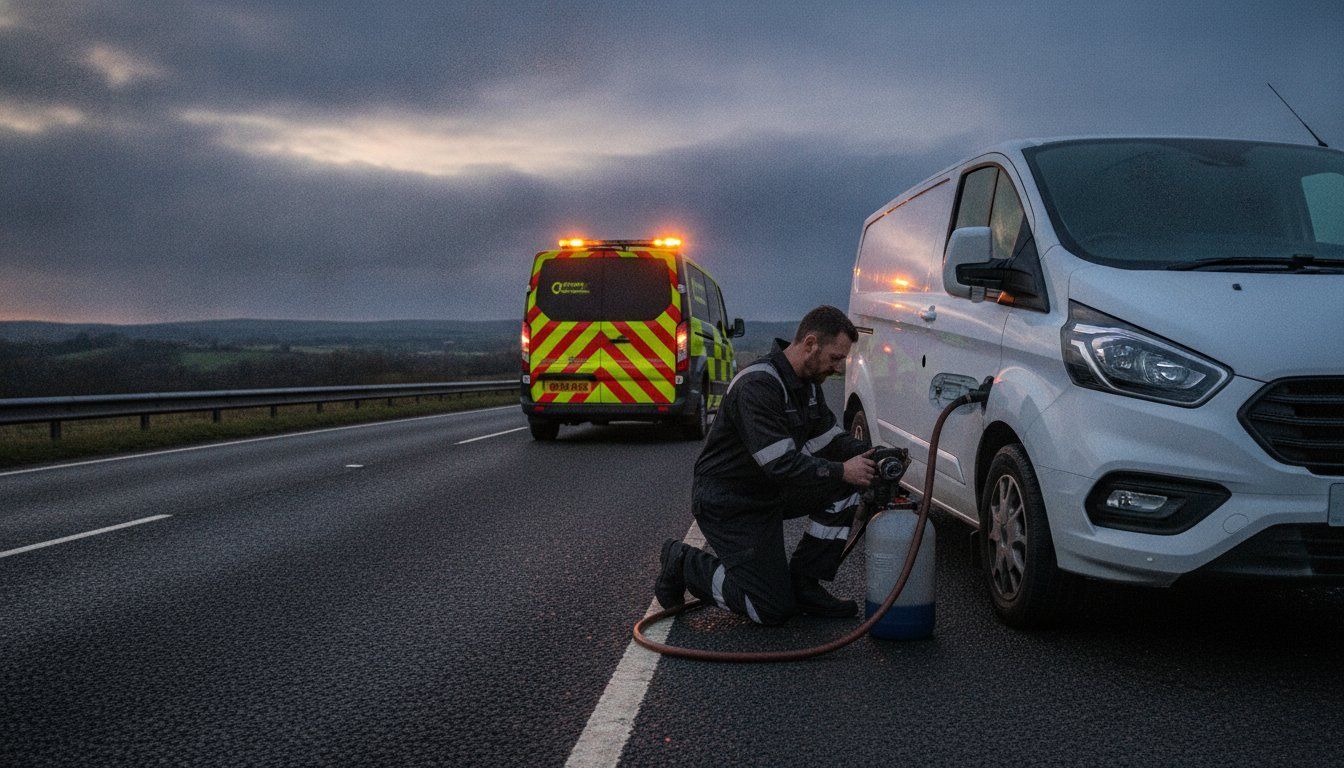
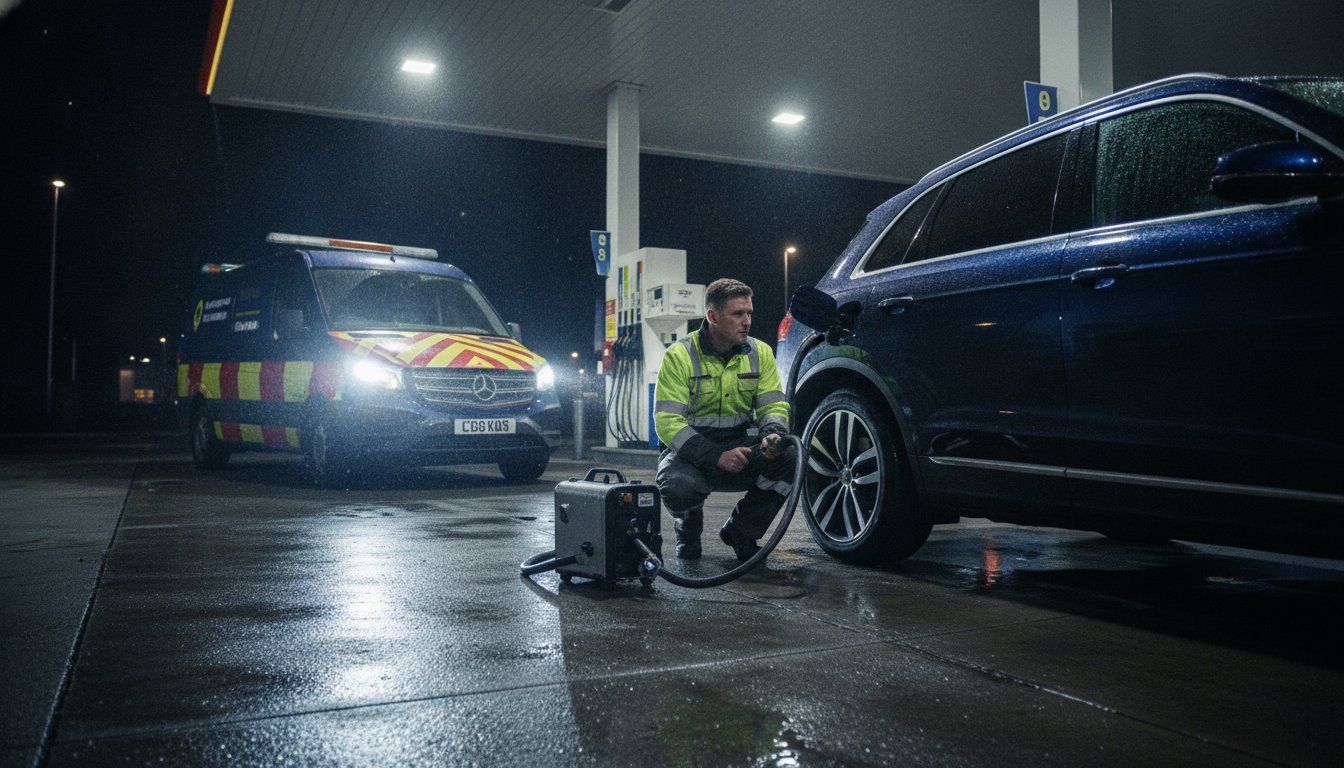
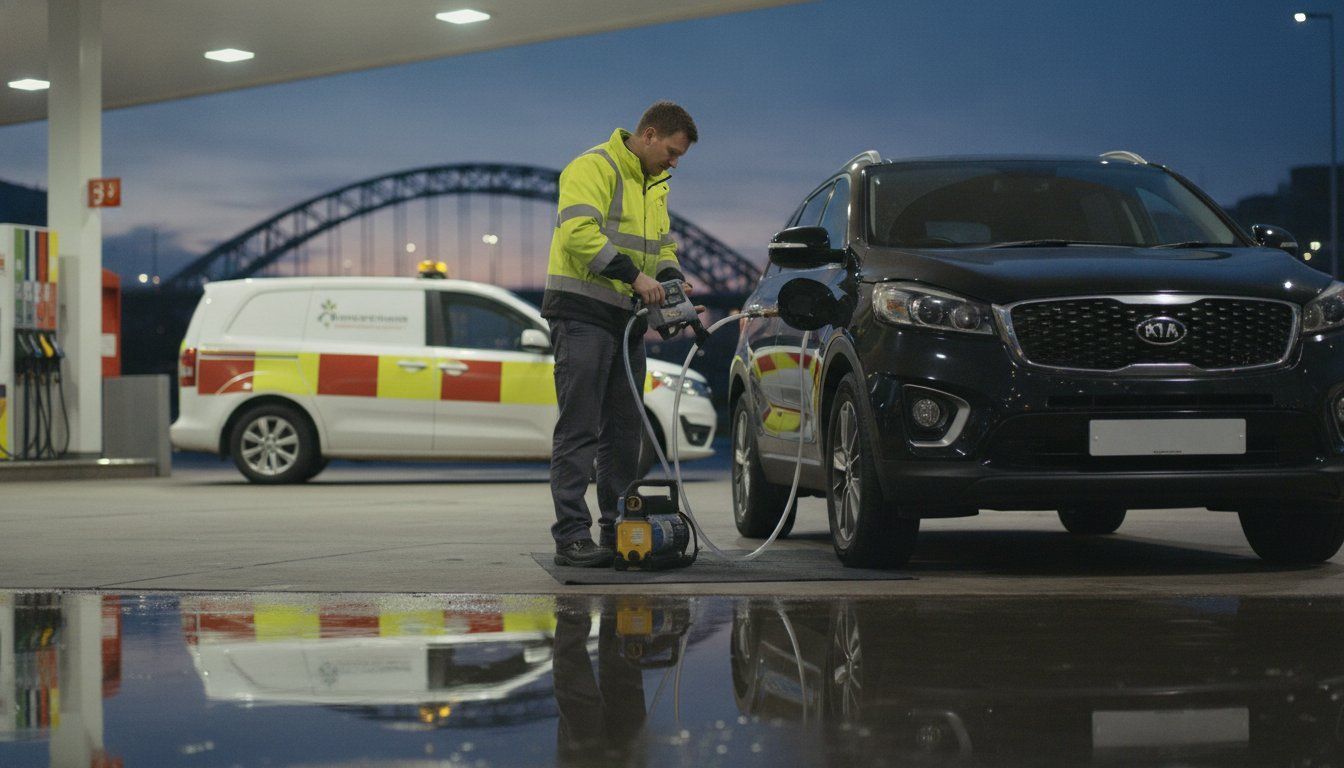
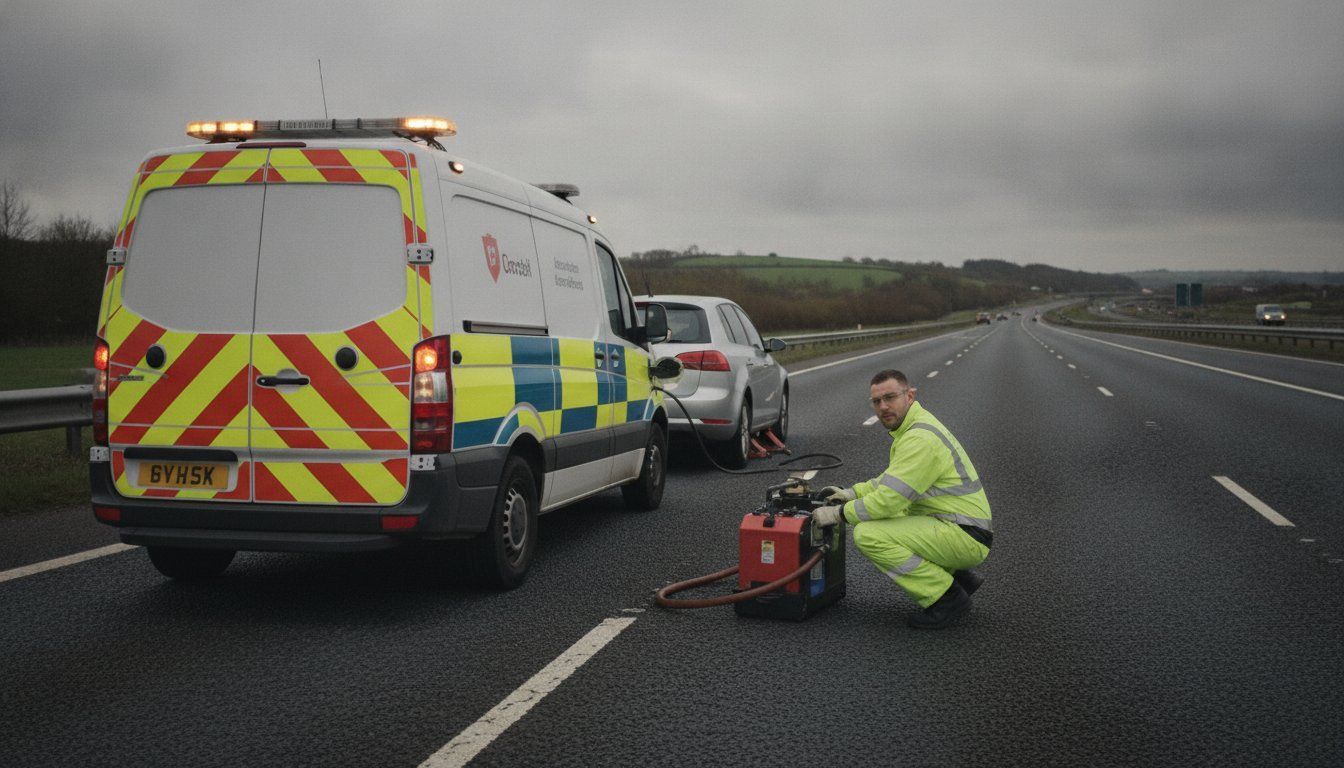
Don't call a general recovery truck or a towing service. Most standard breakdown providers will simply tow you to a local garage, where your car could sit for days awaiting a slot. Instead, contact a specialist mobile fuel drain service. We can reach you at the roadside, often within the hour, to perform a professional extraction. This keeps you in control of the situation and avoids the high labour rates and storage fees often associated with third-party garages.
The Science of Misfuelling: How Diesel Affects a Petrol Engine
While many motorists fear the damage caused by putting petrol in a diesel car, the reverse mistake presents a unique set of technical hurdles. Petrol is a volatile solvent designed to evaporate and ignite instantly under a spark. Diesel, however, is a heavy, viscous oil. This fundamental chemical difference means that once it enters a petrol system, it doesn't just fail to burn; it begins to coat every component it touches. If you are currently searching for diesel in petrol what to do , you need to understand that this is primarily a "clogging" emergency rather than a friction-based one.
In a petrol engine, the fuel is atomised by the injectors before being ignited by a spark plug. Diesel is far too thick for this process. Instead of creating a fine mist, the injectors struggle to push the oily fuel through their tiny nozzles, leading to a build-up of pressure and potential blockages in the high-pressure lines. Because the diesel doesn't ignite properly under the lower compression ratios of a petrol engine, it remains in a liquid state, washing down the cylinder walls and contaminating the engine oil. If you're worried about these technical risks, our specialist mobile technicians can assess the situation and perform a complete system purge at your location.
The Impact on Spark Plugs and Ignition
The most immediate victim of a diesel mistake is the ignition system. As the unburnt oil enters the combustion chamber, it coats the spark plugs in a thick, greasy residue. This soot prevents the electrical spark from jumping the gap, which causes the engine to stutter, lose power, and eventually stall. You'll likely see clouds of white or blue smoke as the engine tries, and fails, to process the heavy fuel. If the engine has been run, the plugs will often require a thorough cleaning or replacement to ensure the car starts reliably once the tank is drained.
Catalytic Converter Contamination
Modern vehicles in the UK must adhere to strict emissions standards, which is where the catalytic converter plays a vital role. This component is designed to handle hot exhaust gases, not raw, unburnt diesel oil. When diesel reaches the exhaust system, it can "poison" the precious metal coatings inside the converter, such as platinum and palladium. This Professional Wrong Fuel Recovery process is essential because it ensures the contaminants are removed before they cause long-term failure. Professional flushing prevents permanent exhaust damage. Without this intervention, you may find your car fails its next MOT due to compromised emissions control components or damaged oxygen sensors.
Mobile Fuel Drain vs. Towing to a Garage: Which is Better?
When you are stranded at a forecourt in Newcastle or Durham, you face a critical decision. Do you call a standard recovery truck or a specialist mobile drain service? Most motorists assume that towing the car to a local garage is the safest route. In reality, this choice often leads to a cycle of unnecessary delays and inflated costs. If you are currently researching diesel in petrol what to do , understand that a mobile fuel drain is almost always the more efficient, professional, and affordable solution. A specialist can typically complete the entire decontamination process at the roadside in just 30 to 40 minutes.
Contrast this with the garage experience. A recovery truck will charge a significant fee just to move your vehicle. Once there, your car enters a queue. You could be without your transport for several days whilst the garage finds a gap in their schedule. Because we provide a 24/7 rapid response across Middlesbrough, Sunderland, and the surrounding areas, we eliminate the need for towing altogether. You stay with your vehicle, and you drive away the same hour.
The Hidden Costs of Garage Recovery
Why pay more for a slower service? Garages are designed for major mechanical repairs, not rapid fuel extraction. Many will charge daily storage fees and "diagnostic" fees before they even touch the fuel tank. There is also the risk of a technician recommending a full fuel system replacement, including new injectors and pumps, which is rarely necessary for a simple misfuelling error. Interestingly, many garages in the North East don't actually own the specialised suction equipment required for this task. They often call out mobile specialists like us to perform the drain on their premises, then add a profit margin to your final bill. By calling us directly, you cut out the middleman and avoid these secondary mark-ups.
What a Professional Mobile Drain Includes
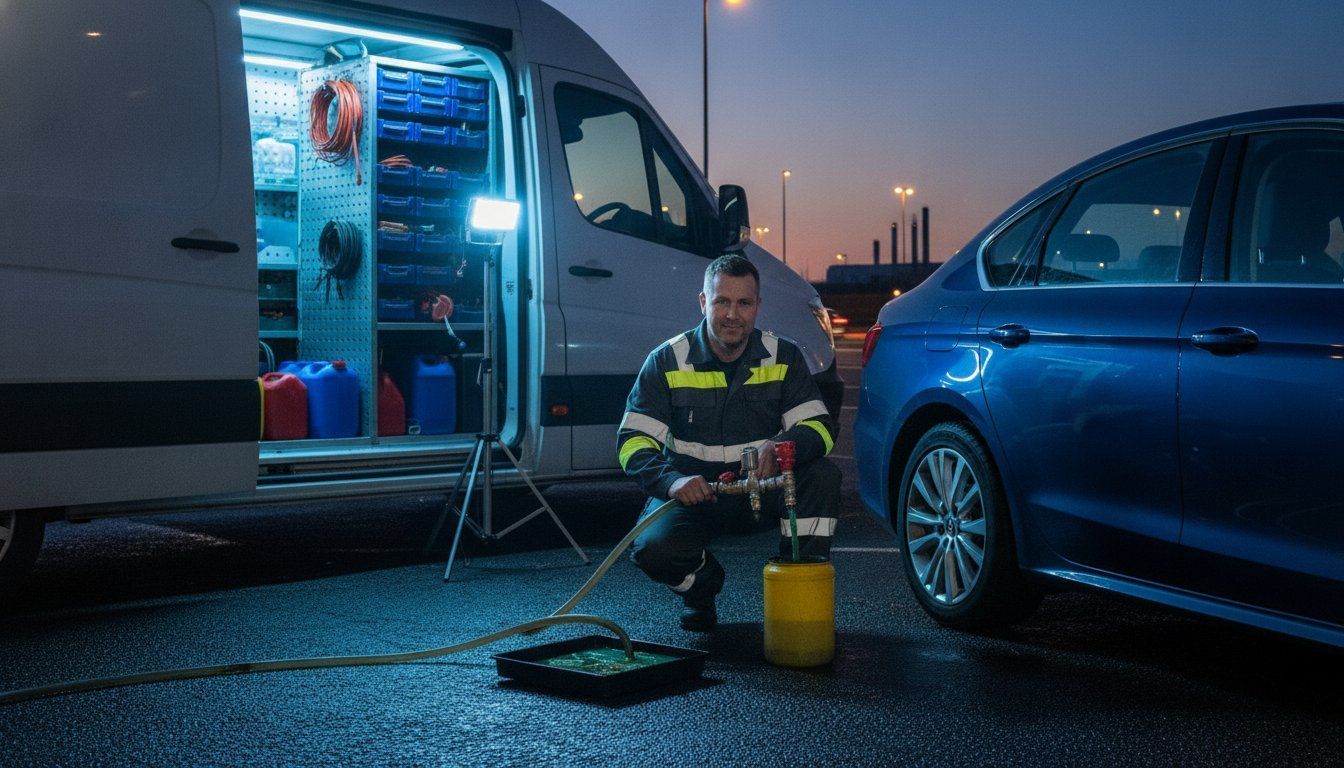
A specialist service is far more thorough than a simple siphon. When you are deciding diesel in petrol what to do , look for a team that uses ATEX-certified equipment. This ensures the safe handling of flammable liquids at the roadside. Our process includes:
- Complete extraction of the contaminated mixture from the tank using high-power suction tools.
- A comprehensive flush of the fuel lines and the fuel rail to remove oily diesel residue.
- A fresh fuel top-up to prime the system.
- A controlled system restart and diagnostic check to ensure the engine is running smoothly.
This methodical approach ensures your engine is protected without the need for a workshop. It is the fastest way to get back to your day with total peace of mind.
Recognising the Symptoms: What Happens if You Have Already Driven?
Many motorists only realise their error a few miles away from the petrol station. Perhaps the radio was on, or you were focused on traffic, and the subtle change in engine note went unnoticed. Suddenly, the car begins to lose power or starts shuddering. If you have already driven off and are now wondering about diesel in petrol what to do , the symptoms will be unmistakable. Your car isn't necessarily heading for the scrap heap, but it is telling you to pull over immediately.
The most common sign is a thick cloud of white or blue smoke billowing from the exhaust. This is caused by the engine attempting to burn the heavy diesel oil, which it cannot do efficiently. You will likely experience severe engine misfiring and a total lack of throttle response; the car may feel like it is "choking". Modern vehicles will often trigger the Engine Management Light (EML) or enter "limp mode" as the on-board computer detects the combustion irregularity. Eventually, the engine will cut out entirely and refuse to restart as the spark plugs become too fouled to create a spark.
Is My Engine Ruined if I Drove It?
Take a deep breath. Whilst misfuelling is stressful, putting diesel in a petrol car is rarely fatal for the engine if you stop quickly. Unlike the reverse mistake, which can cause metal-on-metal grinding in high-pressure pumps, diesel in petrol is primarily a contamination issue. It is usually a "flush and fix" situation rather than a full mechanical rebuild. If your car dies whilst moving in traffic, stay calm. Switch on your hazard lights, steer to the side of the road if momentum allows, and do not keep cranking the starter motor. Repeatedly trying to start the car only pulls more contaminants into the system.
Post-Drain Maintenance
Once we have performed a professional roadside drain and flush, your car should return to its normal behaviour. However, because diesel is an oily substance, it can leave a residue. We recommend changing your engine oil and fuel filter shortly after a misfuel. This ensures that any diesel that "washed" past the piston rings into the sump is removed. Monitor your engine performance over the next 100 miles; if you notice persistent stuttering, your spark plugs may need a quick clean. For a deeper look at the long-term effects, read our Misfuelling Guide: What Happens to Your Engine?
If you are currently stranded at the roadside in the North East, don't wait for a tow truck. Contact our 24/7 emergency team for rapid wrong fuel recovery and get back on the road safely today.
Professional Wrong Fuel Recovery in the North East and North Yorkshire
When you are stuck on a cold forecourt in Middlesbrough or a busy roadside in Newcastle, you don't need a faceless call centre. You need Fuel Mistake®, a family-run team with three generations of motor industry experience. Our technicians come from prestige dealership backgrounds, meaning we treat your vehicle with the same level of technical care you would expect from a high-end workshop. If you have just realised you have diesel in petrol what to do next is simple: call a local specialist who understands the North East landscape and its drivers. We provide 24/7 emergency response across Sunderland, Durham, and Northallerton, ensuring that a simple fuel error doesn't ruin your week.
Our service is built on technical competence and rapid action. We understand the panic that sets in when you see the wrong nozzle in your hand. Because we are a local business, we take pride in our deep roots within the community we serve. We don't just drain your tank; we provide a protective guide through the entire process, from the initial safety check to the final diagnostic restart. When you are deciding on diesel in petrol what to do , choosing a team with a professional heritage ensures your engine's fuel system is handled with the precision it requires.
Rapid Response Across the North East
We have strategically positioned our mobile units to ensure we are never far from an emergency. Whether you are in Stockton-on-Tees, Darlington, or Hartlepool, our arrival times are designed to get you moving before the stress takes over. Our organisation allows us to reach even the more remote North Yorkshire locations with the same level of urgency. If you are searching for Wrong Fuel in Car Near Me: Emergency 24/7 Mobile Fuel Drain, our local knowledge ensures we find you quickly, even whilst you are stranded in areas where GPS might struggle. We prioritise proximity and rapid response because we know you are in a rush.
The Fuel Mistake® Guarantee
Technical competence is only half the battle; safety and environmental compliance are equally vital. We operate with a "safety-first" mindset, ensuring every fuel drain is performed using ATEX-certified equipment that meets rigorous official standards. Unlike uncertified operators who might dispose of contaminated fuel illegally, we are committed to the safe and legal disposal of all waste products in accordance with Environment Agency regulations. This commitment to quality and training sets us apart from less qualified competitors and gives you total peace of mind. Don't leave your engine to chance. Contact Fuel Mistake® now for immediate help and let our family-run team get you back on the road safely.
Get Back on the Road with Confidence
Misfuelling is a stressful interruption, but it doesn't have to be a mechanical catastrophe. By keeping the ignition off and avoiding the temptation to "just drive it home", you have already protected your engine's most sensitive components. A professional roadside drain is the most efficient way to manage diesel in petrol what to do , saving you from the multi-day delays and hidden costs associated with traditional garage recovery.
You need a specialist who combines technical expertise with local reliability. With three generations of motor industry experience and SPA Passport Accredited technicians, Fuel Mistake® provides the rapid response you need across the North East and North Yorkshire. We handle the technical risks and environmental compliance so you don't have to. Put diesel in your petrol car? Call Fuel Mistake® 24/7 for a rapid roadside drain and let our family-run team take the weight off your shoulders. You'll be back on your way safely and quickly.
Frequently Asked Questions
Can I just top up with petrol if I only put a small amount of diesel in?
You shouldn't just top up the tank. Even a small amount of diesel significantly reduces the octane level of petrol, which leads to "knocking" and potential damage to the engine's timing. Because diesel doesn't evaporate as petrol does, it remains in the system and can foul your spark plugs or sensors over time. When considering diesel in petrol what to do, a professional drain is the only way to ensure total system decontamination.
Will putting diesel in a petrol car cause permanent damage?
Permanent engine failure is rare if you catch the mistake before driving. The primary risk involves the "poisoning" of the catalytic converter and the clogging of high-pressure fuel injectors. If you drive the car, the oily diesel can coat the cylinders and contaminate the engine oil. However, a professional decontamination usually resolves these issues without needing a mechanical rebuild. It is far more of a clogging emergency than a destructive friction-based one.
How much does a professional fuel drain service cost in the UK?
While we cannot provide specific quotes here, mobile fuel drain services are generally much more cost-effective than a garage. Choosing a roadside specialist avoids expensive towing fees and the daily storage charges many garages apply. You also save on the high labour rates associated with main dealers. Most drivers find that paying for a specialist mobile drain is a fraction of the cost of replacing fuel system components damaged by prolonged contamination.
Can I use my breakdown cover for a diesel in petrol mistake?
Most standard breakdown policies don't cover misfuelling as part of their basic roadside assistance. You might find it's a paid "bolt-on" service or that they will only offer to tow you to a local garage. This often results in your vehicle being stuck in a workshop queue for days. Calling a dedicated specialist directly is usually the fastest way to get back on the road without waiting for a recovery truck or paying garage premiums.
Does misfuelling invalidate my car insurance or warranty?
Misfuelling is typically classified as "accidental damage" by insurance providers, but claiming may affect your no-claims bonus and involve a high excess. Most manufacturer warranties don't cover damage caused by incorrect fuel as it's considered user error. It's often more practical to pay for a professional mobile drain. This prevents a permanent record of the incident on your car's history whilst ensuring the work meets the high standards required for safety and environmental compliance.
What happens to the contaminated fuel after it is drained?
The mixed fuel is hazardous waste and must be handled in accordance with strict environmental regulations. Professional services use specialised containers to transport the contaminated mixture to a licensed recycling facility. Here, the fuel is processed and often repurposed for industrial heating or other secondary uses. We ensure that every litre of waste is tracked and disposed of legally, preventing any risk to the local environment or breaches of safety and compliance standards.
Can I drain the fuel tank myself at the petrol station?
You shouldn't attempt to drain a fuel tank yourself at a petrol station. Forecourts are high-risk environments, and station managers will stop any unauthorised mechanical work due to the fire hazard and potential for spills. Professional equipment is ATEX-certified, meaning it's designed to operate safely around flammable vapours. Attempting a DIY siphon is dangerous and often results in damaging the anti-siphon flap or leaving residue that continues to contaminate the system and fuel lines.
How long does it take for a mobile technician to arrive in Newcastle or Durham?
We provide a 24/7 rapid response across the North East, including Newcastle, Durham, and Middlesbrough. Because our technicians are locally based, we can usually reach most forecourts or roadside locations within the hour. Our mobile units are fully equipped to start the extraction process immediately upon arrival. This local proximity is why we're the preferred choice for drivers who need to get back to their schedule without the long wait times of national recovery services.