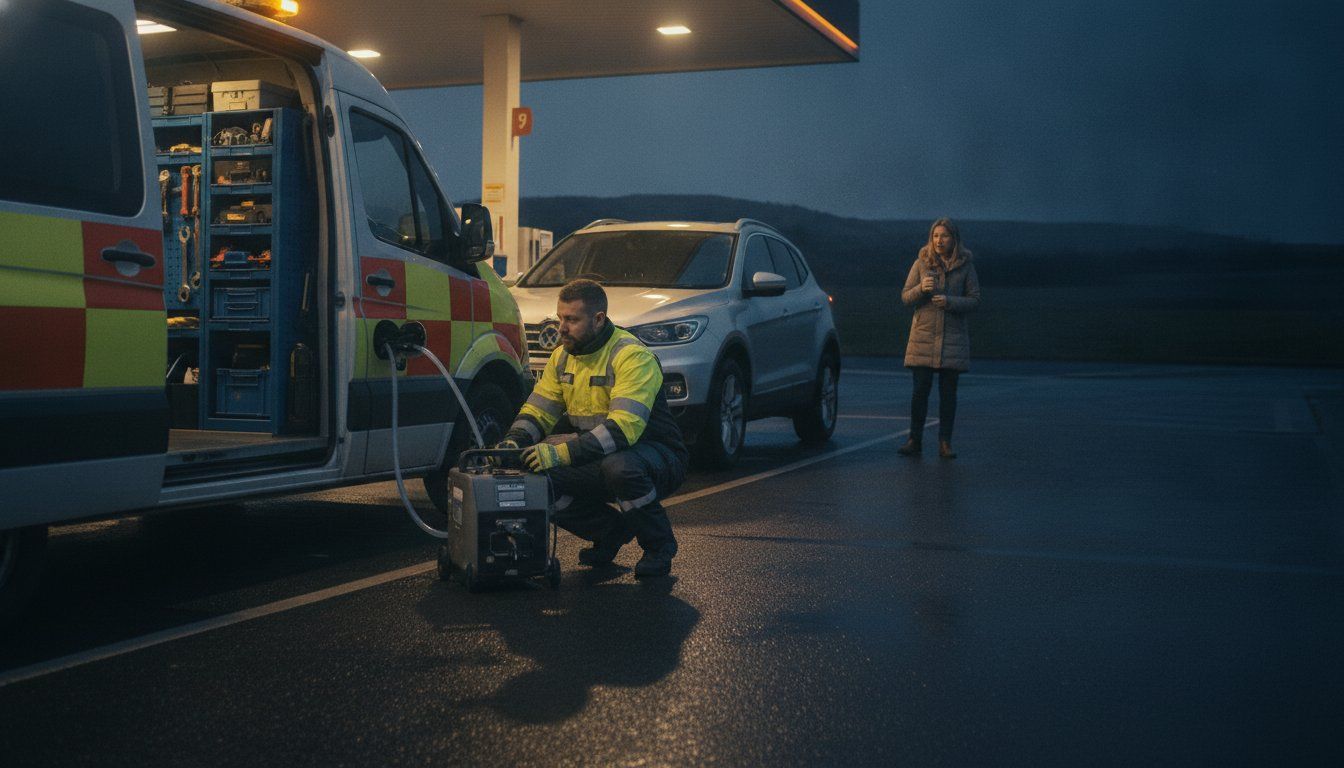
You are standing at the pump, the nozzle has just clicked, and a cold shiver runs down your spine as you realise the handle you are holding is the wrong colour. It is a sickening feeling, but you are not alone. Nearly 30% of UK motorists have accidentally filled up with wrong fuel at some point. Whether you have put petrol in a diesel tank or topped up with AdBlue, the immediate panic is real. You are likely worried about catastrophic engine damage or a repair bill that costs more than the car is worth.
Take a deep breath and, most importantly, do not turn the key. Whilst the situation feels like a disaster, it is a manageable roadside emergency rather than a guaranteed mechanical write-off. This 2026 recovery guide will show you exactly how to protect your fuel system and get back on the road today. We will walk you through the critical "Golden Rule" of misfuelling, explain how specialised on-site drains work under the latest digital waste tracking regulations, and provide a clear plan for the next ten minutes to ensure your vehicle stays safe.
Key Takeaways
- Stop the engine immediately and remove the key from the ignition to prevent the contaminant from circulating through your fuel system.
- Understand the technical differences between petrol and diesel contamination and why petrol in a diesel tank requires more urgent intervention.
- Compare the benefits of an on-site mobile fuel drain against the high costs and significant delays associated with garage towing.
- Identify the early warning signs of misfuelling, such as engine hesitation and power loss, to prevent long-term mechanical damage.
- Discover the fastest way to get back on the road if you have filled up with wrong fuel by using a specialised mobile recovery service.
Table of Contents
- Filled Up with Wrong Fuel? Your 5-Minute Emergency Action Plan
- Petrol in Diesel vs Diesel in Petrol: What Happens?
- Mobile Fuel Drain vs. Garage Towing: Which Recovery Method Is Best?
- Identifying Misfuelling Symptoms and AdBlue Contamination Risks
- Expert Wrong Fuel Recovery Across the North East and North Yorkshire
Filled Up with Wrong Fuel? Your 5-Minute Emergency Action Plan
Realising you have filled up with wrong fuel triggers an instant rush of adrenaline. It is a high-stress moment, but your response in the next five minutes determines whether you face a simple fuel drain or a multi-thousand pound repair bill. You must act decisively to contain the contamination. Follow these four steps immediately to protect your engine and stay safe on the forecourt.
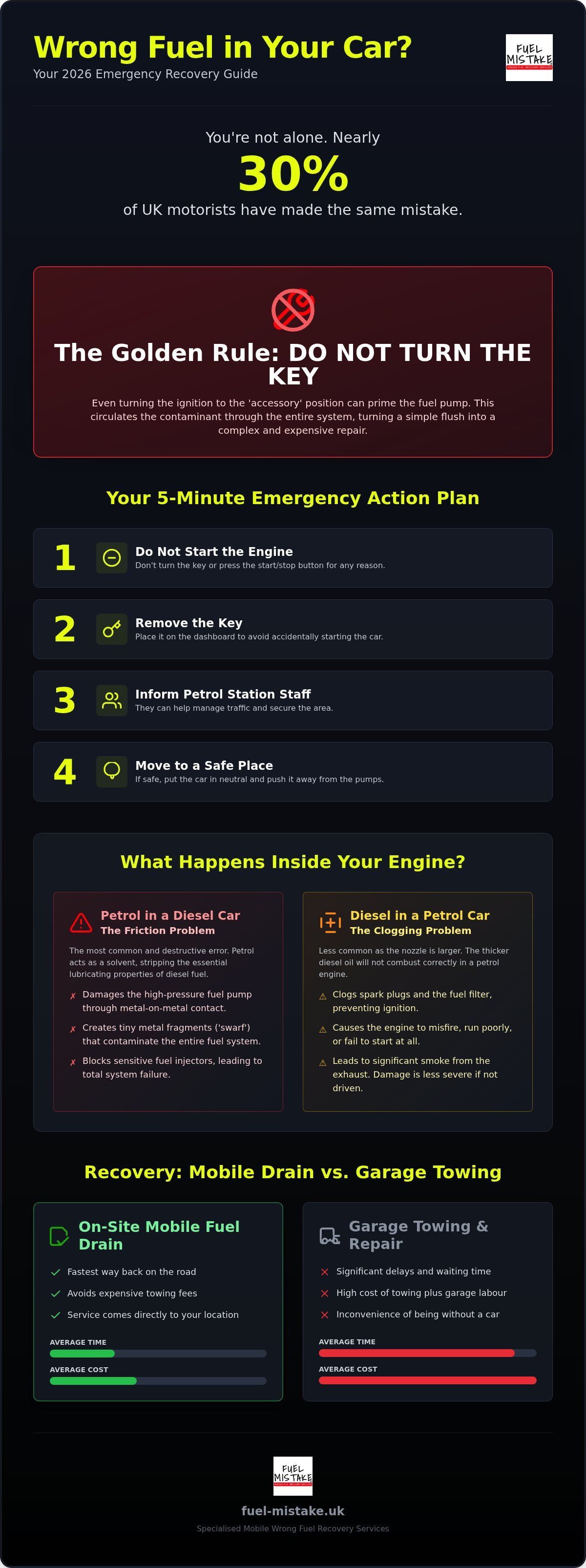
- Step 1: Do not turn the key. If your car uses a start button, do not press it. Even the "accessory" position can trigger the fuel pump.
- Step 2: Remove the key from the ignition. Place it clearly on the dashboard or in the centre console. This physical act prevents you from instinctively starting the engine to move the car out of the way.
- Step 3: Inform the petrol station staff. Attendants deal with this daily. They can help manage traffic and might provide "out of order" signs to place on your vehicle whilst you wait for recovery.
- Step 4: Engage neutral and move the car. If it is safe to do so, push the vehicle to a designated parking bay or a quiet area of the forecourt, away from the pumps.
Why You Must Never Turn the Ignition Key
Modern vehicles are incredibly efficient, but that technical precision works against you during a misfuel. When you ask, What is misfuelling?, you are essentially describing the introduction of a solvent or contaminant into a system designed for specific lubrication levels. The moment you turn the ignition to the first position, many electronic fuel pumps begin "priming." This means the car is already pulling the wrong fuel from the tank into the lines and filters before the engine even cranks. If you have filled up with wrong fuel, attempting to drive even a few yards to a parking space can triple the recovery time. It turns a simple tank flush into a complex, system-wide decontamination process.
Moving Your Vehicle Safely at the Forecourt
Safety is the priority whilst your car is stationary at the pump. For manual gearboxes, simply depress the clutch and select neutral. If you drive an automatic, you may need to turn the ignition to the "on" position without starting the engine to move the selector to 'N'. Be extremely careful; check your manual if you are unsure how to bypass the shift lock. Once in neutral, you will need at least one other person to help push. Remember that steering will be significantly heavier without power assistance. If you are alone or the forecourt is dangerously busy, leave the car where it is. It is better to block a pump for a short while than to risk an accident or personal injury.
Petrol in Diesel vs Diesel in Petrol: What Happens?
The severity of your situation depends entirely on the direction of the mistake. Whilst both scenarios require professional intervention, the chemical interaction between the fuel and your engine components differs significantly. If you have filled up with wrong fuel, understanding these internal reactions can help you appreciate why certain parts are at risk of immediate failure.
Diesel fuel is essentially a light oil. It does more than just provide energy; it acts as a vital lubricant for the high-pressure fuel pump and the delicate internals of the injectors. Petrol, conversely, is a solvent. When these two mix, the petrol aggressively strips away the oily film that protects your engine. This lack of lubrication is the primary cause of the rapid, expensive damage seen in modern vehicles.
The Friction Problem: Putting Petrol in a Diesel Car
Putting petrol into a diesel tank is the most common and destructive error. Because petrol acts as a solvent, the high-pressure fuel pump is the first component to suffer. Without its lubricating coating, metal components begin to rub against one another at incredibly high speeds. This metal-on-metal contact creates microscopic debris, often called "swarf," which is then carried through the system. These tiny metal shards can block the minute holes in your fuel injectors, leading to a total system failure.
Common rail technology involves a high-pressure fuel rail supplying individual solenoid valves, a system that requires the constant lubrication of diesel to prevent the internal components from grinding themselves into metallic dust. If you have already turned the ignition, our specialists can provide an emergency fuel drain to remove the solvent before it causes permanent scarring to these precision parts.
The Clogging Problem: Putting Diesel in a Petrol Car
Putting diesel in a petrol engine is less common because the larger diesel nozzle usually won't fit into a petrol filler neck. However, if it does happen, the symptoms are immediate. Petrol engines rely on spark plugs for ignition, but diesel requires high compression to burn. Consequently, the diesel often fails to ignite properly, leading to the following issues:
- Heavy, pungent smoke billowing from the exhaust pipe.
- Engine misfiring as the spark plugs become coated in oily residue.
- Total engine stalling as the fuel system becomes "clogged" with unburnt diesel.
The long-term risks are just as concerning. Unburnt diesel can enter the exhaust system and coat the expensive honeycomb structure of the catalytic converter. It can also foul the oxygen sensors, leading to poor fuel economy and failed emissions tests even after the tank is drained. Acting quickly to flush the system is the only way to protect these sensitive environmental components.
Mobile Fuel Drain vs. Garage Towing: Which Recovery Method Is Best?
If you have filled up with wrong fuel, you face a fork in the road. You can call a traditional recovery truck to tow you to a garage, or you can contact a mobile fuel drain specialist to resolve the issue where you stand. For most drivers, the choice comes down to time and total expense. Mobile recovery is almost always the superior option for roadside emergencies because it treats the incident as a recovery task rather than a major mechanical project.
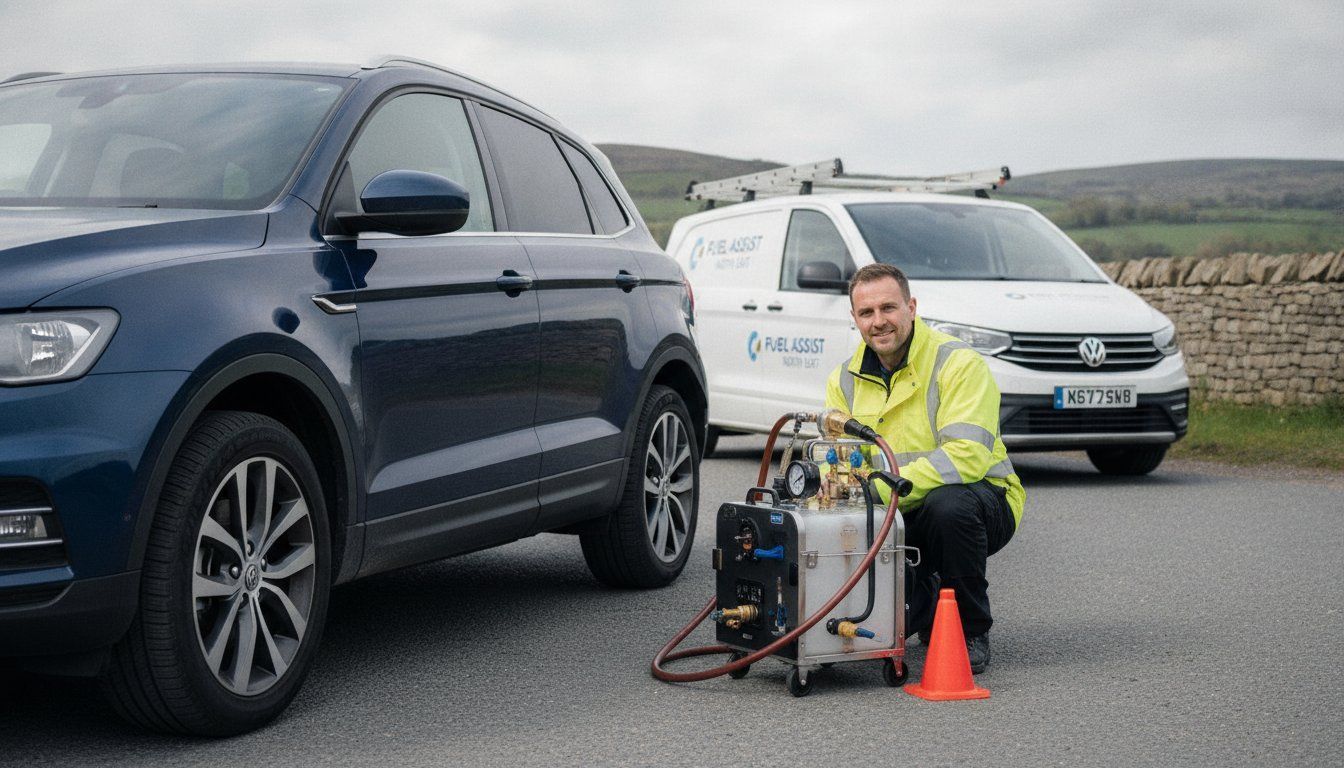
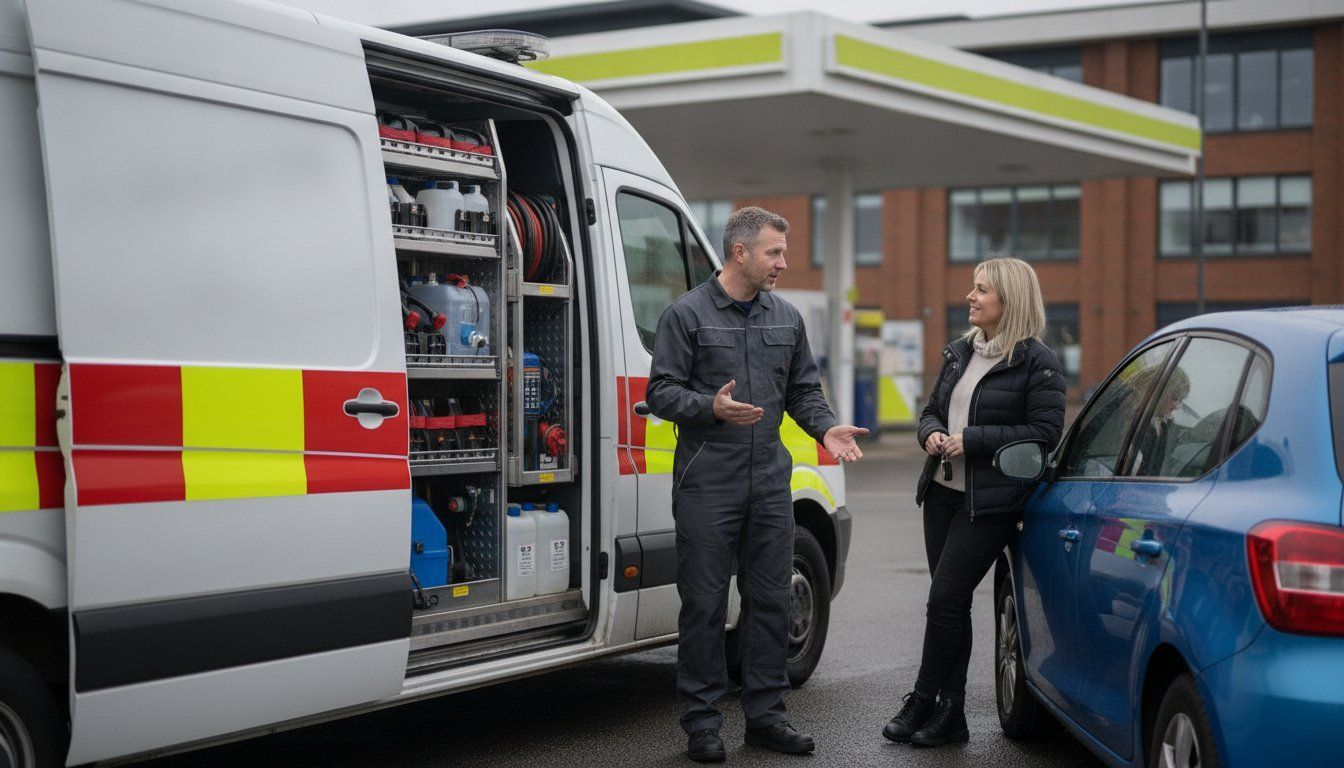
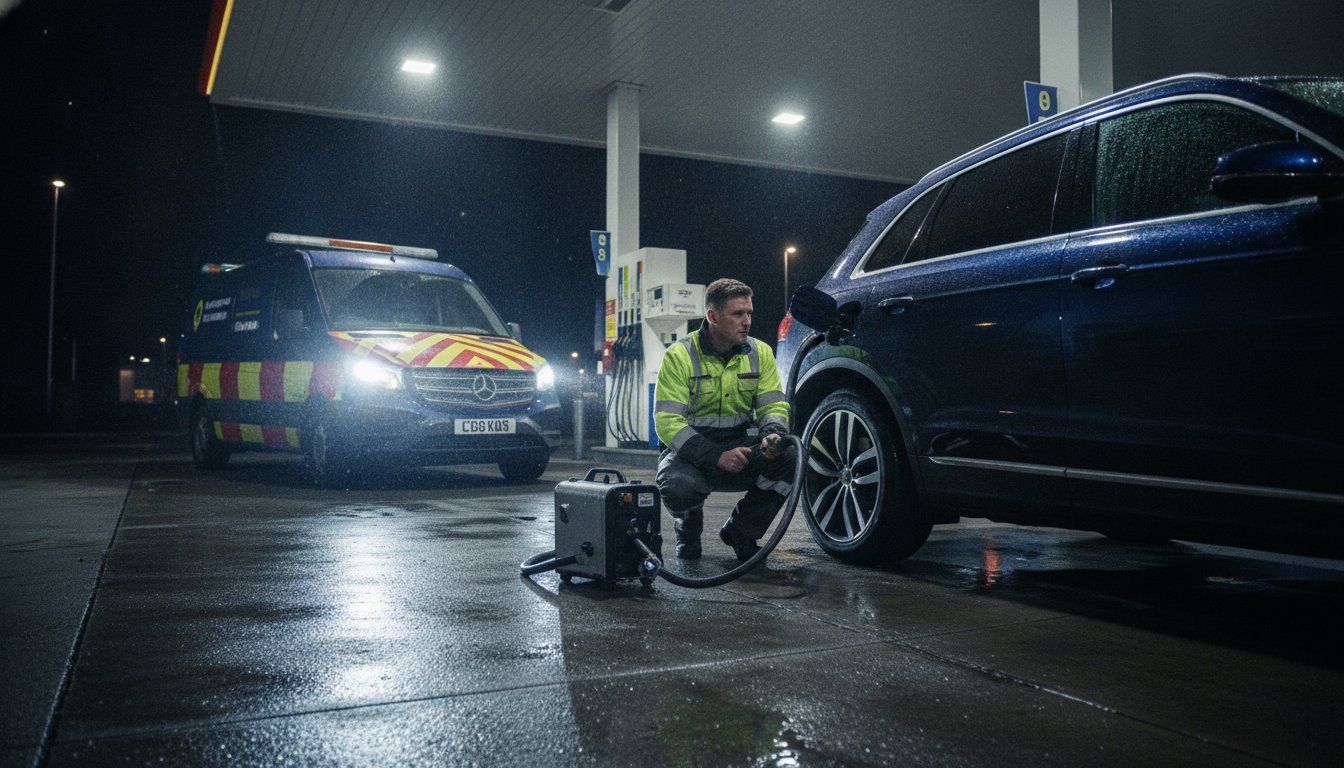
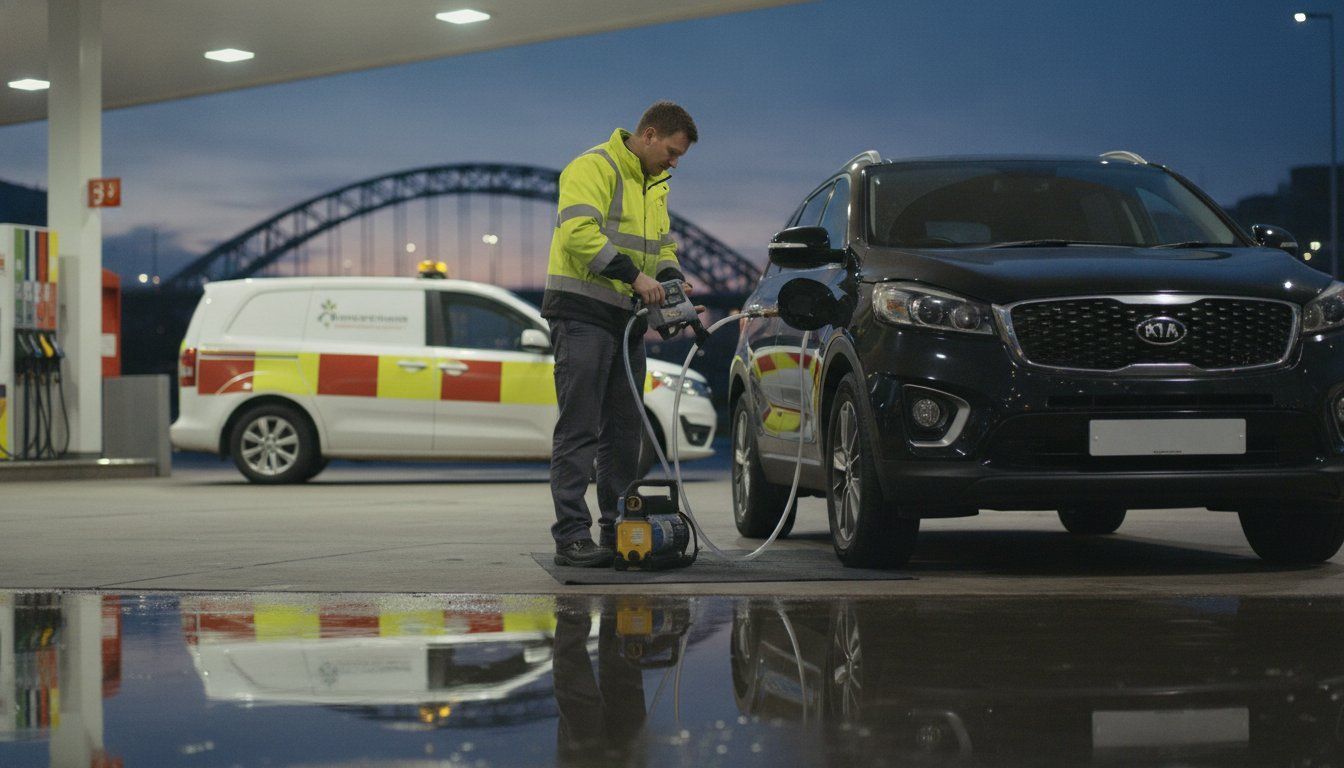
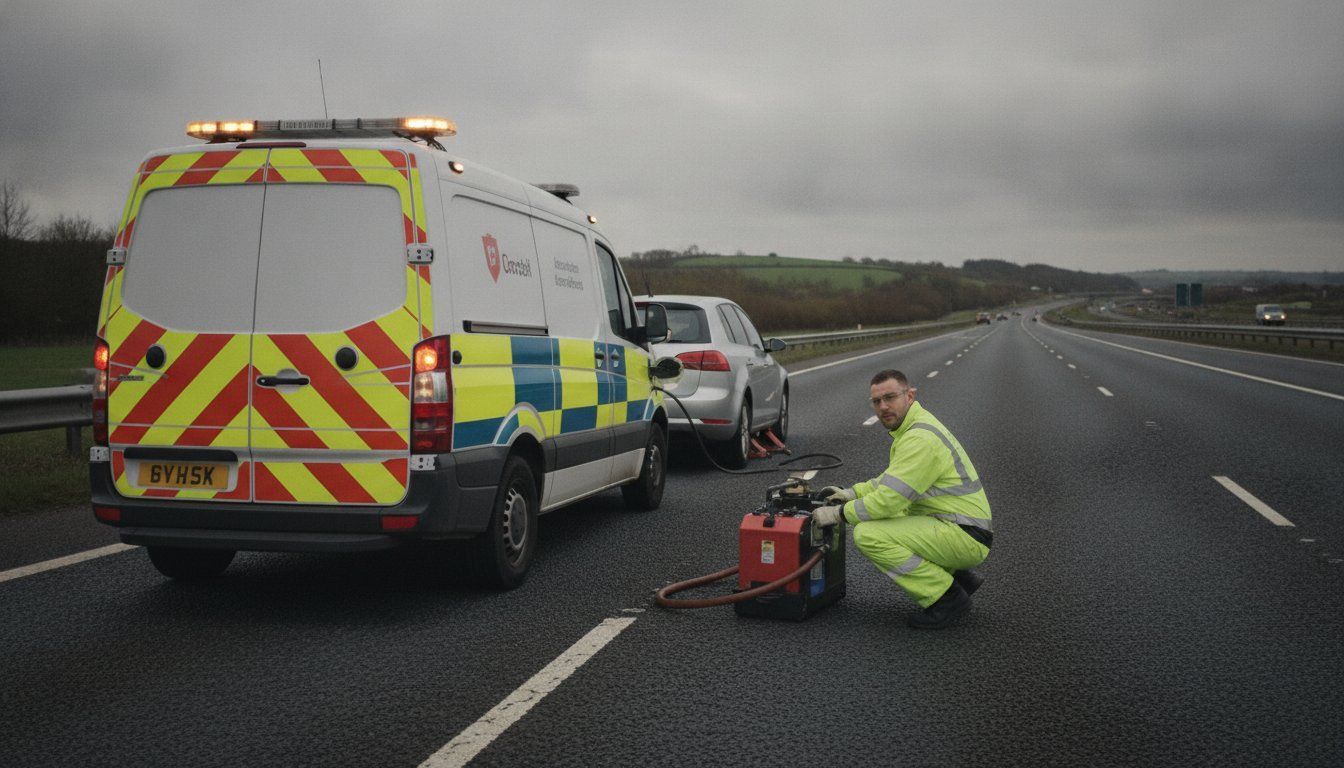
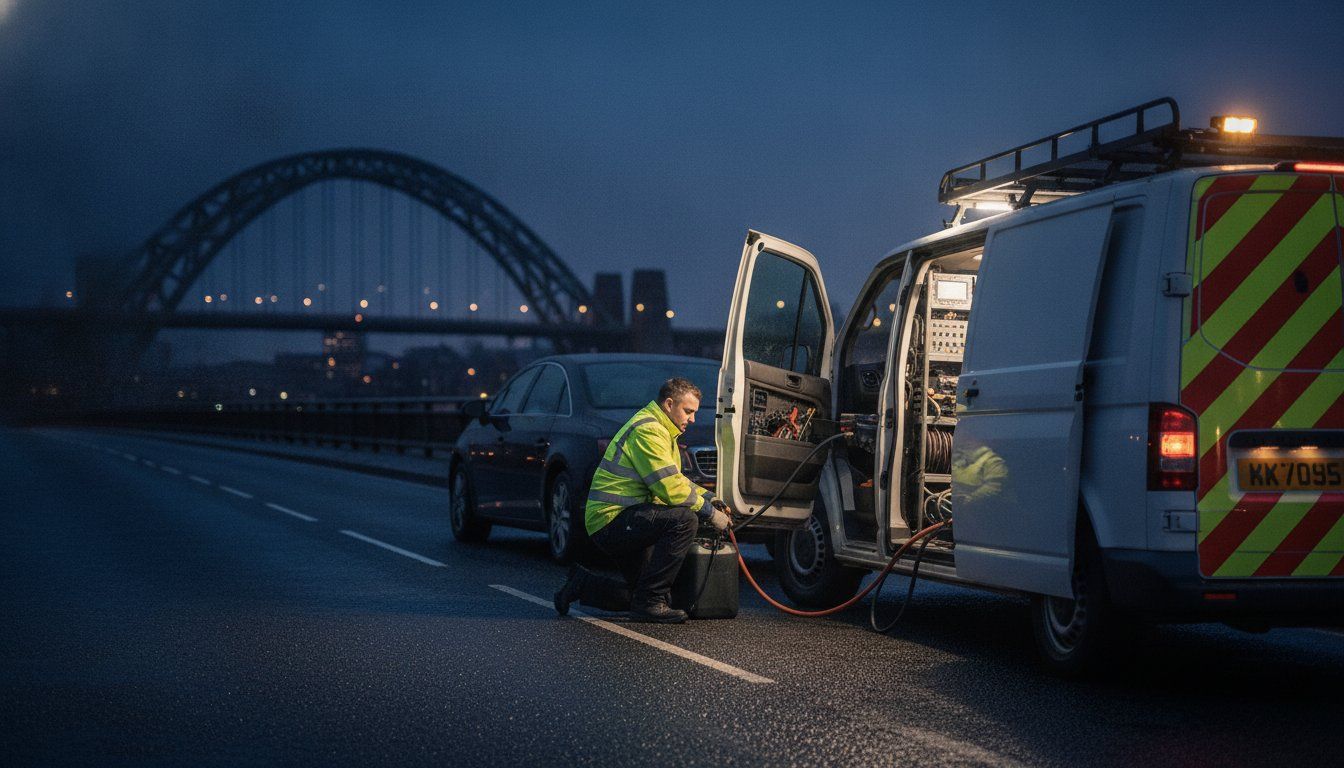
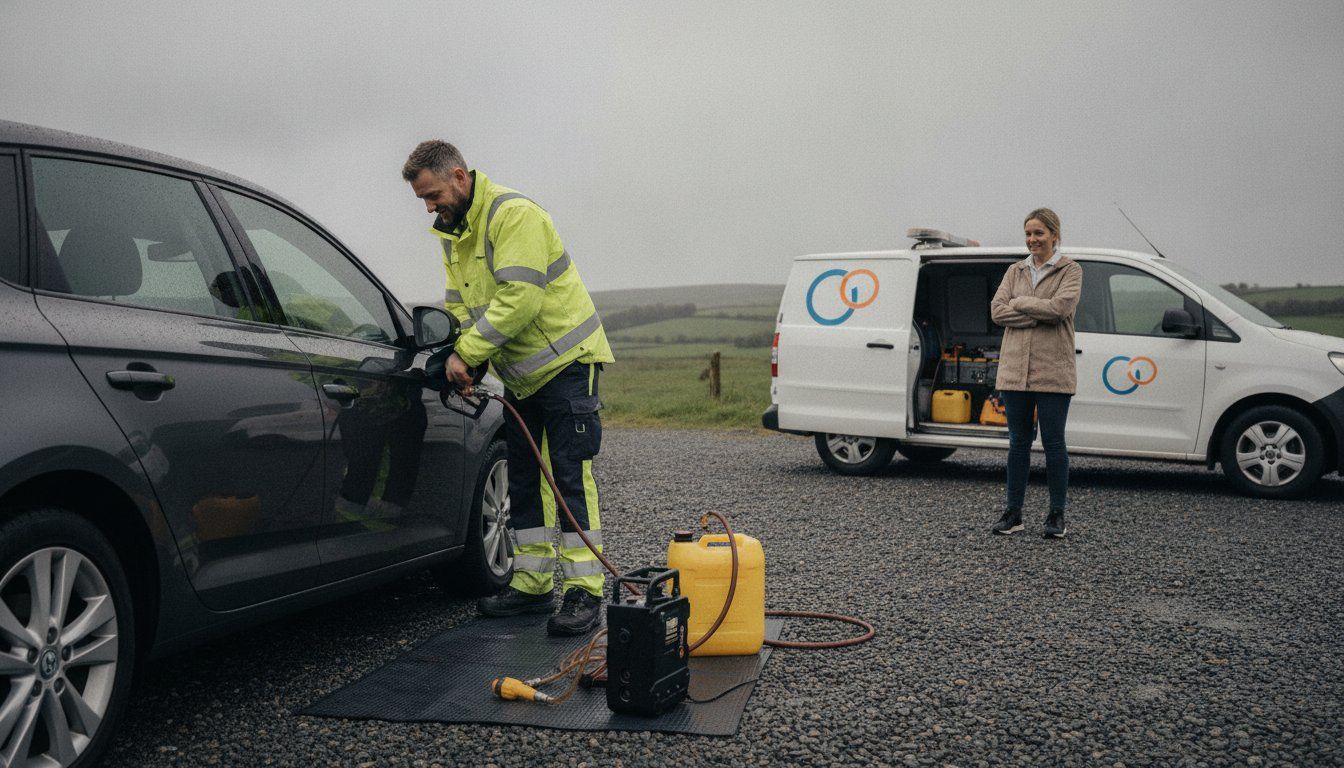
When you have filled up with wrong fuel, the last thing you need is a week-long wait at a dealership. Mobile fuel drains are completed on-site, usually within 30 to 60 minutes of the technician arriving. Our units are equipped with ATEX-certified pumping systems, which are specifically designed for the safe handling of flammable liquids on busy forecourts. This specialised equipment allows us to work safely and efficiently whilst you wait, avoiding the logistical headache of vehicle storage and third-party workshop schedules.
The Benefits of On-Site Emergency Fuel Drains
Speed is the most obvious advantage of a mobile service. Instead of waiting hours for a tow and days for a garage slot, a specialist can get you back on the road in under an hour. This efficiency is why mobile drains are the preferred method for modern drivers. By performing the drain at the pump or roadside, we eliminate the need for expensive towing fees. If you are currently stranded and need to know who is closest to your location, you can find more details in our Fuel Drain Service Near Me: Your Local Guide to Emergency Misfuel Recovery.
Avoiding Unnecessary Garage Repair Bills
Many general garages and main dealers aren't set up for rapid fuel extraction. Their standard procedure is often to replace the entire fuel system, including the high-pressure pump and injectors, as a precaution. This leads to multi-thousand pound bills that are often completely unnecessary if the engine hasn't been run extensively. At Fuel Mistake®, we use three generations of motor industry experience to focus on a "flush and save" philosophy. We use professional-grade equipment to remove every drop of contamination and high-pressure flush the lines. This methodical approach ensures your engine is safe without the need for part replacements, protecting your bank balance from the inflated costs of a traditional garage overhaul.
Identifying Misfuelling Symptoms and AdBlue Contamination Risks
If you didn't realise you had filled up with wrong fuel at the station and have already joined the traffic, your vehicle will soon exhibit physical signs of distress. These symptoms range from subtle hesitations to total power loss. Recognising these early warning signs is vital to preventing a complete engine seizure. If you have already started the engine, the contamination is no longer confined to the tank; it is actively circulating through your high-pressure system and delicate internal components.
Warning Signs Whilst Driving After a Fuel Mistake
One of the most distinct symptoms of petrol in a diesel engine is a loud, metallic "knocking" sound. This occurs because petrol ignites much earlier than diesel, causing uncontrolled explosions within the cylinders that the engine is not timed to handle. If you notice your car juddering or losing power whilst driving at speed, do not try to "limp" home. Pull over safely as soon as the engine management light or "Limp Mode" warning appears. A smoky exhaust is another advanced indicator, often appearing as thick white or blue vapour as the engine struggles to process the incorrect fuel mixture. For a detailed breakdown of these indicators, read our guide on Wrong Fuel in Car Symptoms: How to Tell Early.
The Dangers of AdBlue in a Diesel Tank
Whilst petrol contamination is common, AdBlue in a diesel tank is a far more aggressive "silent killer." AdBlue is not a fuel; it is a urea-based solution designed for the exhaust system, not the engine. It is highly corrosive to non-ferrous metals and electronic fuel sensors. The moment AdBlue meets diesel fuel, it begins to crystallise. These crystals act like sand in your fuel system, instantly blocking the microscopic apertures of your fuel injectors and filters. This chemical reaction is incredibly difficult to reverse once the crystals have formed throughout the fuel lines.
AdBlue is 67.5% deionised water, which is fatal to high-pressure pumps. Unlike petrol, which simply lacks lubrication, the water content in AdBlue causes immediate internal rust and catastrophic component failure. It can destroy the sensitive ceramic components in modern injectors in seconds. If you suspect you have put AdBlue in your diesel tank, you must seek a professional drain immediately to avoid a five-figure repair bill from a main dealer. Our specialised equipment is designed to flush these crystals out before they set, saving your engine from a total write-off.
Expert Wrong Fuel Recovery Across the North East and North Yorkshire
When you have filled up with wrong fuel, the speed of recovery is often dictated by local knowledge. National breakdown services often juggle thousands of calls simultaneously, which can lead to prolonged waiting times at a cold, exposed forecourt. As a local, family-run specialist, we prioritise motorists in our immediate community, ensuring that help is never more than a short drive away. We understand the specific layout of our region's roads and the urgency of getting you moving again.
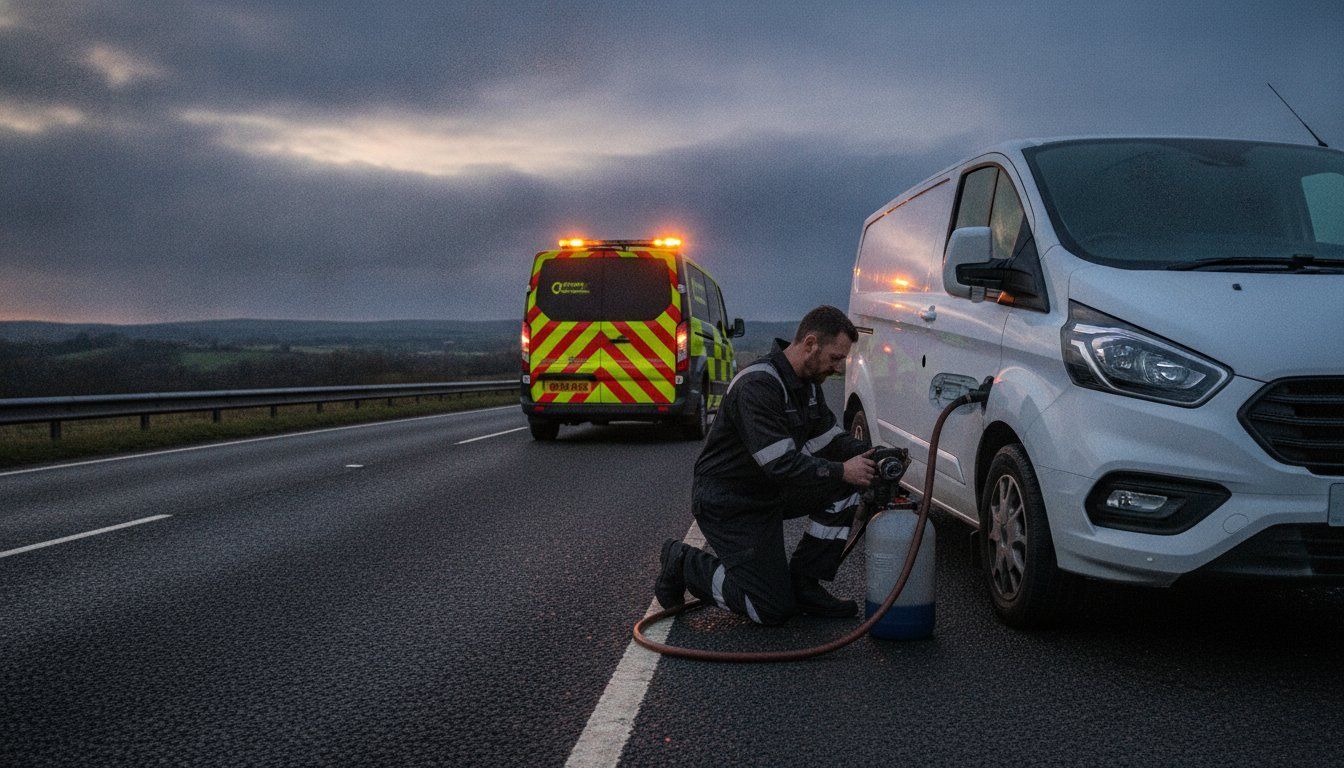
Our rapid response coverage extends across the North East, reaching drivers in Middlesbrough, Newcastle, Sunderland, and Durham. We also provide dedicated support throughout North Yorkshire, serving Thirsk, Ripon, and Northallerton. Whether you are stranded on a busy forecourt or your own driveway, our technicians are available 24 hours a day, 7 days a week. We understand that when you have filled up with wrong fuel, you need a composed, professional guide to resolve the crisis on-site.
24/7 Emergency Response in Your Local Area
Proximity to major routes like the A1, A19, and A66 allows our mobile units to reach you quickly, even during peak travel periods. We maintain a constant presence near Darlington, Hartlepool, Stockton-on-Tees, and Bishop Auckland to ensure your wait is as short as possible. If you need immediate assistance in the Teesside area, our Emergency Fuel Drain Middlesbrough: 24/7 Roadside Wrong Fuel Recovery service provides the rapid intervention required to save your engine.
Why Trust a Family-Run Specialist with Your Vehicle?
Entrusting your vehicle to a technician requires confidence in their technical ability and their integrity. Fuel Mistake® carries the weight of three generations of motor industry experience, offering a level of specialised knowledge that general recovery clubs simply cannot match. We have worked with everything from family hatchbacks to high-performance engines from prestige dealerships, ensuring that every fuel drain is performed with surgical precision.
Safety and legality are at the core of our operations. We adhere to rigorous safety-first protocols and maintain full environmental compliance. This includes utilising the mandatory digital waste tracking systems introduced in 2026 to record the movement and disposal of all contaminated fuel. This professional heritage means we don't just fix the problem; we provide a calming, authoritative presence to guide you through a stressful day. We offer transparent pricing and a commitment to protecting your vehicle's fuel system without resorting to the unnecessary part replacements often suggested by larger garages.
Protect Your Engine and Restore Your Day
Misfuelling is a stressful mistake, but it doesn't have to be a financial disaster. By keeping the ignition off and choosing a mobile recovery specialist, you protect your vehicle from the severe internal friction caused by contamination. Modern common rail systems and AdBlue sensors require precise, technical handling to avoid permanent damage. Choosing an on-site drain over a garage tow saves you time, avoids inflated part replacement costs, and ensures your car is handled according to the latest environmental standards.
If you have filled up with wrong fuel , don't wait for a national club with long queues. Fuel Mistake® provides a 24/7 rapid response across the North East and North Yorkshire, bringing three generations of motor industry expertise directly to your location. Our specialised equipment allows for a thorough system flush that gets you moving again in under an hour. Filled up with the wrong fuel? Call Fuel Mistake® now for 24/7 emergency roadside help. Stay calm, keep the keys out of the ignition, and let a local professional handle the rest.
Frequently Asked Questions
Is 5 litres of petrol in a diesel tank okay to drive?
No, you shouldn't risk driving with any amount of petrol in a diesel tank. Whilst older engines could sometimes tolerate small percentages, modern high-pressure common rail systems are incredibly delicate. Petrol immediately begins stripping the lubricating film from your fuel pump and injectors. This leads to metal-on-metal friction and the creation of microscopic debris. Even 5 litres can cause significant internal wear that eventually leads to a breakdown or expensive component failure.
How much does it cost to drain the wrong fuel from a car in 2026?
The cost of recovery depends on several technical factors, primarily whether the ignition was turned on. If the engine remained off, the process is a straightforward tank drain. However, if you have filled up with wrong fuel and started the car, the price increases significantly because the entire fuel system requires a high-pressure decontamination. Other factors include your vehicle's make and model, the volume of contamination, and your location within the North East or North Yorkshire.
Will putting the wrong fuel in my car void my manufacturer warranty?
Misfuelling itself doesn't automatically void your entire warranty, but the resulting damage and how you fix it will. Most manufacturers require that any fuel system work is carried out by certified technicians using approved methods. If you use an uncertified service or attempt a "DIY" fix, the manufacturer may refuse future claims related to the fuel system. Using a specialist who follows rigorous safety protocols and provides official documentation helps maintain your vehicle's service history.
What happens if I started the engine after filling up with the wrong fuel?
Starting the engine forces the contaminant out of the tank and into the delicate high-pressure fuel system. If you have filled up with wrong fuel and turned the key, petrol begins damaging the pump and injectors instantly. If it's diesel in a petrol car, the engine will likely misfire and stall as the spark plugs become fouled. This requires a more complex recovery process, including a high-pressure flush of the fuel lines and rail rather than a simple tank drain.
Can I use my breakdown cover for a wrong fuel drain?
It depends on your specific policy. Some premium breakdown tiers include misfuel cover as standard, whilst others treat it as an add-on or a chargeable emergency service. Be aware that many national breakdown clubs prioritise towing you to a local garage rather than performing an on-site drain. This can lead to your car being stranded at a workshop for several days. Always ask if they can perform a mobile drain before agreeing to a tow.
How long does a mobile fuel drain service take to complete?
A professional mobile fuel drain usually takes between 30 and 60 minutes to complete once the technician arrives at your location. This includes the time needed to safely extract the contaminated fuel, flush the lines, and replenish the tank with the correct fuel to get the engine running again. It is significantly faster than the garage alternative, which involves waiting for a recovery truck and then joining a workshop queue that can last for several days.
Can AdBlue contamination be fixed at the roadside?
Yes, AdBlue contamination can be resolved at the roadside if you act quickly. Specialist mobile units carry the necessary equipment to extract the urea solution before it has a chance to crystallise within the fuel system. However, if the engine has been run, the process is more difficult because AdBlue is 67.5% deionised water and highly corrosive. Our technicians use advanced flushing techniques to remove these contaminants on-site, potentially saving you from a multi-thousand pound dealer repair.
Does insurance cover misfuelling mistakes?
Many comprehensive insurance policies cover misfuelling under accidental damage, but you must check your individual policy wording. Some insurers have a specific clause that pays for the drain. If you intend to claim, notify them before work begins. Using a certified technician who provides a digital waste transfer note is often a requirement. This regulation helps combat waste crime, which costs the UK economy an estimated £1 billion each year according to government data.