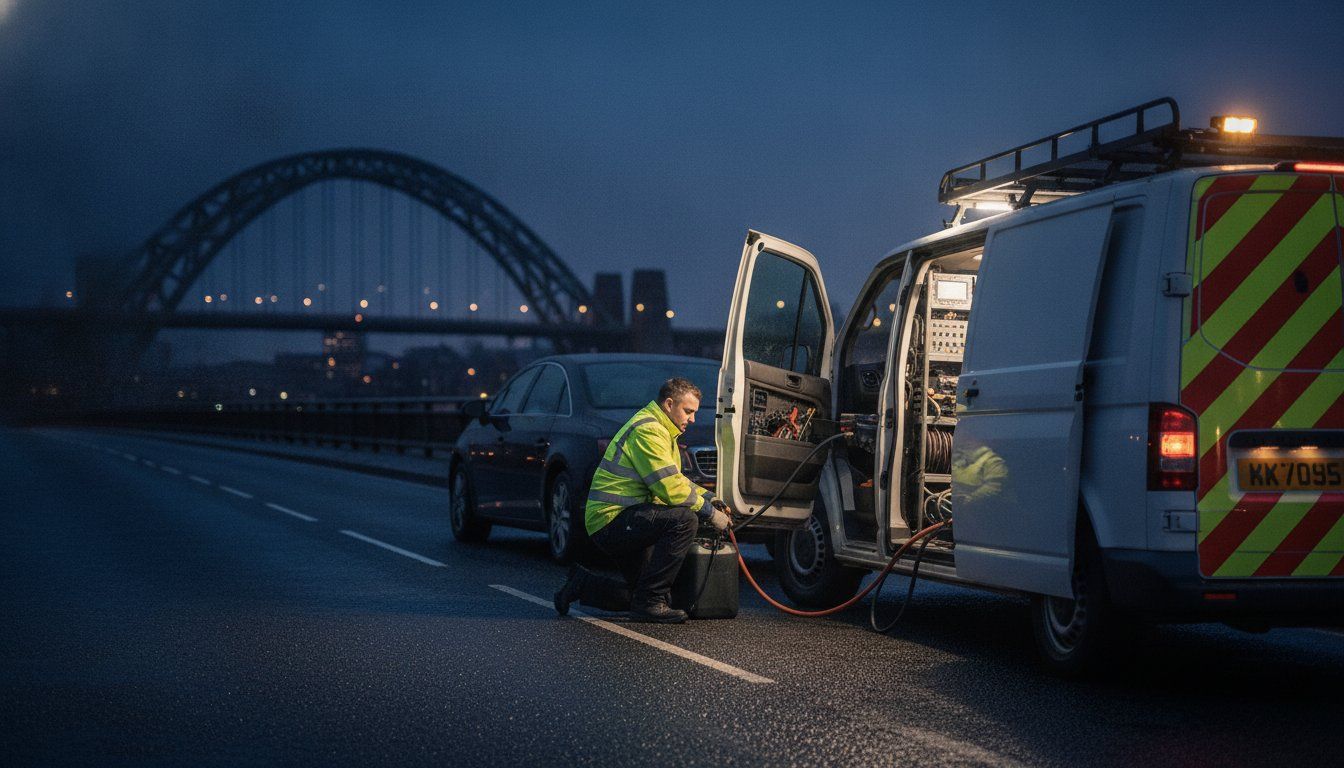

Did you know that approximately 150,000 drivers in the UK misfuel their vehicles every year? That is one person every few minutes facing the exact same pit-of-the-stomach dread you are feeling right now. If your car has started to lose power or the engine is making a loud knocking noise, the threat of petrol in diesel engine damage is very real. It is a high-stakes situation where the wrong move could turn a simple fix into a multi-thousand pound disaster.
It is completely normal to feel overwhelmed by conflicting internet advice whilst worrying about being stranded. You need to know if your symptoms match a fuel mix and how to stop the damage before it is too late. This article provides a clear prevention checklist and explains the specific risks petrol poses to your high-pressure fuel pump. We will show you how to handle the crisis calmly, identify the symptoms early, and why a specialist mobile drain in the North East is the most reliable way to protect your engine and your wallet.
Key Takeaways
- Stop the engine and remove the key immediately to prevent the fuel pump from priming and circulating contaminated fuel throughout the system.
- Identify critical warning signs, such as loud "pinking" noises or excessive exhaust smoke, that indicate petrol in diesel engine damage is occurring.
- Verify a suspected misfuel by checking your most recent fuel receipt for "Unleaded" or "E10" markings before attempting to restart the vehicle.
- Understand the technical risk of petrol acting as a solvent, which strips away the essential lubrication required to protect your high-pressure fuel injection pump.
- Discover how a specialist mobile fuel drain provides a safe, on-site solution that avoids expensive towing fees and traditional garage repair bills.
Table of Contents
Common Wrong Fuel in Car Symptoms: Is Your Engine at Risk?
Are you noticing a strange metallic rattle or a sudden drop in power? These are the first red flags. If you've just left the forecourt, identifying these signs quickly is the only way to limit petrol in diesel engine damage . Many drivers don't realise they've made a mistake until the vehicle begins to protest physically. Before we dive into the mechanics, it helps to understand the basics: What is misfuelling? Simply put, it's the accidental addition of the wrong combustible liquid to your tank, and your engine will let you know very quickly that something is wrong.
- Loud knocking or "pinking" sounds: This occurs because petrol ignites much faster than diesel, causing a premature explosion in the cylinders.
- Excessive smoke from the exhaust: You may see clouds of black or blueish smoke as the engine struggles to process the incorrect fuel mixture.
- Sluggish performance: The car will feel heavy and unresponsive, often failing to gain speed even when you floor the accelerator.
- Engine warning light: Modern sensors will detect combustion irregularities and trigger a dashboard alert almost immediately.
- Starting issues and stalling: If the petrol has already reached the injectors, the car will be incredibly difficult to start or will cut out repeatedly.
Symptoms whilst driving vs. at a standstill
If you are still at the petrol station, you might not notice anything at all. The real trouble starts once you turn the key. Symptoms often take a few miles to appear because the engine is still burning the pure diesel left in the fuel lines and filter. Once the petrol reaches the injectors, the engine note will change significantly. You'll hear a harsh, metallic clatter as the petrol ignites prematurely. This often comes with a "misfire" sensation, where the car feels like it's gasping for air or jerking during acceleration. If you are driving on the A1 or through a busy Newcastle city centre, pull over to a safe spot immediately. The longer you drive, the higher the risk of permanent petrol in diesel engine damage .
Visual and olfactory warning signs
Your nose is often a better diagnostic tool than the dashboard. Petrol has a much sharper, thinner scent than the oily, heavier smell of diesel. You might notice distinct petrol fumes wafting from the rear of the vehicle or even from under the bonnet if the car has stalled. Don't ignore the physical evidence right in front of you. Take a moment to check your fuel cap; many modern cars have a "Diesel" or "No Petrol" sticker that acts as a final warning. You should check your most recent fuel receipt for the "Unleaded", "E10", or "E5" keywords to confirm the error before you attempt to drive any further.
Petrol in Diesel Engine Damage: Why It Happens So Fast
Why does the damage happen so quickly? It comes down to a fundamental difference in chemical properties. Diesel is not just a fuel; it is a heavy oil that provides essential lubrication for your high-pressure fuel injection pump and injectors. Petrol, by contrast, is a thin solvent. The moment petrol enters a diesel system, it begins to strip away the protective oily film that keeps metal components moving smoothly. This lack of lubrication leads to immediate petrol in diesel engine damage as internal parts begin to grind against one another.
Modern "Common Rail" diesel engines are particularly vulnerable to this process. These systems operate at incredibly high pressures, often exceeding 2,000 bar. At these intensities, any loss of lubrication is magnified. If you have noticed the symptoms of petrol in a diesel engine, the clock is already ticking. The friction generated by the high-pressure pump can cause it to overheat and begin to break apart internally in a matter of miles.
The "Solvent Effect" on fuel system components
Petrol is chemically aggressive toward the materials used in diesel systems. It doesn't just fail to lubricate; it actively attacks the delicate rubber seals and gaskets. These components are designed to withstand diesel, but petrol can cause them to swell, shrink, or perish entirely. The impact on fuel injectors is equally severe. Because they rely on the fuel for cooling and lubrication, they can seize or "stick" almost instantly when the mix is wrong. It's a startling fact that even a 5% petrol mix can reduce diesel lubrication by as much as 50%, leaving your engine's most expensive parts exposed to terminal wear.
The danger of swarf and systemic contamination
The most devastating result of metal-on-metal friction is the creation of "swarf". These are microscopic metal shavings that are sheared off the internal surfaces of the fuel pump. Once these shavings are created, they don't just stay in the pump. They are carried by the fuel flow into the fuel rail and directly into the injectors. This is why a simple "top-up" with fresh diesel is never a solution. The metal debris remains in the system, acting like liquid sandpaper that continues to cause petrol in diesel engine damage long after the petrol itself is gone. To avoid a total system replacement, you need a specialist petrol in diesel drain to flush the contamination out before it spreads.
Diagnostic Checklist: How to Confirm a Misfuel
Panic often clouds judgment. If you suspect a mistake, stop. The most reliable evidence is usually in your pocket or the centre console. Check your most recent fuel receipt immediately. In the UK, look for the words "Unleaded", "E10", or "E5". If these appear on the slip, you have confirmed a misfuel. Understanding why petrol damages diesel engines is important for the long term, but right now, confirmation is your priority. If you have lost the receipt, check the fuel flap or filler neck for a "Petrol" label you might have missed in the rush. Finally, compare the smell of the fuel in the tank to a known diesel source; petrol has a sharp, chemical odour that is unmistakable once you are looking for it.
Forecourt forensics: checking the pump
If you are still at the petrol station, walk back to the pump. In the UK, green nozzles signify petrol whilst black handles indicate diesel. It is a cruel design flaw that the smaller petrol nozzle fits perfectly into the wider diesel filler neck. This makes it incredibly easy to make a mistake, especially amongst North East drivers navigating busy forecourts during the morning rush. Distractions like a phone call, crying children, or simply being on autopilot are the most common reasons for this error. If you see the green handle resting in the holster you just used, do not turn the ignition. Even a small amount of petrol can trigger significant petrol in diesel engine damage if it is drawn into the system.
Dashboard and performance indicators
Your car's onboard computer is designed to protect the system, but it isn't always specific. You might see the "Water in Fuel" light illuminate on your dashboard. This happens because the ECU (Engine Control Unit) detects a change in the fuel's density and conductivity, often misinterpreting petrol as water contamination. The ECU will try to compensate for the poor fuel quality by adjusting timing, which leads to the sluggishness and power loss described in previous sections. Keep an eye on your trip computer; a sudden, unexplained drop in MPG is a clear sign that the combustion process is failing. Ignoring these indicators will accelerate petrol in diesel engine damage , leading to the expensive swarf contamination that can ruin an entire fuel system.
Emergency Protocol: 5 Steps to Prevent Engine Failure
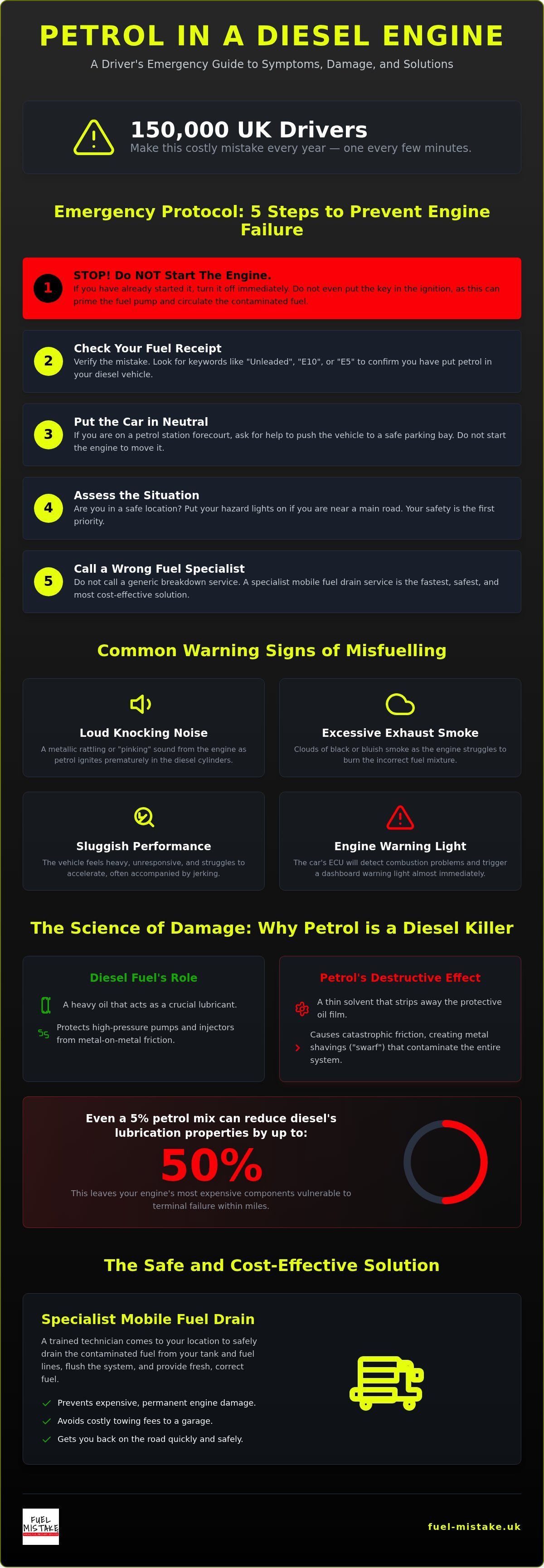
If you are currently sitting in your car after a misfuel, your immediate actions will determine whether you face a simple drain or a catastrophic repair bill. Take a breath. Follow these five steps to halt petrol in diesel engine damage in its tracks. First, stop the engine immediately. If you have just realised the error at the pump, do not turn the key. Second, remove the key from the ignition or move the electronic fob at least five metres away from the vehicle. Third, do not attempt to restart the car, even if you are blocking a pump; your engine's health is more important than a three-minute delay for the driver behind you. Fourth, put the vehicle in neutral and ask for assistance to push it to a safe parking bay. Finally, call a specialist mobile fuel drain service for an on-site recovery.
The "No Ignition" rule for modern vehicles
Choosing a standard garage or towing service often leads to unnecessary financial strain and lengthy delays. Towing fees are just the beginning; many garages will charge daily storage rates whilst your car sits in a queue. Because standard mechanics often lack specialised fuel drainage equipment, they frequently insist on a full fuel system replacement as a "safety first" measure. This can easily cost upwards of £3,000, as it involves replacing the pump, injectors, and all common rail components. You can read more about these potential expenses and how to avoid them in our Misfuelling Guide.
A specialist mobile service is designed to prevent petrol in diesel engine damage by cleaning the system where the car stands. This avoids the risk of further contamination that occurs during a tow. To avoid inflated garage costs and get back on the road in under an hour, contact our team for a professional petrol in diesel removal service.
Mobile Fuel Drain: The Safe and Cost-Effective Solution
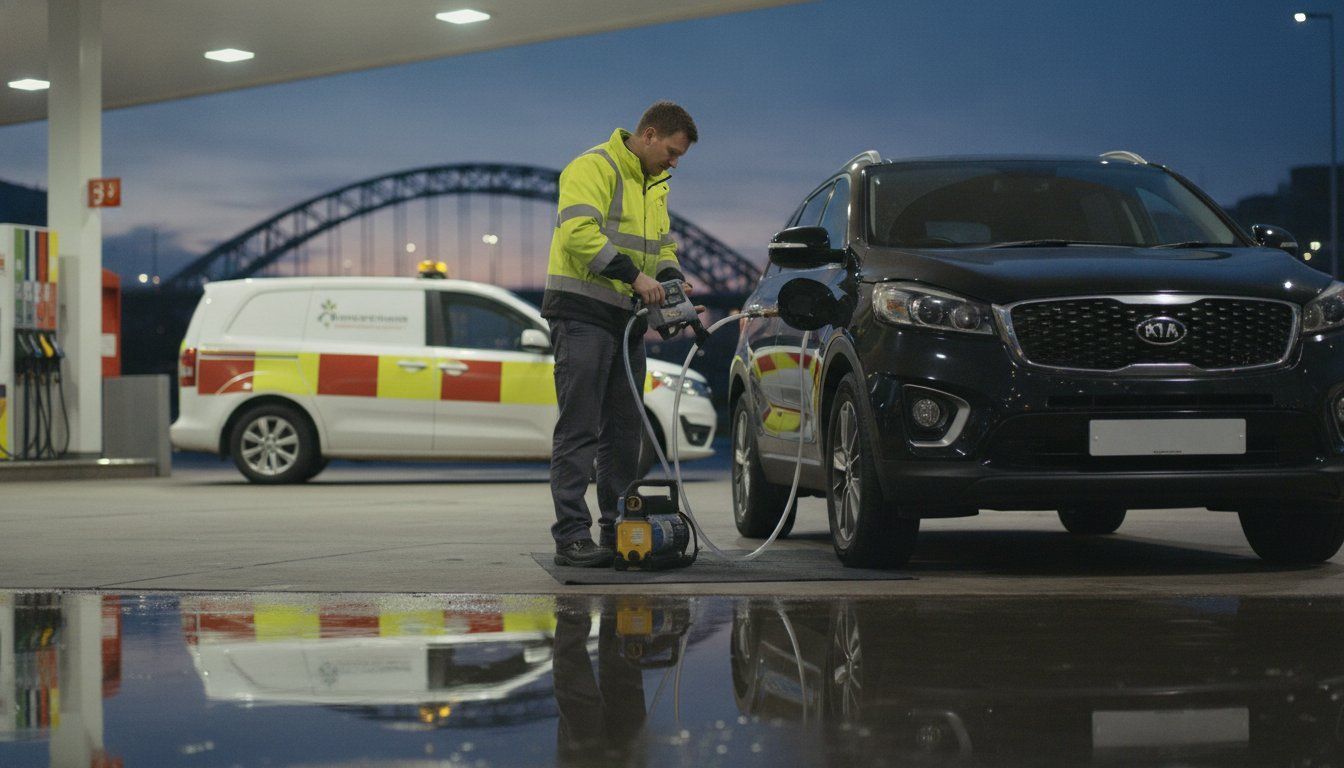
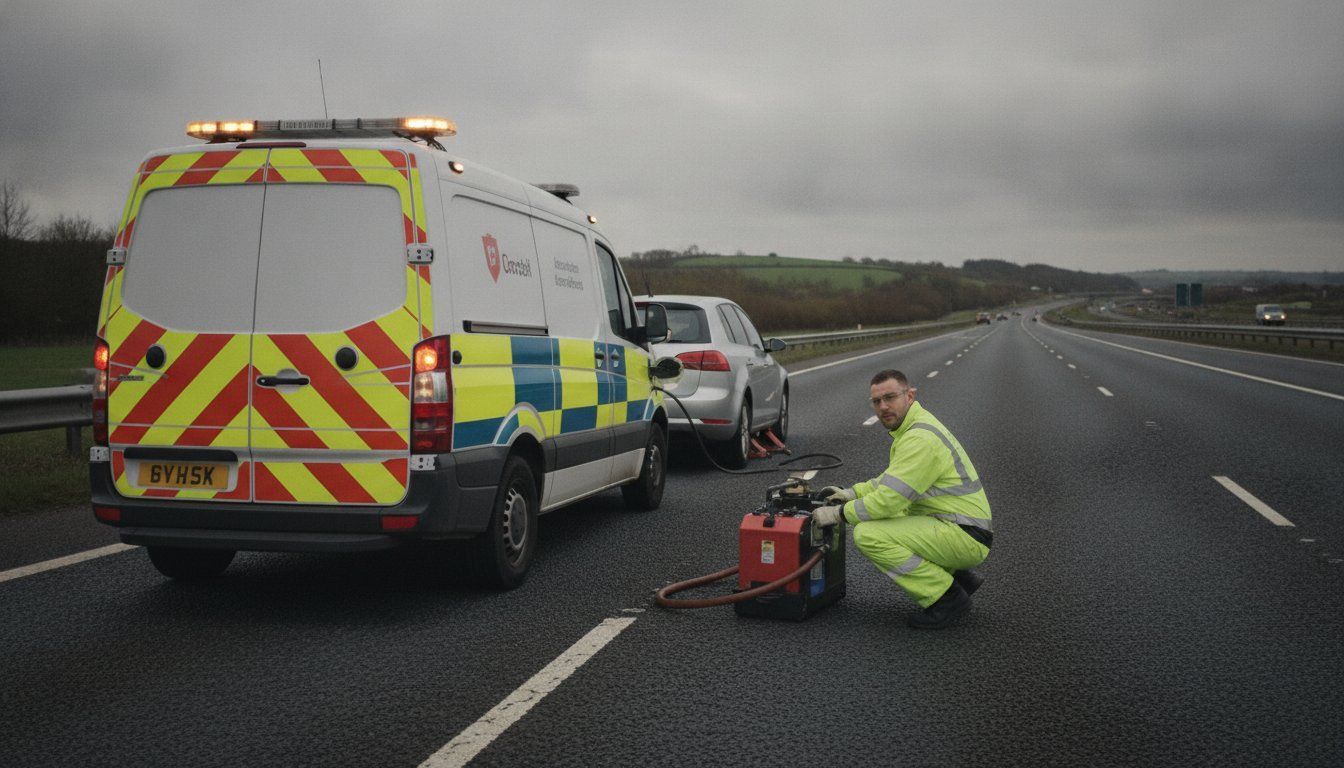
Once you have secured your vehicle and avoided the temptation to restart the engine, the solution is much simpler than you might fear. A professional mobile fuel drain is designed to reverse the mistake right where you are parked. Unlike a traditional garage that might dismantle your car, a specialist technician uses high-powered suction equipment to drain the contaminated mixture directly from the tank. This process is efficient and non-invasive, ensuring that no further petrol in diesel engine damage occurs during the recovery process.
The service goes beyond just emptying the tank. To ensure your engine's longevity, the technician will flush the entire fuel system, including the fuel lines and the common rail, to remove every trace of petrol. This methodical approach is critical because even a small amount of residual solvent can compromise the lubrication of your high-pressure pump. Once the system is clear, it is primed with fresh diesel. Choosing this on-site fix is usually 70% cheaper than garage repairs, as it eliminates towing fees and the unnecessary replacement of healthy components. We also take responsibility for the contaminated fuel, disposing of it through licensed environmental waste carriers in accordance with UK regulations.
24/7 Rapid Response in the North East
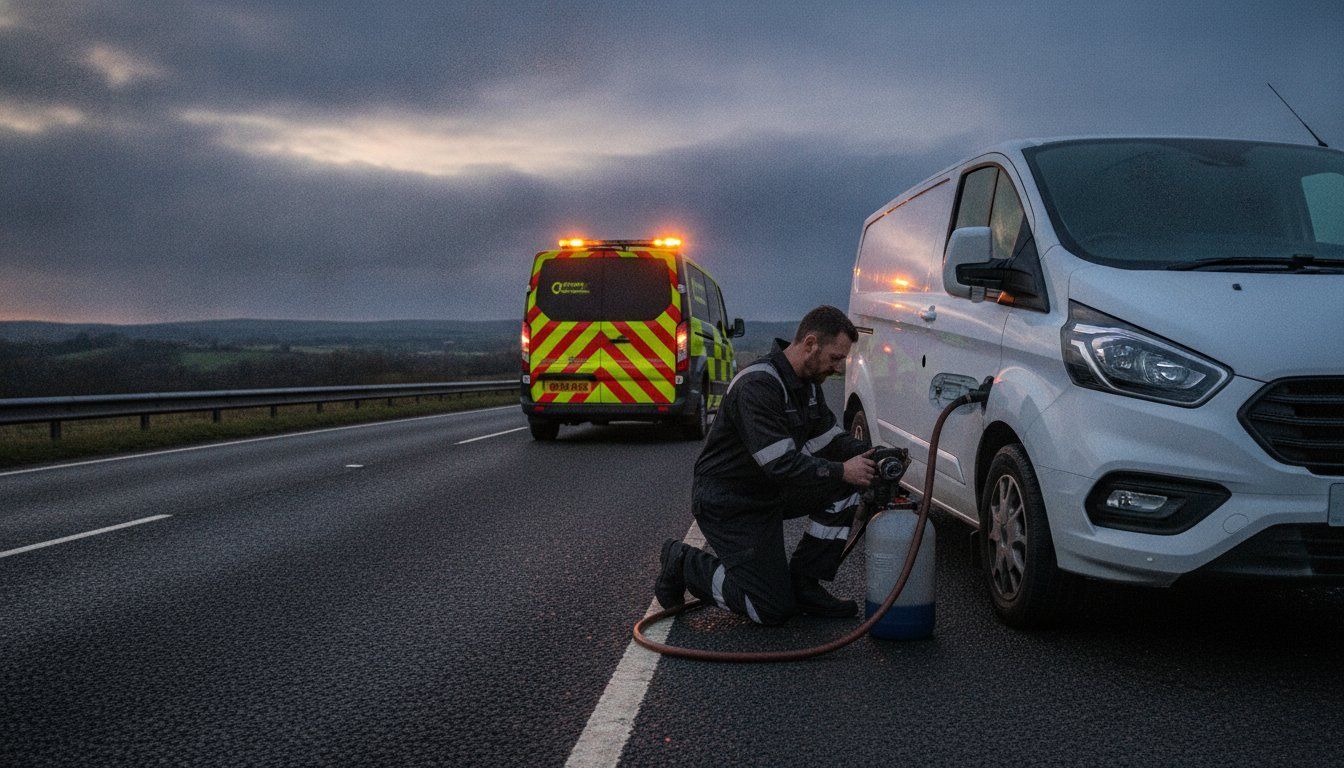
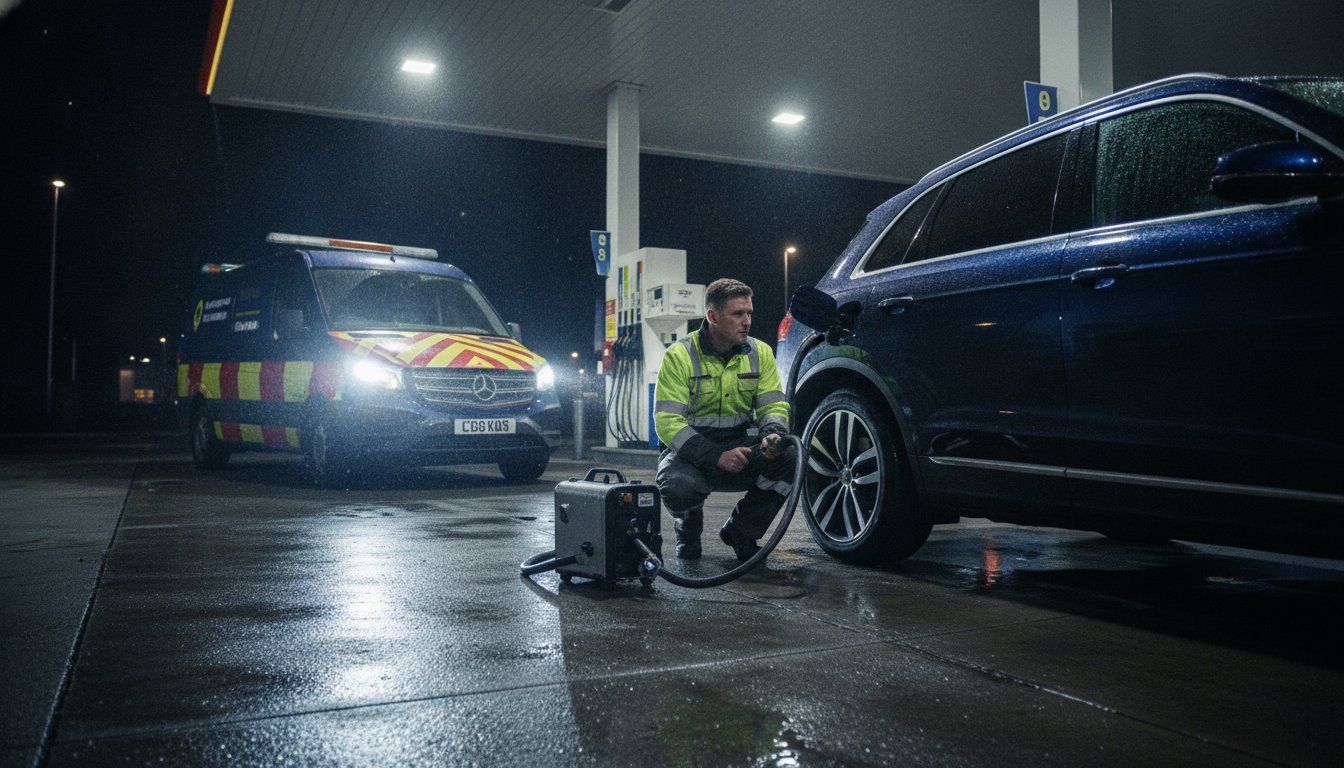
We understand that misfuelling doesn't happen on a schedule. Our rapid response teams provide 24/7 coverage across Newcastle, Sunderland, Middlesbrough, and Durham, ensuring you aren't left stranded on a dark hard shoulder or a busy forecourt. We carry specialised equipment tailored for roadside drains in more rural locations like Thirsk, Northallerton, and Ripon. Whether you have put petrol in your car or are facing AdBlue in diesel tank emergencies, we have the technical expertise to get you moving again without the need for a tow truck.
The Fuel Mistake® Guarantee
Trust is vital when someone is working on your vehicle's fuel system. As a family-run business with three generations of motor industry experience, we bring a level of care that corporate recovery firms often lack. Founded by a prestige dealership technician, our service is built on rigorous safety-first protocols. We don't just drain the fuel; we perform diagnostic checks to ensure your car is safe to drive before we hand back the keys. This heritage of technical competence means you can rest easy knowing your engine is in expert hands. Don't risk permanent petrol in diesel engine damage by waiting. Call Fuel Mistake® now for emergency help in the North East!
Protect Your Engine and Get Back on the Road
Misfuelling is a stressful mistake, but it doesn't have to mean the end of your engine. Remember that the "No Ignition" rule is your most powerful tool in preventing permanent petrol in diesel engine damage . By keeping the key away from the ignition and calling for a specialist drain, you avoid the solvent effect that destroys high-pressure pumps and injectors. Acting quickly and calmly is the best way to keep your repair costs as low as possible and ensure your vehicle remains reliable.
Our family-run team brings three generations of motor industry expertise to every roadside call. We provide a rapid, 24/7 response across the North East, covering areas from Newcastle down to Northallerton. We handle the entire process on-site, including the safe, certified disposal of your contaminated fuel, so you can avoid the inflated costs and delays of a traditional garage. Take control of the situation now. Get a 24/7 Emergency Fuel Drain Quote and let a local specialist handle the rest. You'll be back behind the wheel before you know it.
Frequently Asked Questions
Can I drive my diesel car if I only put a small amount of petrol in?
No, you shouldn't risk driving the vehicle. Even a small amount of petrol, as little as 5%, can reduce the lubricating properties of your diesel by half. This puts your high-pressure fuel pump at immediate risk of wear and overheating. It is far safer and more cost-effective to drain the tank now than to gamble on a small mix and face a massive repair bill later.
Will putting petrol in my diesel engine ruin it permanently?
Not necessarily, but it depends on how quickly you stop the engine. Most petrol in diesel engine damage is reversible if the contamination is professionally removed before internal components fail. If you haven't started the car, a simple drain usually solves the problem. However, driving until the engine cuts out can lead to terminal damage to the injectors and the high-pressure pump; in such instances, businesses like Diego's Shop offer the expert service and warrantied repairs needed to restore your diesel vehicle's fuel system.
Does car insurance cover the cost of a fuel drain?
Coverage varies significantly between providers, as misfuelling is typically classed as "accidental damage". Some comprehensive policies include it as standard, whilst others require a specific "wrong fuel" add-on. You should check your policy documents carefully before making a claim. Often, the cost of a private mobile drain is lower than your insurance excess and won't risk your no-claims bonus or future premium hikes.
What is the "swarf" everyone talks about in misfuelled engines?
Swarf refers to microscopic metal shavings that are ground off the internal surfaces of your fuel pump. Because petrol strips away the lubrication that diesel provides, metal parts rub together at high speeds. These shavings then circulate through the fuel rail and into the injectors, causing widespread blockages. Once swarf is detected, the entire fuel system often requires a professional flush or a very expensive replacement.
How long does a mobile fuel drain take to complete at the roadside?
A professional mobile fuel drain usually takes between 30 and 45 minutes to complete. This includes the time needed to drain the contaminated tank, flush the fuel lines, and prime the system with fresh diesel. Our technicians use specialised high-suction equipment to ensure the job is done thoroughly. You'll typically be back on the road in under an hour from the moment we arrive at your location.
Is it possible to "siphon" the petrol out myself?
You shouldn't attempt to siphon the fuel yourself. Modern vehicles are fitted with anti-siphon flaps and complex internal baffles that make it almost impossible to reach the fuel with a standard tube. More importantly, you cannot clear the contaminated fuel already sitting in the lines or the filter without specialist equipment. There are also strict environmental regulations regarding the safe disposal of contaminated fuel that you must follow.
Why does my car make a loud knocking noise after misfuelling?
This noise, often called "pinking", occurs because petrol ignites much faster and more violently than diesel. In a diesel engine, the fuel should ignite under compression at a precise moment. Petrol ignites prematurely, causing an uncontrolled explosion that rattles the pistons and cylinders. This is a primary symptom of petrol in diesel engine damage and is a clear signal that you must turn off the engine immediately.
What happens if I accidentally started the engine after putting petrol in?
If you've started the engine, the contaminated fuel has already been drawn into the delicate injectors and the high-pressure pump. Don't panic, but do turn the engine off immediately to limit the spread. Whilst this increases the risk of damage compared to a car that hasn't been started, it doesn't always mean the engine is ruined. A technician can still perform a deep system flush to remove the petrol traces.