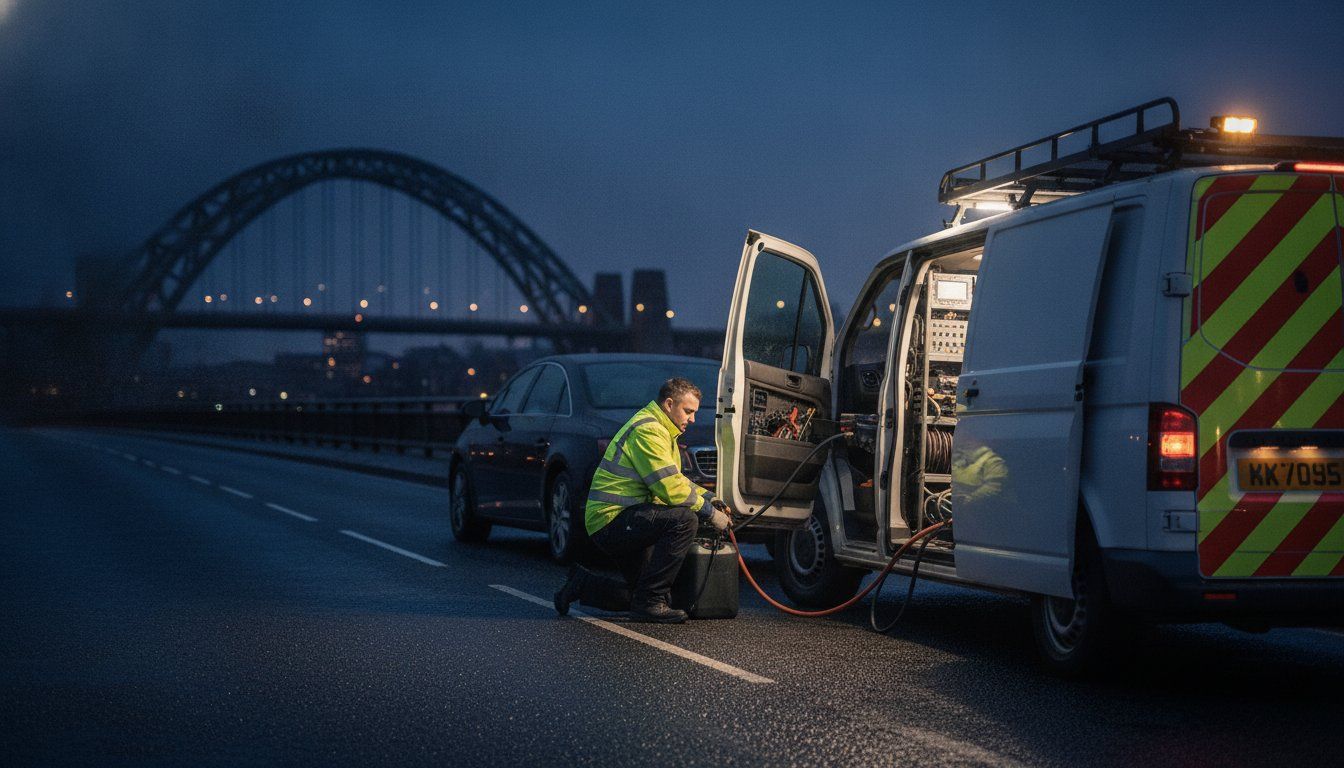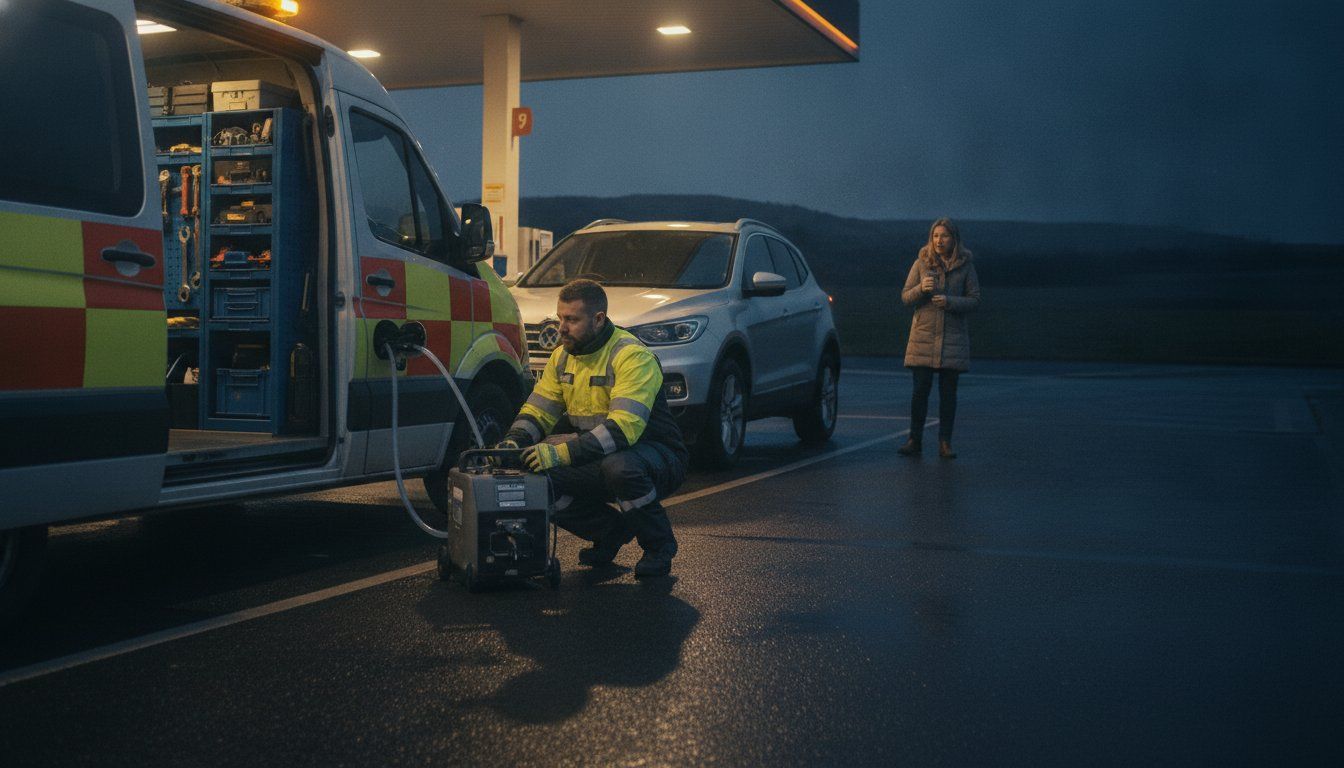
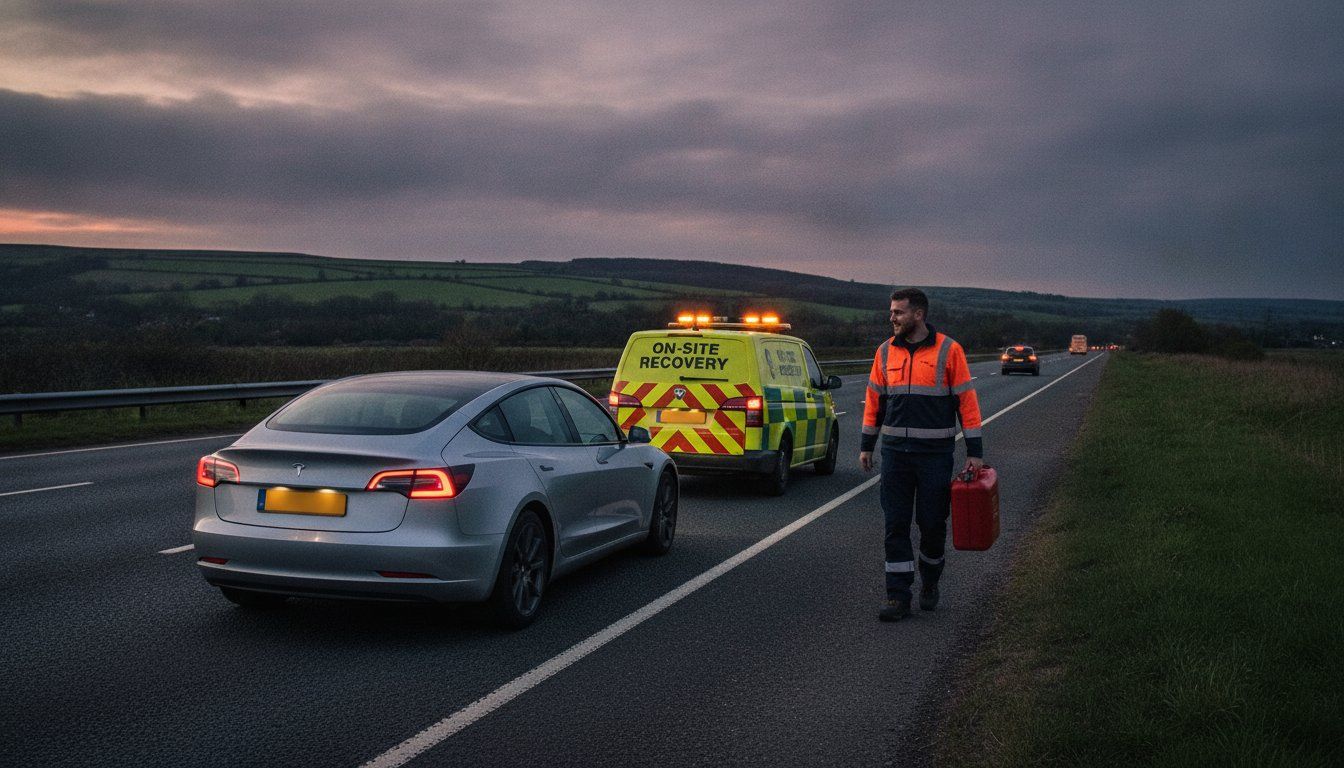
If you've ran out of fuel Darlington motorists should be aware that a simple breakdown can lead to a £100 fine and three penalty points on your licence. If your vehicle causes a preventable obstruction, the police have the power to penalise you under Rule 97 of the Highway Code. It's a high-stakes situation that happens to many, whether you misjudged the distance to a forecourt or a faulty gauge caught you out. We understand the immediate panic when your engine dies on a busy road. You aren't just worried about the delay; you're concerned about your safety and the risk of long-term fuel system damage.
This guide provides the professional reassurance and technical steps you need to handle this emergency safely. You'll discover the immediate actions to protect your vehicle, the legal implications of a roadside breakdown, and the fastest ways to get back on the road. We'll explain why you must avoid the temptation to repeatedly restart a dry engine and how a local specialist can help you avoid an expensive tow. Follow these instructions to secure your car and reach the nearest pump without further drama.
Key Takeaways
- Prioritise your safety by moving the vehicle off the carriageway and activating hazard lights to ensure you're visible to other Darlington commuters.
- Be aware that causing an obstruction can result in a £100 fine and three penalty points, making a quick response essential.
- Avoid damaging your high-pressure fuel pump by not repeatedly trying to start the engine once the tank is empty.
- Identify the most efficient ways to get moving again if you've ran out of fuel Darlington roadside to bypass the expense of a recovery truck.
- Learn how specialist priming equipment can restart your car at the roadside, saving you from unnecessary garage repair bills.
Table of Contents
What to Do if You Run Out of Fuel at the Roadside
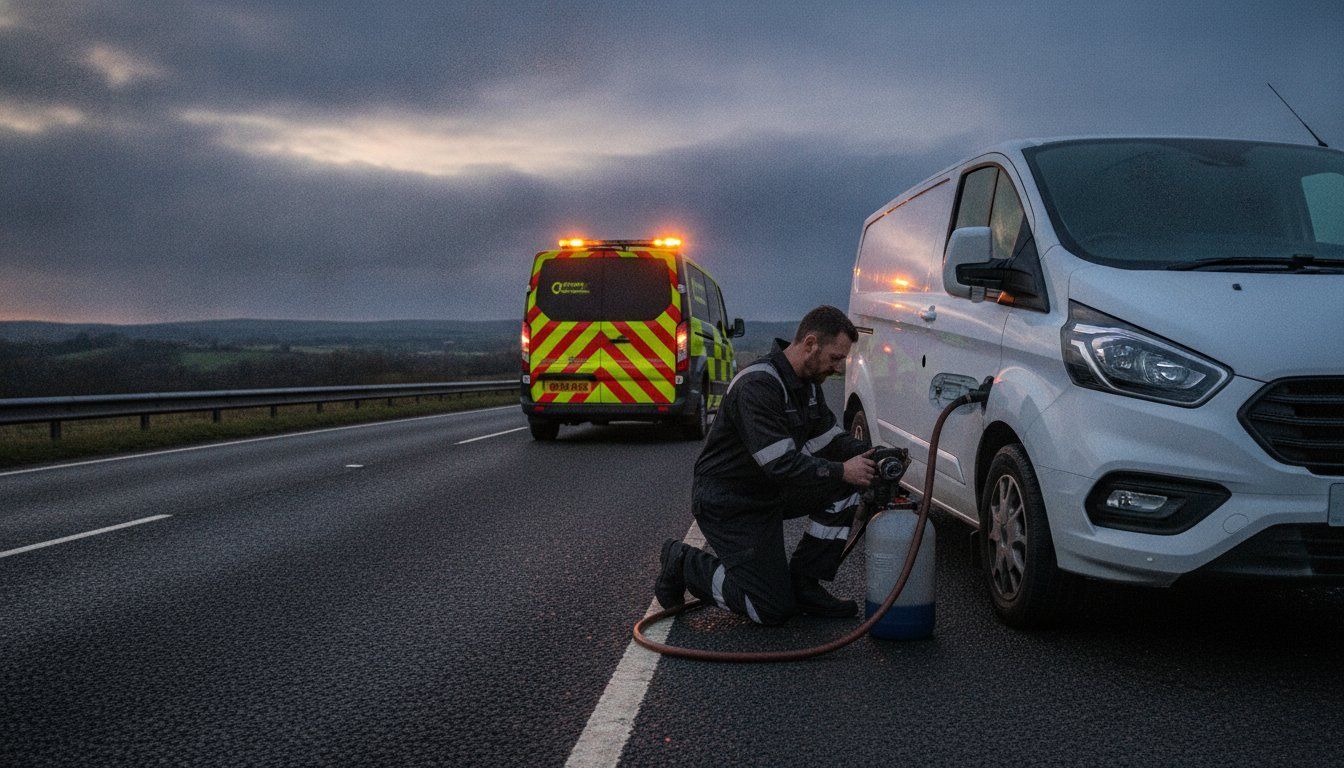
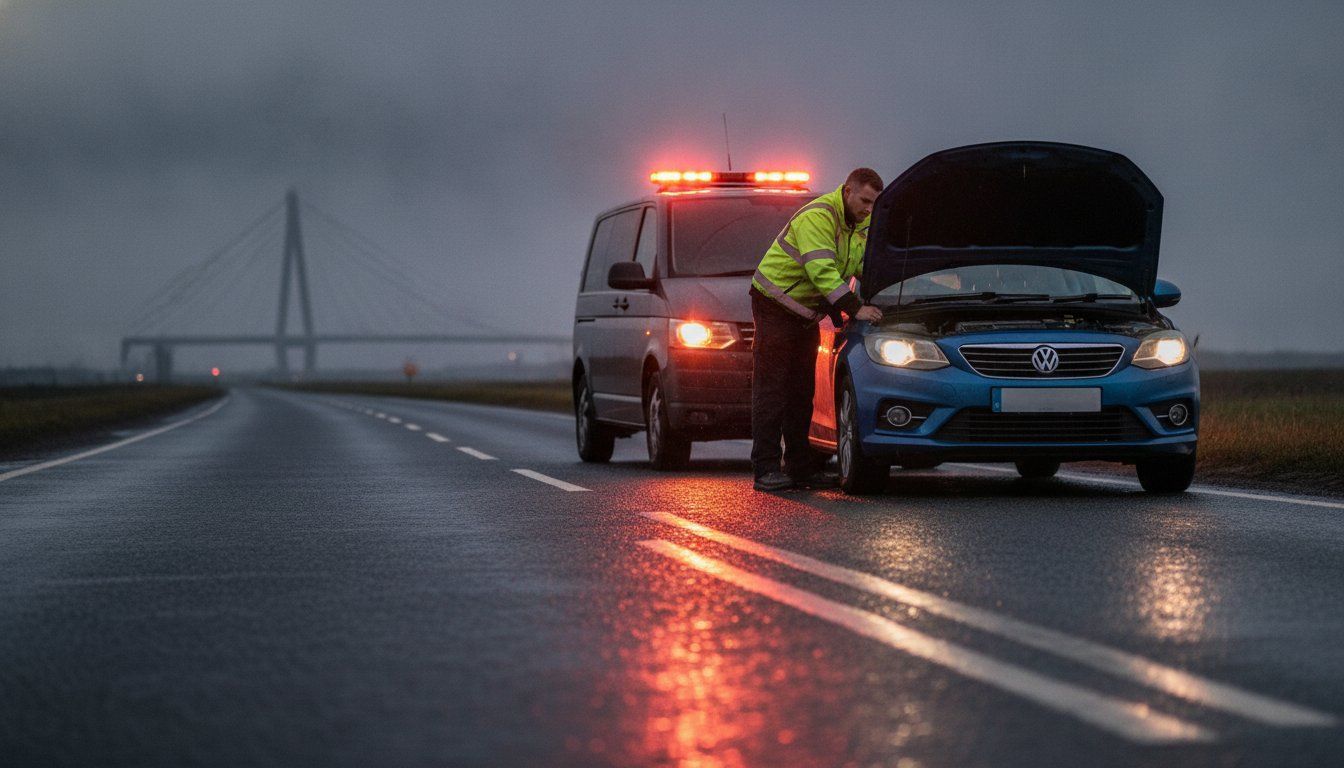
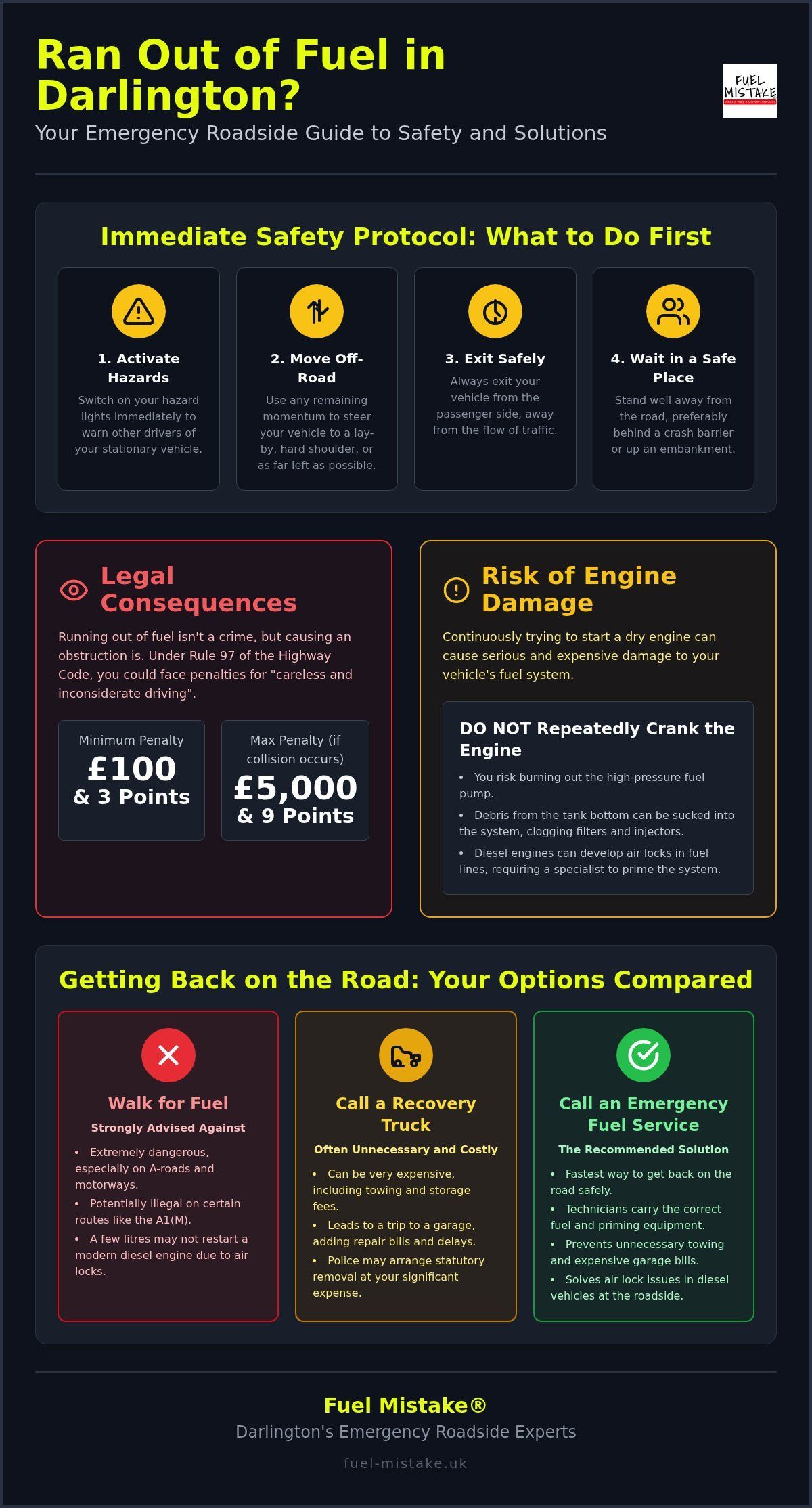
Your engine stutters, the revs drop, and suddenly the steering feels heavy. If you've ran out of fuel darlington roads can become dangerous in seconds. What's your first move? Don't panic. Switch on your hazard lights immediately to warn following traffic. If you have enough momentum, steer your vehicle as far off the road as possible. Ideally, find a lay-by or a wide, flat verge. If you're on a busy carriageway, exit the vehicle via the passenger door. Standing on the driver's side puts you at extreme risk from passing vehicles. Your safety is the absolute priority, far outweighing the condition of the car.
Safe Positioning on Darlington's Major Routes
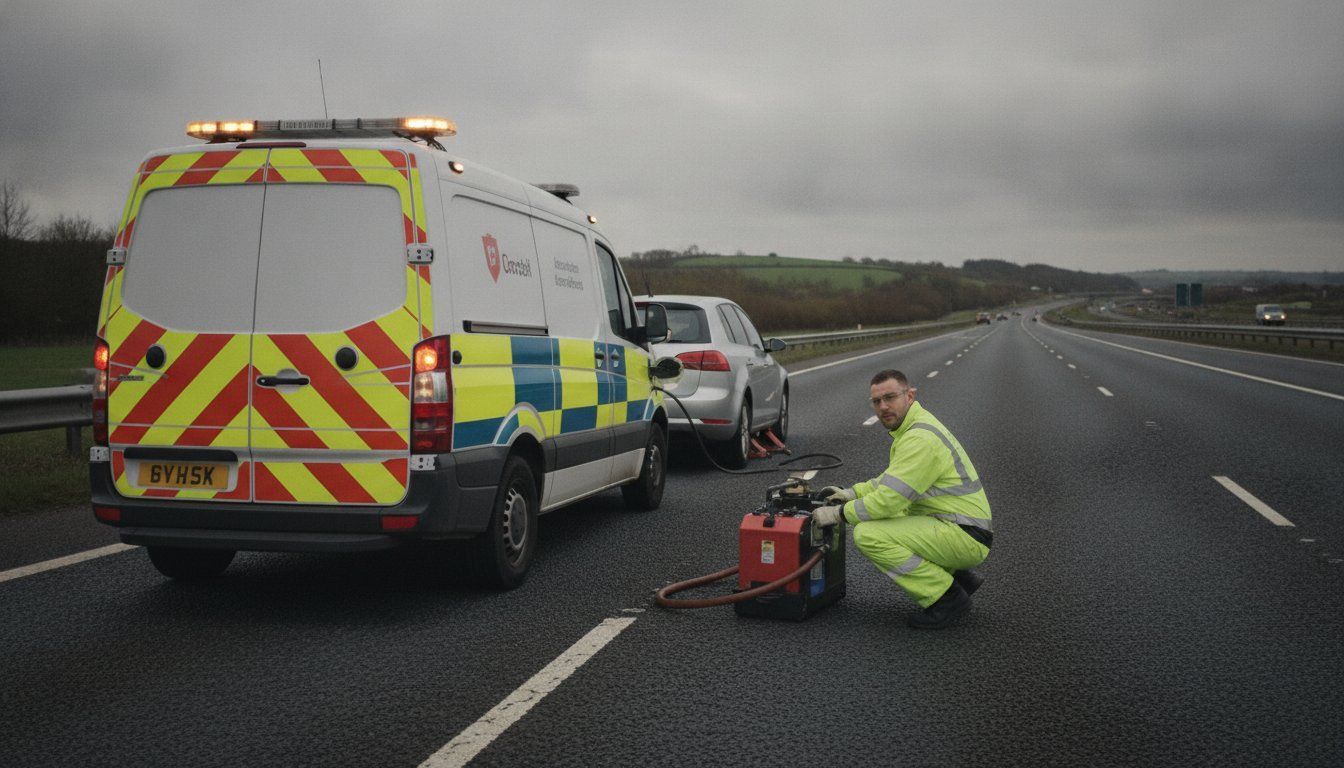
Darlington's road network presents unique challenges for a stranded motorist. If you're stuck near Junction 57 or 58 of the A1(M), you're in a high-speed environment where every second counts. Never stay in your car if it's on the hard shoulder or a narrow verge. Move behind the crash barrier, climb the embankment if there is one, and stand well away from the traffic flow. For those on the A66 or navigating the busy Grange Road centre, the priority is visibility. Darlington commuters are often in a rush; don't assume they've seen you. If you can't get the car entirely off the road, your hazard lights and a high-visibility jacket are your primary defences against a collision.
Communicating Your Location Effectively
Where exactly are you? When you call for help, precision saves lives and time. Look for local landmarks like the Darlington Clock Tower or specific units in the Morton Park Retail Park. If landmarks aren't visible, use the 'What3Words' app on your smartphone. This tool provides a three-metre square location that helps our technicians find you instantly, even on unmarked stretches of the A1(M). Is your vehicle causing a dangerous obstruction in a live lane? If so, you must inform the police via 101 or 999. An obstruction on a major route isn't just a nuisance; it's a safety hazard that requires official management to prevent a serious accident. Clear communication ensures the right help arrives at the right spot.
It's often tempting to grab a plastic bottle and walk to the nearest petrol station. We strongly advise against this. Walking along the A66 or the A1(M) is incredibly dangerous and, in some cases, illegal. Beyond the safety risks, modern engines often won't restart just by pouring in a few litres of fuel. If you've ran out of fuel darlington vehicles, especially diesels, often require professional priming to remove air locks from the fuel lines. Stay with your vehicle in a safe spot, keep your phone line clear, and wait for specialist assistance to arrive with the correct equipment.
Is it Illegal to Run Out of Fuel in the UK?
Technically, running out of fuel isn't a crime in the UK. However, the legal consequences of doing so can be severe if your vehicle creates a hazard. The Highway Code, specifically Rule 97, states that you must ensure you have sufficient fuel for your journey before setting off. If you've ran out of fuel darlington police officers may deem this a failure to maintain your vehicle properly. When your car grinds to a halt in a live lane of traffic, you aren't just a stranded motorist; you're a potential cause of a serious accident.
The location of your breakdown often dictates the severity of the police response. Darlington motorists are far more likely to face prosecution on the A1(M) or the A66 than on a quiet residential street. On high-speed routes, a stationary vehicle is an immediate danger. If the authorities decide your lack of fuel has led to "careless and inconsiderate driving", you could face a minimum fine of £100 and three penalty points on your licence. In cases where a collision occurs as a direct result of your vehicle being stationary, fines can escalate to £5,000 with up to nine penalty points.
Fixed Penalty Notices and Police Powers
In 2026, the police have clear mandates to clear obstructions quickly to maintain road safety. If your car is blocking a major Darlington junction and you cannot move it, the police may exercise their powers of statutory removal. This means they'll arrange for a third-party contractor to tow your vehicle to a secure compound. You'll be liable for the recovery fee and a daily storage charge, which often totals hundreds of pounds before you even consider the cost of fuel. Utilising professional wrong fuel recovery or emergency fuel delivery services can help you avoid these astronomical costs by getting you moving before the police intervention becomes necessary.
Insurance Implications of Running Dry
Does your insurance policy cover you for running out of fuel? Many standard breakdown policies include a "human error" clause, but some may charge an additional fee for fuel delivery. More importantly, if you've damaged your engine by running the tank to empty, your insurer might refuse to pay for repairs. They often classify this as "mechanical neglect" rather than an accidental failure. Always keep a record of your emergency call-out and the technician's report; this documentation is vital if you need to prove you took immediate, professional action to rectify the situation. If you're currently stranded, choosing Fuel Mistake for roadside assistance ensures you have a professional record of the recovery and a safe restart for your engine.
The Hidden Dangers: How Running Dry Damages Your Engine
Many Darlington motorists assume that running out of fuel is merely a logistical headache. It's actually a mechanical crisis. In modern combustion engines, fuel serves a dual purpose: it powers the vehicle and acts as a vital lubricant for the high-pressure fuel pump. When you've ran out of fuel darlington roads aren't just dangerous for you; they're dangerous for your car's internal components. Without the cooling properties of petrol or diesel, moving parts within the pump generate intense friction. This metal-on-metal contact can cause internal scoring or complete pump seizure within minutes of the tank running dry.
Another risk involves the sediment that naturally accumulates at the bottom of your fuel tank over time. When the fuel level is healthy, this debris remains undisturbed. However, when the pump struggles to draw the last few drops, it often sucks up this concentrated sludge. This can lead to several complications:
- Clogged fuel filters that restrict flow even after you've refilled the tank.
- Contaminated injectors that fail to atomise fuel correctly, leading to poor performance.
- Premature wear on the sensitive fuel pressure regulator.
Fuel Pump and Injector Failure
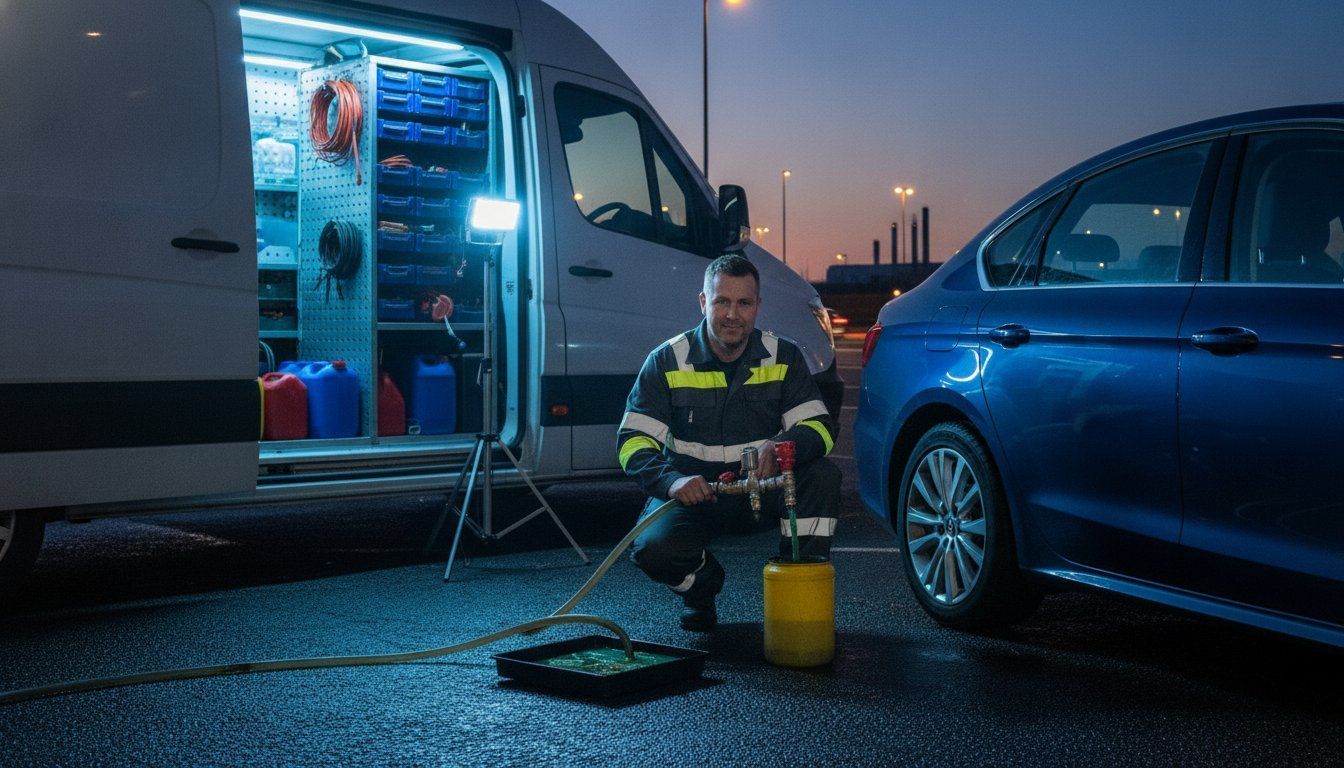
If your engine dies, stop cranking it immediately. Attempting to restart a dry car repeatedly forces air into the system. These air locks act like physical barriers, preventing new fuel from reaching the combustion chamber. This often results in misfuelling style symptoms, such as rough idling, loss of power, or a complete failure to start. Replacing a set of high-pressure injectors can cost thousands of pounds, whereas a professional prime and system bleed is a fraction of that price. Our technicians use specialised vacuum equipment to purge air and restore pressure safely without damaging the pump.
Diesel Particulate Filter (DPF) Issues
Modern diesel engines are particularly sensitive to sudden fuel loss. If you run out of fuel during a DPF regeneration cycle, the process is abruptly cut off. This can lead to the filter becoming prematurely blocked with soot, potentially triggering a "limp mode" warning on your dashboard. This doesn't just affect your immediate journey; it has a long-term impact on your vehicle's emissions system and fuel economy. A qualified technician won't just pour in five litres of diesel and hope for the best. They will ensure the system is correctly bled and check that the engine management system hasn't logged critical faults that could prevent a successful restart. Taking these technical precautions protects your investment and ensures your car remains reliable once you're back on the road.
Getting Back on the Road in Darlington: Your Recovery Options
You're stranded, the fuel light is mocking you, and you need a solution now. When you've ran out of fuel darlington offers a few different routes back to the tarmac, but choosing the wrong one can lead to wasted hours and unnecessary expense. Traditional recovery services often prioritise accidents or major breakdowns, leaving a "simple" fuel emergency at the bottom of their list. This can result in wait times of two hours or more, followed by a costly tow to a garage that might not even be open. You need an alternative that focuses on speed and technical precision.
Comparing the costs is eye-opening. A traditional tow truck involves a call-out fee and a mileage charge, often followed by a garage's labour rate to bleed the fuel system. In contrast, an on-site fuel top-up from a mobile specialist bypasses these layers of bureaucracy. It's a direct, one-stop fix that addresses the fuel shortage and the mechanical air lock simultaneously. This isn't just about saving money; it's about reclaiming your day with the least amount of friction possible.
Local Darlington Forecourts and Accessibility
If you're in the town centre, you might consider walking to the stations on Victoria Road or Northgate. Whilst this seems proactive, it's rarely effective for modern vehicles. Walking on the A1(M) or the A66 is strictly prohibited and carries a significant risk of a serious accident. Even if you reach a forecourt safely, a five-litre jerry can is often insufficient to prime a modern fuel system. You'll likely find yourself back at the car with a small amount of fuel and an engine that still won't start because of air trapped in the lines. Don't risk your safety for a partial solution that leaves you exactly where you started.
Why a Specialist Mobile Technician is Better
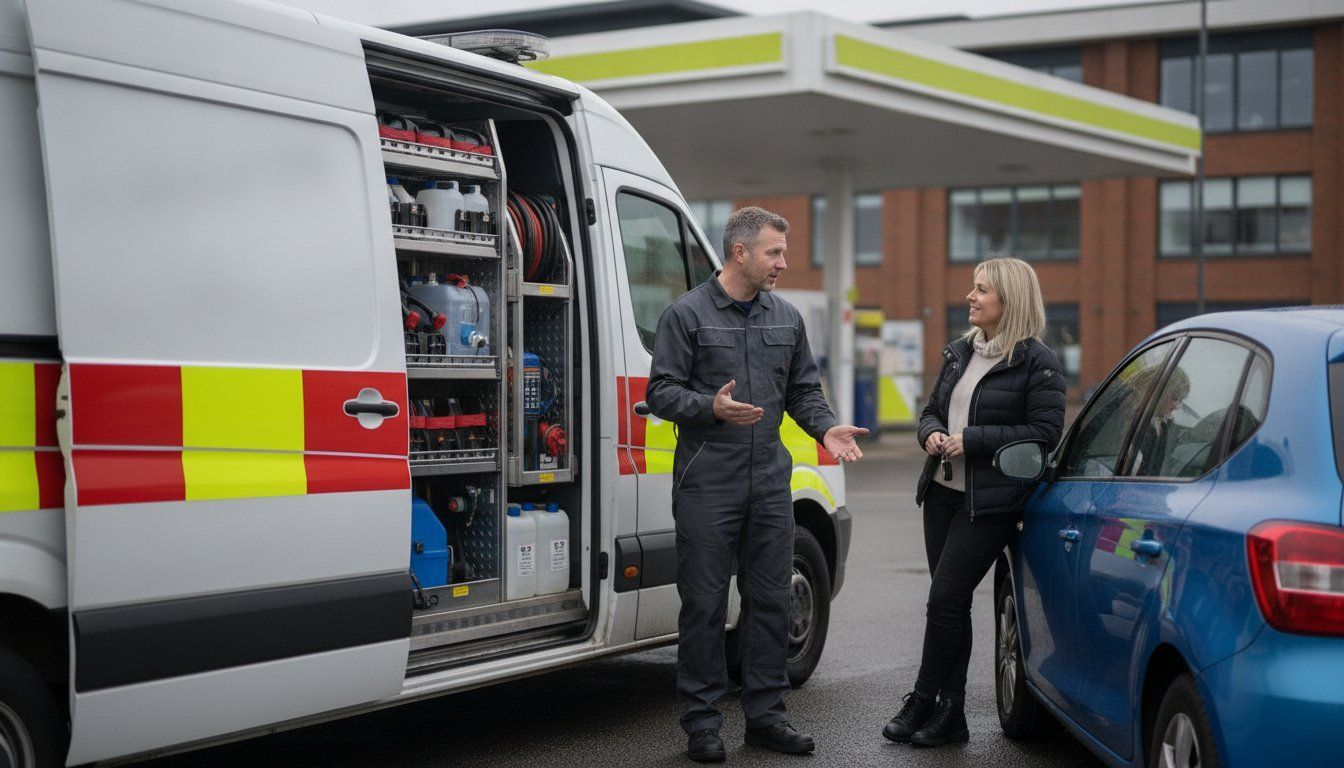
A specialist doesn't just bring fuel; they bring the technical expertise to ensure your car actually runs. Modern engines, particularly diesels, require specific priming procedures to purge air from the high-pressure lines. If you've been trying to force a start, you may have already drained your battery. In these cases, our technicians can also provide a mobile jump start service to get your electrical system back online. This comprehensive approach prevents further damage to your starter motor and ensures you reach your destination safely. For immediate, expert help, you should contact Fuel Mistake for rapid roadside assistance and get back on the road within the hour.
By choosing a mobile technician, you receive a professional diagnostic check as part of the service. We verify that the fuel system is pressurized correctly and that no fault codes are preventing the engine from firing. This level of care is something a simple jerry can or a standard tow truck driver simply cannot provide. It is the difference between a temporary patch and a professional recovery that respects the integrity of your vehicle's engine.
Fuel Mistake®: Darlington's Emergency Roadside Experts
When you've ran out of fuel darlington roads can feel incredibly isolating, especially in the middle of the night or during a busy rush hour. This is where the value of a local, family-run specialist becomes clear. Fuel Mistake® isn't a faceless national call centre. We are a team built on three generations of motor industry experience, rooted deeply in the North East. We understand the specific geography of our region, from the tight streets of the town centre to the fast-moving lanes of the A1(M). This local knowledge allows us to navigate traffic and reach you faster than generic recovery services.
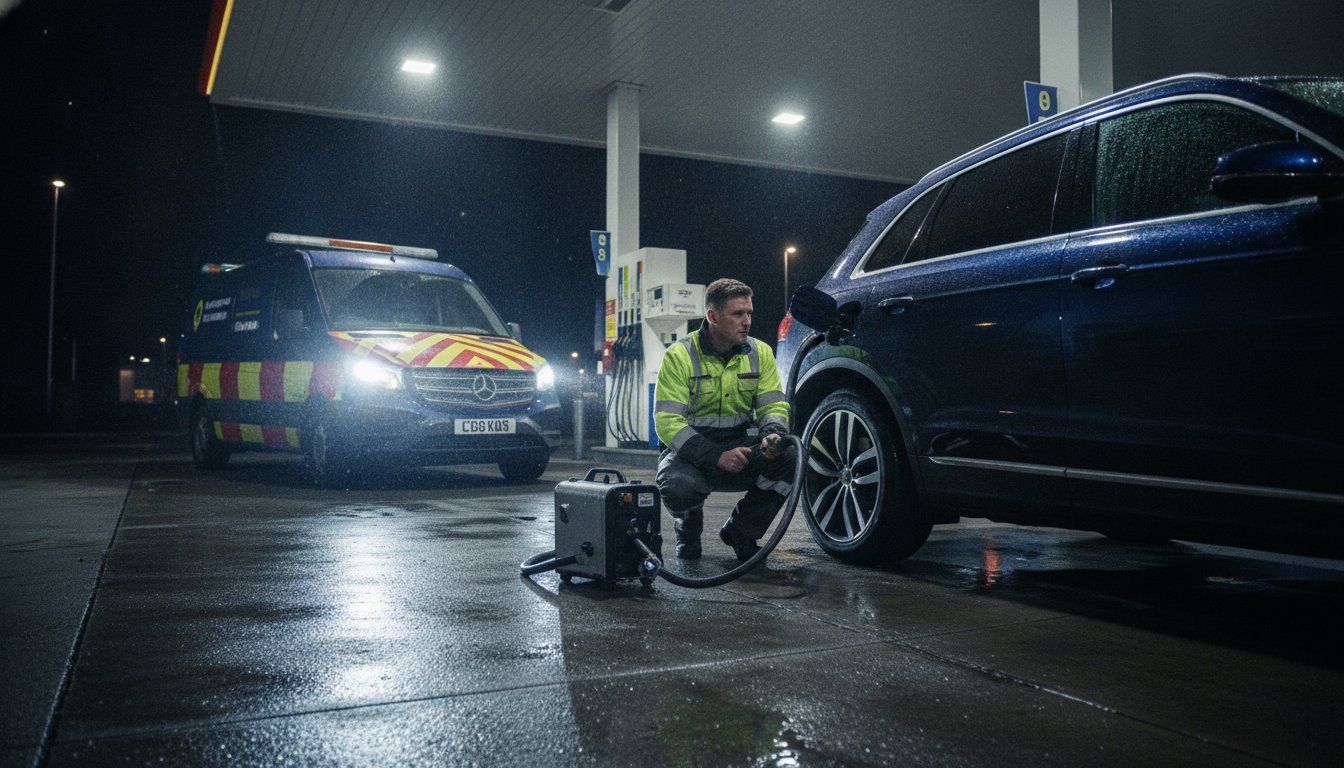
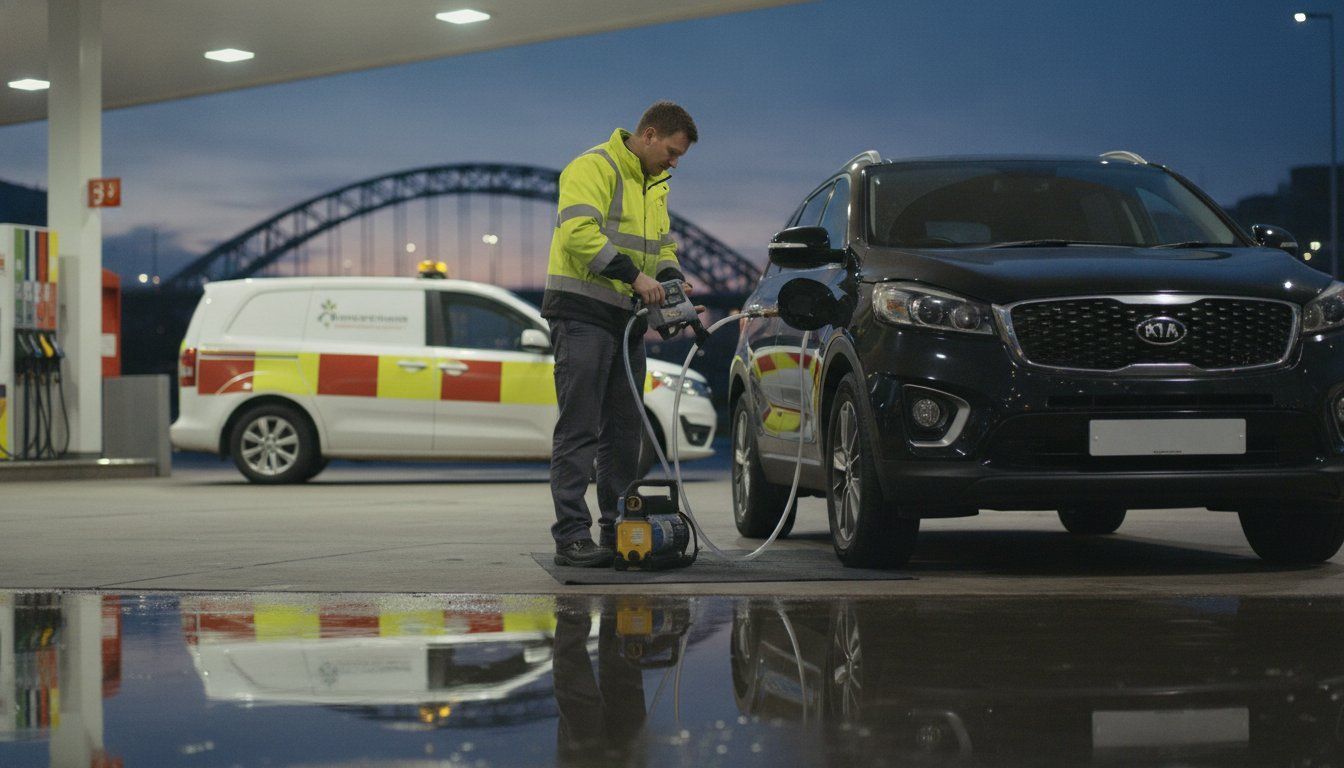
Why risk an expensive garage bill or the stress of a tow? Our 24/7 rapid response coverage extends across Darlington, Hartlepool, and Stockton, ensuring that help is never more than a phone call away. We operate with a "safety-first" philosophy, meaning our technicians are trained to secure your vehicle and protect you from traffic before any technical work begins. We take pride in our technical competence, utilising professional-grade equipment that allows us to resolve your emergency right there at the roadside.
Our Process for Ran-Out-of-Fuel Emergencies
Our response is designed to be methodical and calming. Once you contact us, we follow a strict protocol to ensure your vehicle is returned to a safe, drivable state without the need for a workshop visit:
- Rapid Dispatch: We send a technician to your exact location immediately, using GPS tracking to provide an accurate arrival time.
- Safe Fuel Delivery: We provide enough high-quality fuel to reach a forecourt safely, ensuring the correct grade for your specific engine.
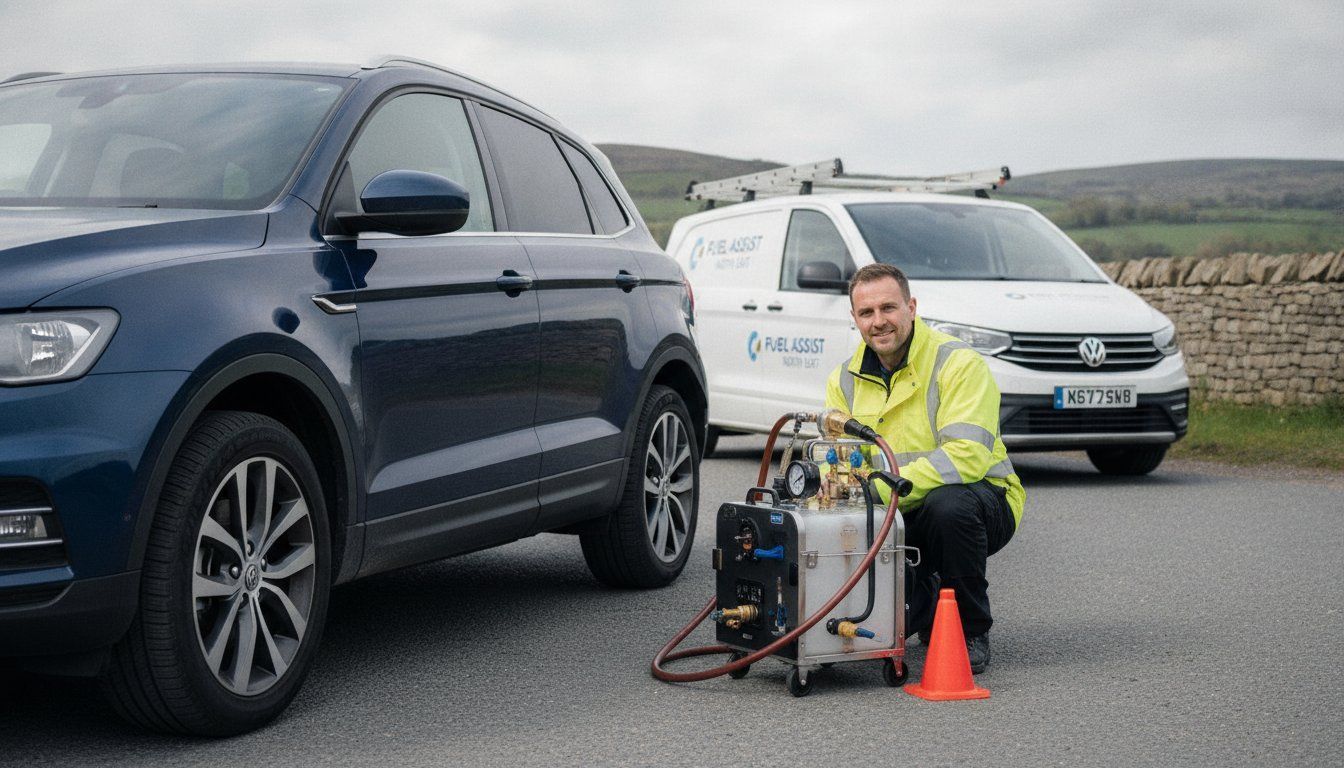
- Professional Priming: We use specialised vacuum equipment to bleed the fuel lines and clear air locks, preventing damage to your high-pressure pump.
- Battery Health Check: If you've ran out of fuel darlington winters or long periods of cranking can drain your battery. We test your charging system to ensure the car will restart reliably for the rest of your journey.
Contacting Us for Immediate Help
Getting help should be the easiest part of your day. When you call us, you'll speak directly to a professional who can provide an immediate quote and a realistic ETA. There are no hidden fees or membership requirements; we operate on a transparent "pay-on-use" basis. This straightforward approach is why we are the preferred choice for mis-fuel recovery and emergency fuel delivery in the North East. We don't just fix the problem; we educate you on how to protect your engine and stay safe in future emergencies. Stuck in Darlington? Call Fuel Mistake® now for emergency fuel delivery and let our family-run team get you moving again.
Secure Your Vehicle and Get Moving Again
Running out of fuel is a high-stakes emergency that demands immediate, professional action. You've seen that safe positioning on routes like the A1(M) and understanding the legal risks of obstruction are vital for protecting your licence. Modern engines are complex; a simple refill often isn't enough without a professional system prime to clear air locks and protect your high-pressure pump. Don't risk expensive mechanical damage or a police fine by attempting a DIY fix on a busy Darlington verge.
If you've ran out of fuel darlington specialists from our family-run local business are ready to assist. We provide a 24/7 rapid response with certified roadside technicians who bring the specialised equipment needed to get you moving without a tow. We take pride in our technical competence and our deep roots in the community. Stuck without fuel in Darlington? Call our 24/7 emergency line now! We'll handle the technical pressure so you can focus on reaching your destination safely and with total peace of mind.
Frequently Asked Questions
Is it illegal to run out of fuel on a motorway like the A1(M)?
It isn't a specific crime to run out of fuel, but you will likely face a fine if you cause an obstruction. Under Rule 97 of the Highway Code, drivers must ensure they have enough fuel for their journey. On the A1(M), a stationary vehicle is a major hazard. Police regularly issue £100 fixed penalty notices and three points for careless driving if your lack of maintenance leads to a motorway breakdown.
Can running out of fuel damage my car's engine permanently?
Yes, running a tank completely dry can cause severe mechanical failure. Fuel serves as a lubricant and coolant for the high-pressure fuel pump. When the pump runs dry, metal-on-metal friction creates heat and internal wear. Additionally, the pump may draw in sediment from the bottom of the tank, which can clog fuel filters and injectors. These repairs often cost thousands of pounds if the system isn't addressed by a specialist immediately.
How much fuel will an emergency roadside service provide?
Emergency services typically provide enough fuel to ensure you reach the nearest forecourt safely. This is usually between five and ten litres of the correct petrol or diesel grade. The goal isn't to fill your tank, but to provide sufficient volume to purge air from the system and get you moving. If you've ran out of fuel darlington technicians will also ensure the engine is running smoothly before you depart.
What should I do if my car won't start after putting fuel in it?
Your engine likely has an air lock in the fuel lines. Modern fuel systems are pressurised and cannot always self-prime once they've been run dry. Repeatedly trying to start the car will only drain your battery and wear out the starter motor. You need a technician to use specialist vacuum equipment to bleed the air from the system and restore the necessary fuel pressure for combustion to occur safely.
Can I get a fine for running out of petrol in Darlington town centre?
You can definitely receive a fine in the town centre if your vehicle blocks traffic. If your car stops on a busy route like Northgate or Victoria Road, the police may charge you with causing an unnecessary obstruction. Even if you aren't on a motorway, the same £100 fine and three penalty points can apply. It's always safer to call for a rapid response than to leave your vehicle in a live lane.
How long does it take for a fuel delivery technician to arrive in Darlington?
We pride ourselves on a 24/7 rapid response for anyone who has ran out of fuel darlington wide. Our technicians are usually on-site within 45 to 60 minutes, depending on your specific location and local traffic conditions. Because we are a local, family-run business, we know the North East road network intimately. This allows us to find the fastest route to your vehicle, whether you are in the town centre or on the outskirts.
Is it safe to use a jerry can to fill my car on a busy road?
Using a jerry can on a busy road is extremely dangerous and often prohibited on major routes. Walking along the verge of the A66 or A1(M) puts you at significant risk from high-speed traffic. Furthermore, a small can of fuel rarely provides enough pressure to restart a modern engine that has sucked in air. It's much safer to stay with your vehicle, behind the safety barrier, and wait for a certified technician.
Will running out of fuel cause a flat battery?
Running out of fuel is a common cause of a flat battery. This happens because motorists often crank the engine repeatedly in a desperate attempt to get it to fire. This puts an enormous strain on the electrical system. If your battery has died, our technicians can provide a jump start service alongside fuel delivery. This ensures your car has the electrical power needed to support the priming process and a successful restart.