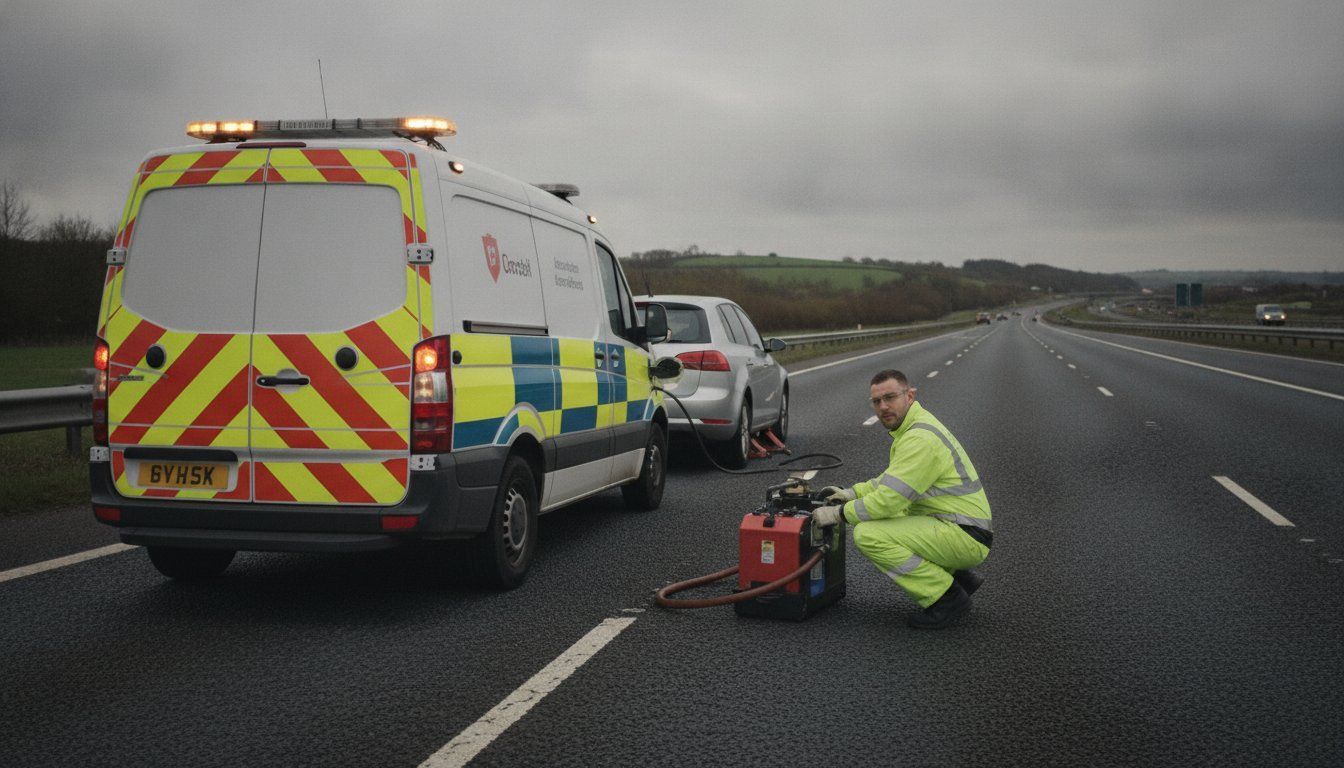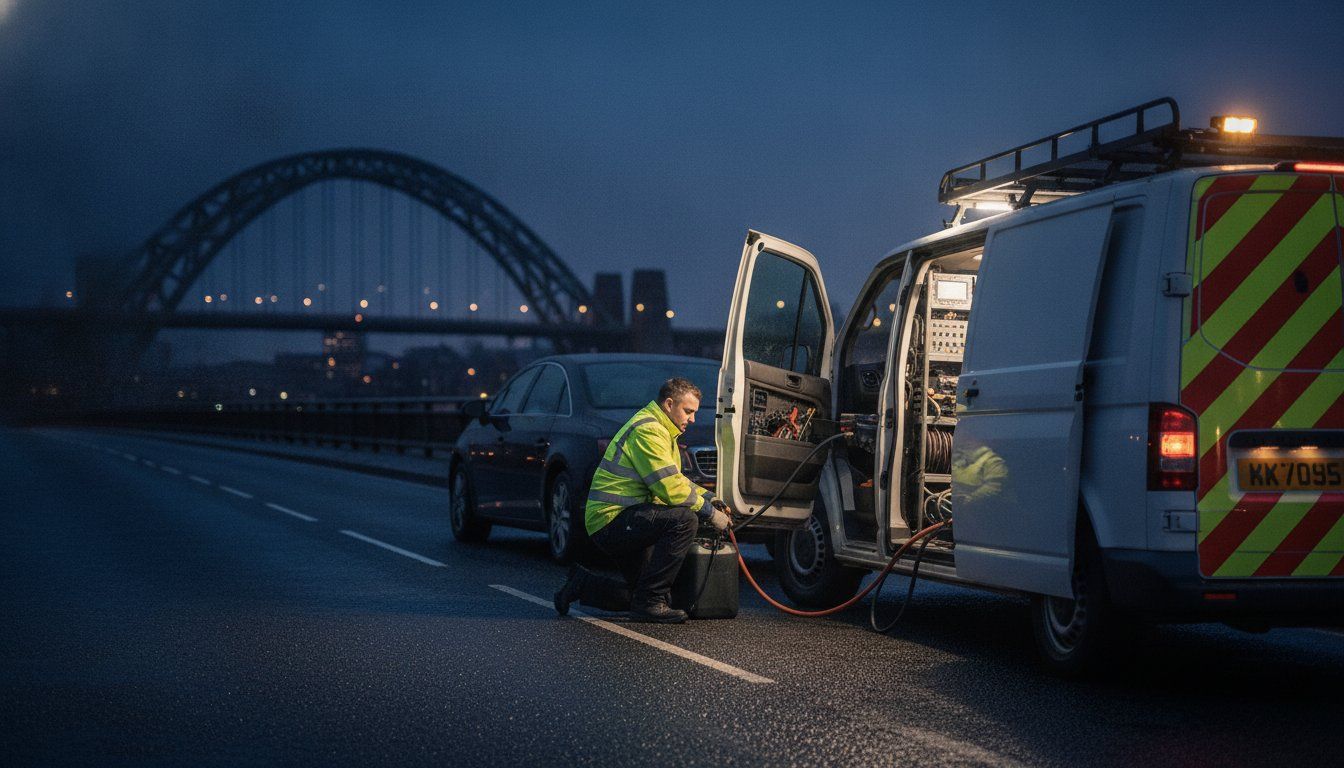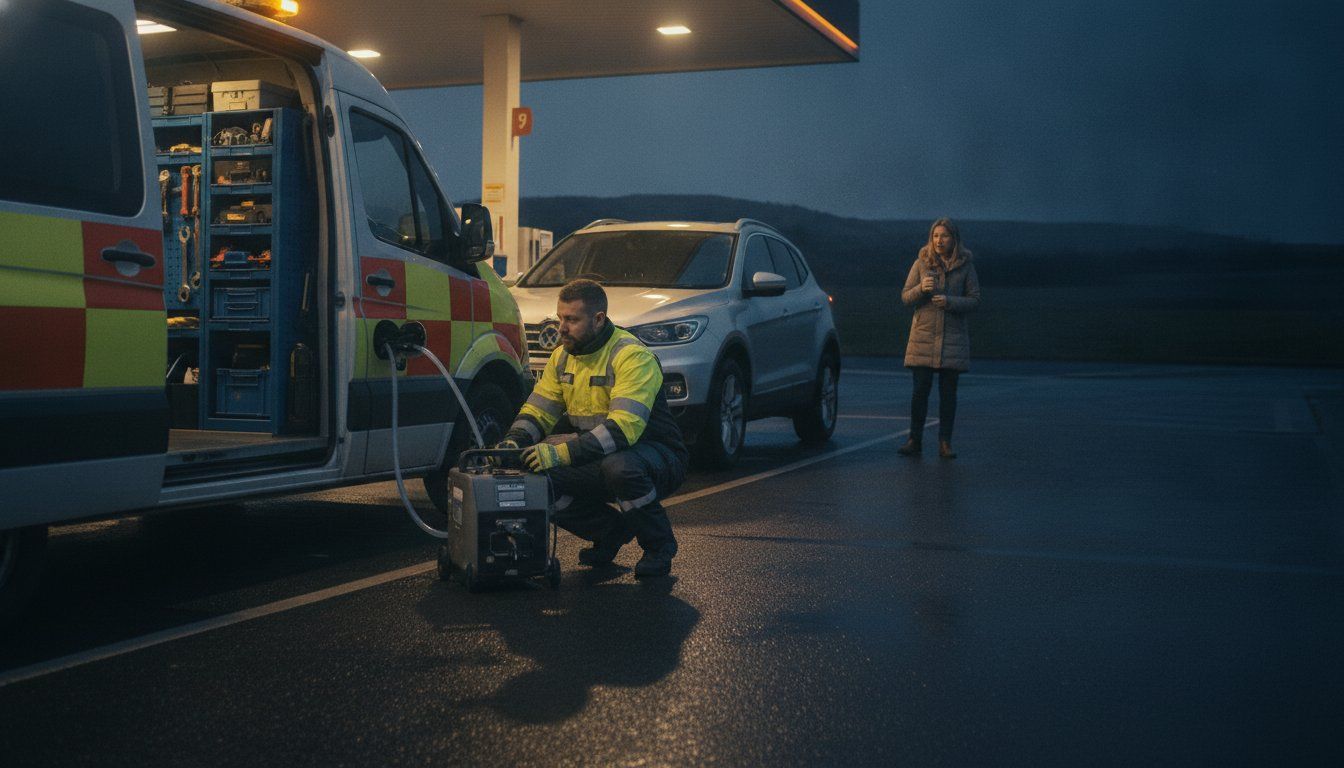

You're pulling away from the service station in Durham, heading for the A1, when your engine begins to cough and a thick cloud of smoke appears in your rearview mirror. It's a sickening moment of realisation that the black nozzle was the wrong choice. We understand the immediate panic and the fear of a massive repair bill, especially when you're stranded on a busy North East road. Recognising specific diesel in petrol car symptoms early is the only way to prevent a simple mistake from turning into a mechanical catastrophe.
This guide provides the clarity you need during a high-stress breakdown. We promise to show you exactly how to handle this situation to protect your fuel system from permanent damage. You'll learn the step-by-step actions to take right now, why professional mobile drainage is your safest alternative to a main dealer, and how to find expert help near you in Newcastle or Middlesbrough to get your day back on track.
Key Takeaways
- Identify why diesel's oily consistency causes spark plugs to fail and leads to a sudden loss of engine power.
- Spot the most frequent diesel in petrol car symptoms , including unusual exhaust smoke and a distinct "oily" smell at the filler neck.
- Master the immediate safety steps required to protect your engine, starting with the absolute rule of never turning the ignition key.
- Compare the benefits of on-site fuel removal against the high costs and long delays associated with third-party garage towing.
- Access rapid, 24/7 assistance from local specialists covering the entire North East, from Newcastle and Durham to the A19.
Table of Contents
What Happens When You Put Diesel in a Petrol Car?
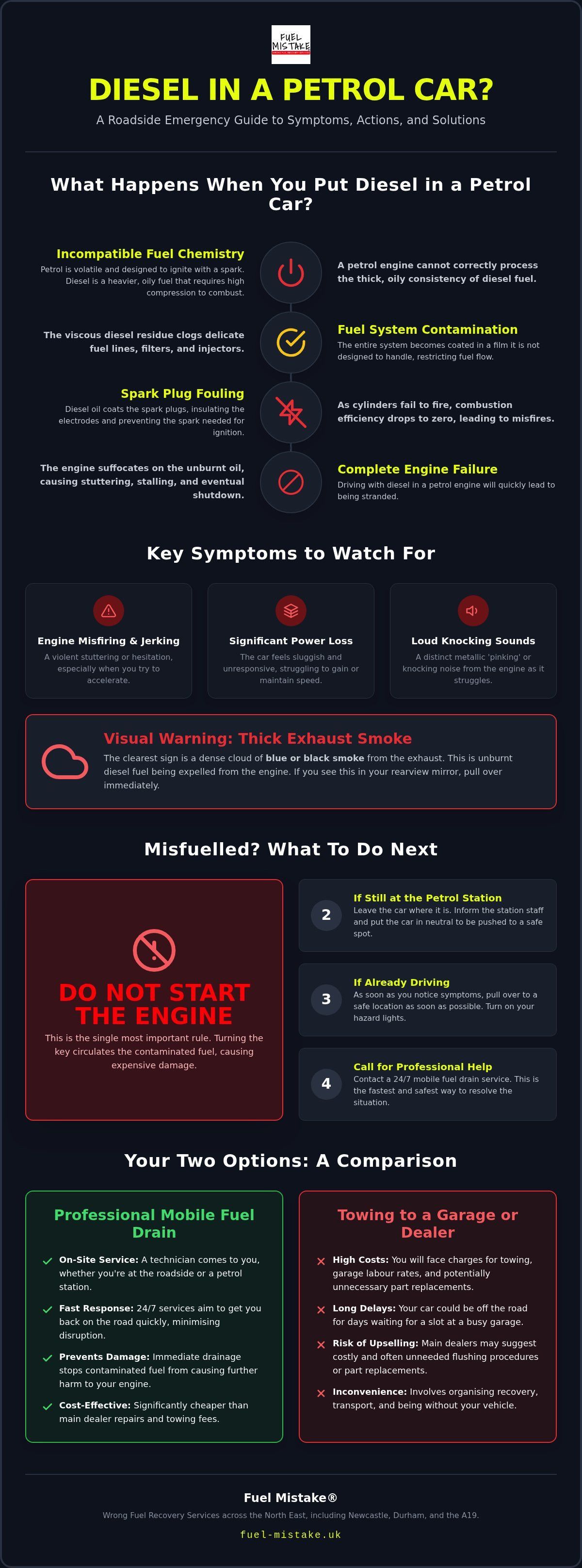
When you accidentally introduce diesel into a petrol tank, you aren't just adding the wrong liquid; you're fundamentally altering the chemistry of your engine's combustion cycle. Petrol is a highly volatile substance designed to evaporate and ignite instantly. Diesel, by contrast, is a much heavier, oilier fuel that requires intense heat and high-pressure compression to burn. Because a petrol engine lacks the compression ratios of a diesel unit, it simply cannot process this thicker fuel correctly. The first of the diesel in petrol car symptoms you'll likely notice is a dramatic loss of power as the fuel system struggles to cope with the contamination.
The damage begins in the fuel lines. Diesel residue is viscous and can quickly clog delicate components like fuel filters and injectors, which are calibrated for the thin consistency of unleaded petrol. As the oilier fuel moves through the system, it leaves a film on every surface it touches. Understanding the misfuelling process is the first step in protecting your vehicle from a total mechanical failure. If you've realised the mistake at the pump, stay calm and do not turn the key. If you're already driving, the physical impact on your engine's internals will become apparent within seconds.
The Science of Spark Plug Fouling
Unlike petrol, which atomises into a fine mist, diesel remains relatively liquid when it enters a petrol engine's combustion chamber. This is where the most immediate failure occurs. The diesel oil coats the spark plugs, effectively insulating the electrodes. When this happens, the electrical spark cannot jump the gap to ignite the fuel. As more cylinders fail to fire, your combustion efficiency drops to zero. Your engine essentially suffocates on the unburnt oil, leading to the characteristic stuttering and eventual stall that leaves many motorists stranded.
Why Diesel is Less Common (But More Dangerous) for Petrol Cars
Standard diesel nozzles are manufactured with a wider diameter than petrol filler necks, which serves as a physical deterrent. However, it's still possible to pour diesel into a petrol car, particularly when using Jerry cans or at older fuel stations in rural parts of the North East. While this mistake is less frequent than the reverse, it carries a severe risk of destroying your catalytic converter. If unburnt diesel reaches the exhaust system, the intense heat can cause the oil to ignite inside the converter, potentially melting its internal structure. This makes professional on-site removal an urgent necessity to avoid a multi-thousand-pound repair bill.
Key Diesel in Petrol Car Symptoms to Watch For
Identifying diesel in petrol car symptoms quickly is the difference between a straightforward fuel drain and a catastrophic engine failure. Most motorists only realise their mistake once they've left the forecourt and joined a busy road like the A1 or A19. Because your fuel lines still contain a small amount of "clean" petrol, the car may initially seem fine. However, as soon as the diesel mixture reaches the fuel injectors, the engine's behaviour will change dramatically. You must be prepared to react the moment you feel the vehicle's performance begin to degrade.
Watch for these primary warning signs whilst driving:
- Engine misfiring: A violent jerking or "stuttering" sensation, especially under acceleration.
- Significant power loss: The car feels sluggish and fails to respond when you press the throttle.
- Loud knocking sounds: A metallic "pinking" noise coming from the engine bay.
- Cutting out: The engine stalls completely when you come to a stop or slow down.
- Dashboard warnings: The "Check Engine" or "Engine Management" light illuminates.
Exhaust Smoke: The Visual Warning Sign
Exhaust smoke is a primary indicator of misfuelling. Whilst it's normal to see a small amount of white steam on a cold North East morning, diesel contamination produces something far more distinct. Because diesel is too heavy to ignite properly in a petrol engine, the unburnt fuel is forced out through the exhaust system as a thick vapour. This usually appears as a dense cloud of blue or black smoke that lingers behind the car. If you see this in your rearview mirror, it's a clear signal that your fuel system is compromised and you need to find a safe place to pull over immediately.
Engine Performance and Misfiring
When diesel coats your spark plugs, they can no longer create the clean spark required for combustion. This leads to a "misfire," where the car feels like it's "running on three cylinders" or struggling to find its rhythm. According to industry experts at J.D. Power, these Key Diesel in Petrol Car Symptoms occur because the viscous diesel fuel rapidly clogs the fuel filter and injectors. The "pinking" sound you might hear is particularly dangerous; it indicates the fuel is detonating at the wrong time, which puts immense pressure on the pistons. If you experience these issues, seeking a mobile fuel drain specialist is the fastest way to protect your engine from permanent damage.
Recognising the Signs: At the Pump vs On the Road
The moment of realisation often happens in two distinct phases: the immediate "gut feeling" at the petrol station or the sudden mechanical failure whilst driving. Catching the mistake before you leave the forecourt is the ideal scenario, as it prevents the contaminated fuel from ever reaching your engine's delicate internals. However, if you've already pulled away, the diesel in petrol car symptoms will manifest as your vehicle struggles to process the heavier fuel. Knowing exactly what to look for in both environments is crucial for North East motorists who want to avoid a total breakdown on busy routes like the A19 or the A1.
If you suspect a mistake whilst still at the station, trust your senses. Petrol has a sharp, solvent-like smell that evaporates almost instantly. Diesel, however, has a heavy, oily odour that lingers on your hands and the filler neck. You might also notice a different consistency on the fuel nozzle; diesel is slippery and leaves a translucent, straw-coloured residue. If the pump felt "wrong" or didn't sit flush in the filler neck, do not ignore that instinct. It's far better to call for a fuel drain on the forecourt than to risk an engine stall at a major junction like the Testo’s Roundabout.
Stationary Warning Signs at the Forecourt
If you've hung up the nozzle and feel a wave of dread, perform a quick visual check before touching the ignition. Look for oily spills around your fuel cap or a greasy film on the nozzle you just used. Because diesel is far more viscous than petrol, it doesn't "dry" like unleaded. Another clue is the pump's behaviour during the fill; if the nozzle clicked off repeatedly or felt unusually tight, you may have been forcing a larger diesel nozzle into your petrol filler neck. If any of these signs are present, stay in the car and keep the engine off.
Symptoms Whilst Driving Across the North East
For those already on the move through Newcastle or Sunderland, diesel in petrol car symptoms often peak when the engine is under load. You might notice the car losing momentum as you climb an incline or join a dual carriageway. Whilst the car might idle roughly at traffic lights, the real danger occurs at high speeds where the engine suddenly "suffocates" on the unburnt diesel. This often leads to a complete stall in high-traffic areas, such as the Tyne Tunnel approaches or the Haymarket. If your throttle response becomes sluggish or the engine begins to hunt for revs, find a safe place to pull over immediately before the vehicle loses all power.
Put Diesel in a Petrol Car? Here is What to Do Next
If you've identified diesel in petrol car symptoms whilst driving, the next sixty seconds are critical for your vehicle's survival. Your immediate priority is damage limitation. Stop the engine at the first safe opportunity and pull over. Whether you're on a quiet residential street in Durham or a high-speed stretch of the A1, you must resist the urge to "limp" the car home. Every second the engine runs, more viscous diesel is being pulled into your fuel injectors and across your spark plugs.
Follow these emergency steps immediately:
- Turn off the ignition: Do not leave the engine idling whilst you decide what to do.
- Secure the vehicle: Put your hazard lights on and ensure all passengers move to a safe location, especially if you are on a dual carriageway.
- Stay put: Do not attempt to restart the car, even to move it a few metres.
- Ignore the "top-up" myth: Never try to dilute the diesel by adding more petrol. This rarely works and often leads to a more expensive disposal process.
The "Don’t Start" Rule
The most expensive mistake you can make happens before the engine even turns over. In many modern cars, simply turning the ignition key to the "on" position or pressing the start button without the clutch primes the fuel pump. This sends a high-pressure burst of contaminated fuel directly into the lines. There is a massive cost difference between a simple tank drain and a full fuel system flush; keeping the ignition off is the best way to stay on the cheaper side of that equation. If the car is in a dangerous spot, put it in neutral and push it to a safe position manually.
Finding a Local Specialist in North Yorkshire or the North East
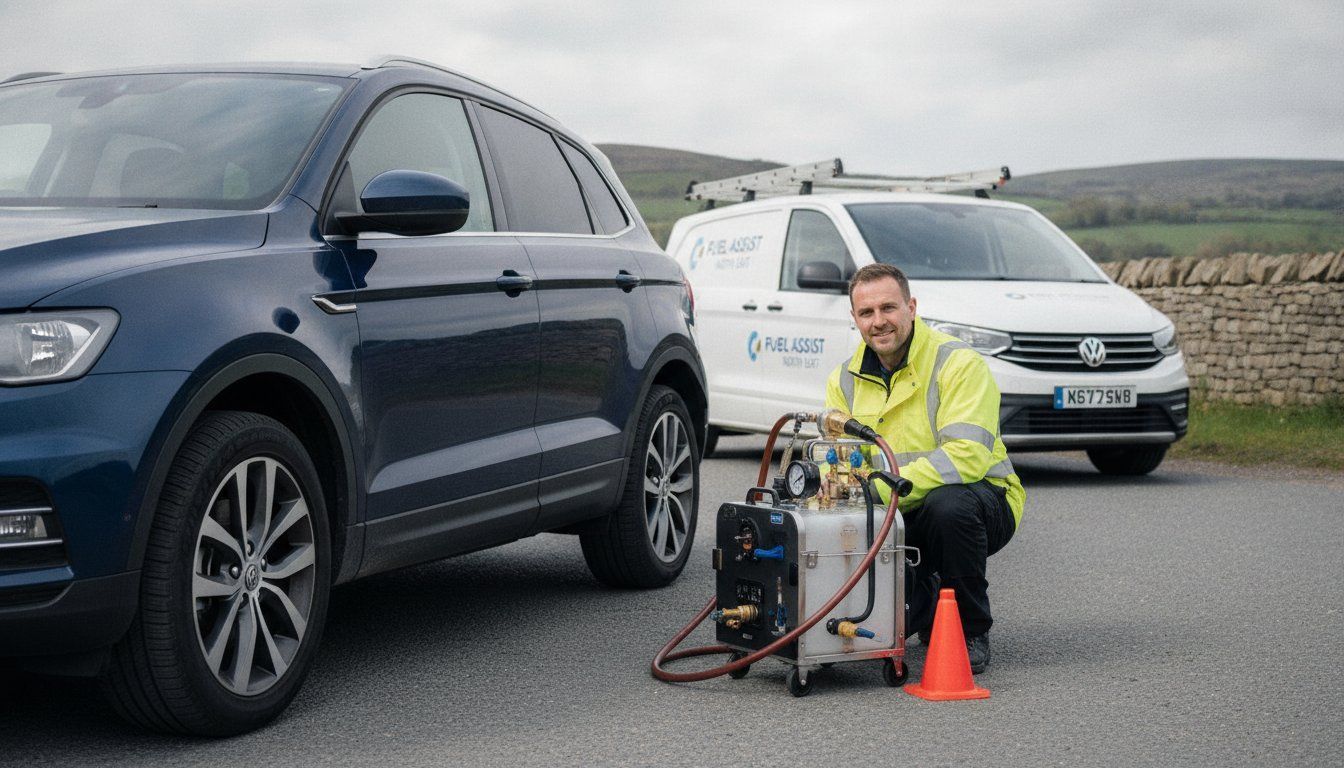
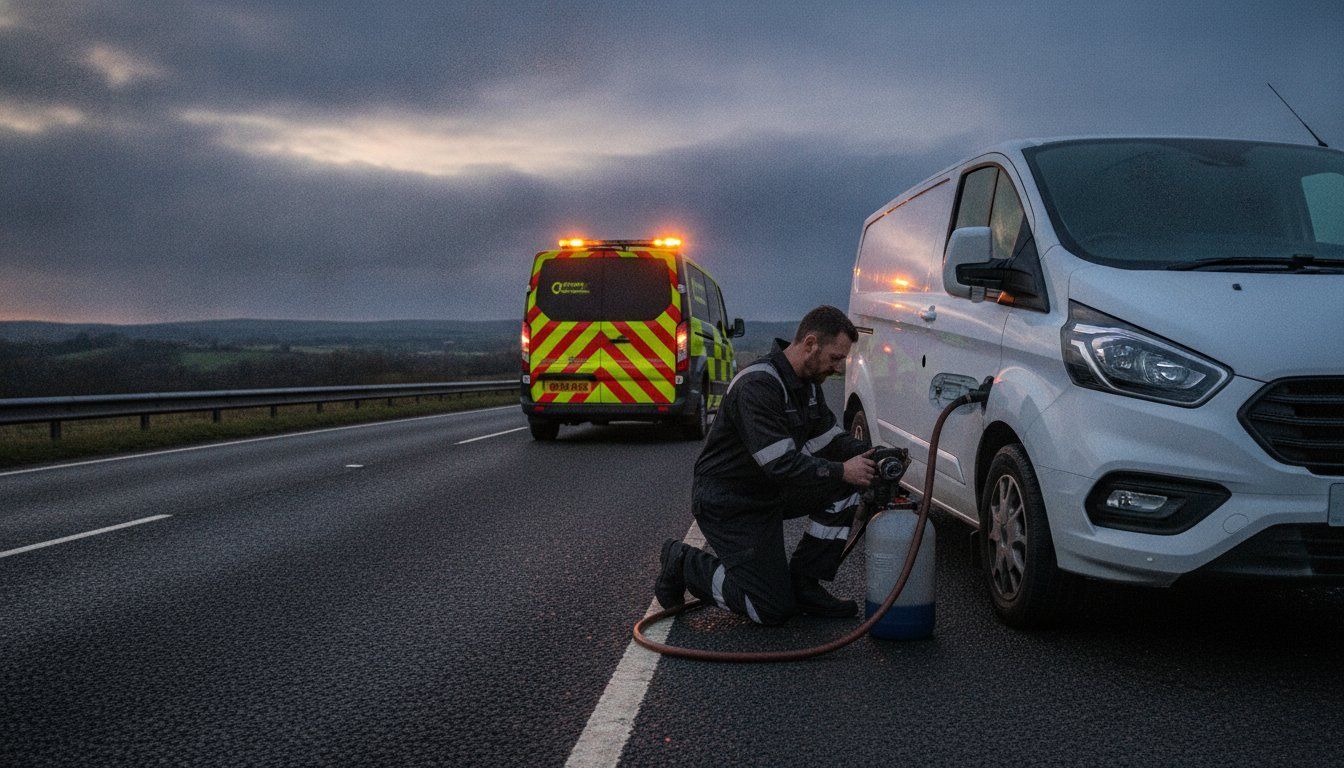
Standard breakdown recovery services often tow your vehicle to a third-party garage, where it might sit for days. A mobile fuel drain specialist is a much faster alternative. When you call, have your vehicle model, the approximate amount of diesel added, and your exact location ready. Specialists covering Middlesbrough, Durham, and Newcastle can typically reach you within the hour to perform an on-site recovery. This gets you back on the road without the need for a hire car or a long wait for garage repairs. For immediate assistance, contact a specialised mobile fuel drain service to handle the extraction safely and professionally.
Professional Fuel Drain Services Across the North East
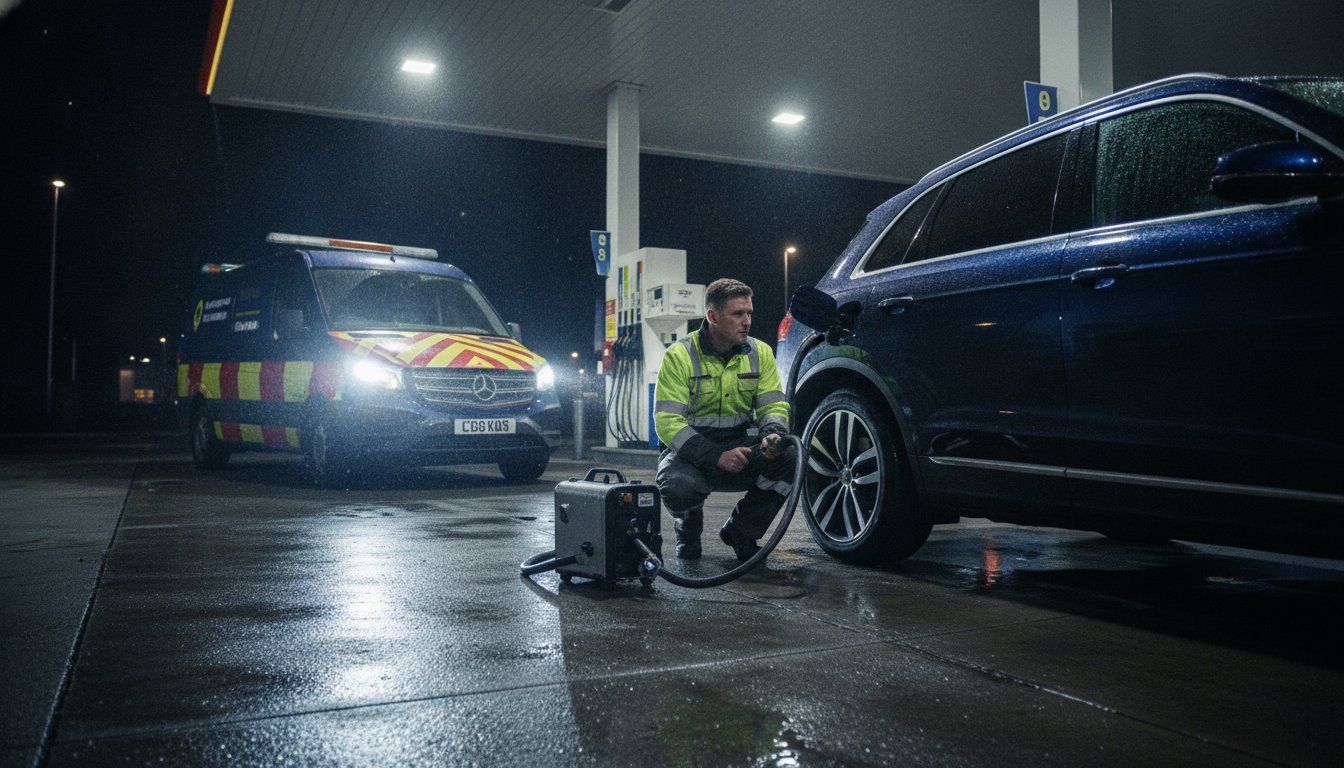
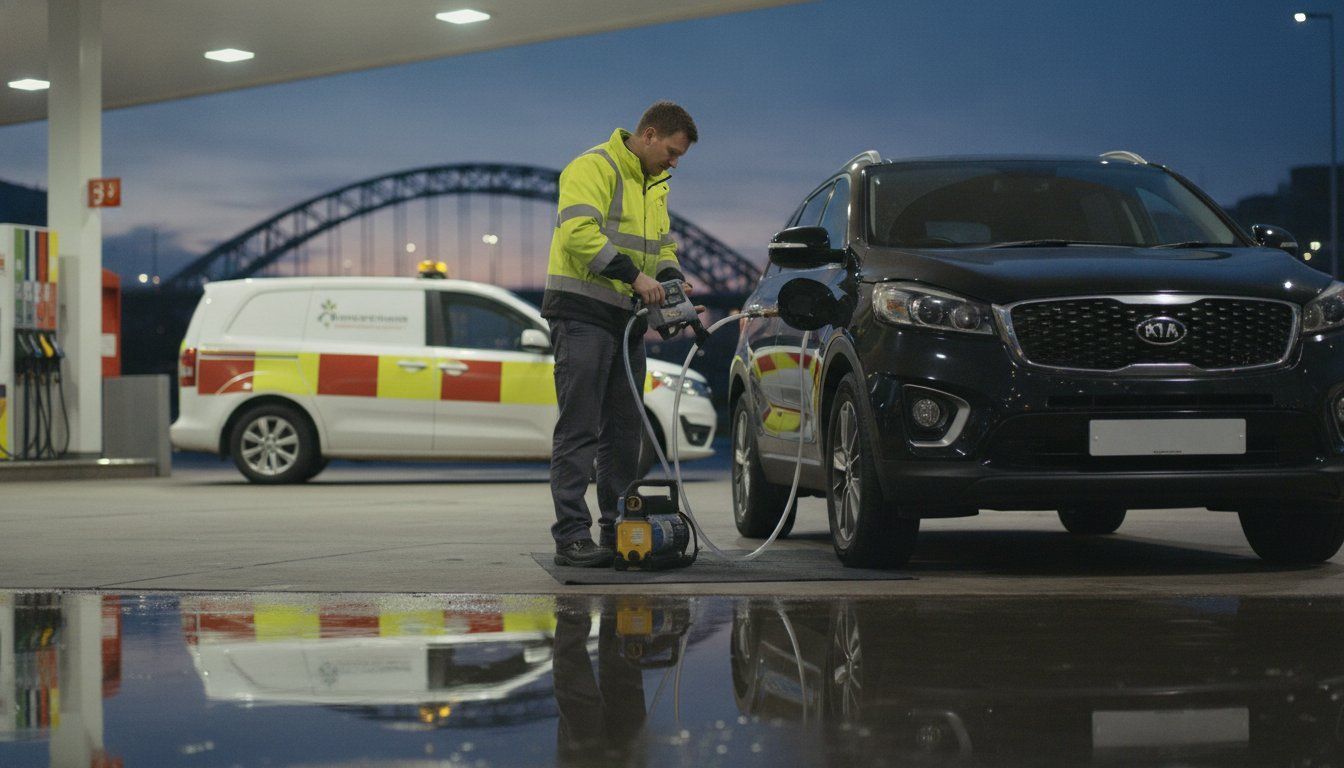
If you're currently experiencing diesel in petrol car symptoms , you need a solution that is both rapid and technically sound. Fuel Mistake® provides 24/7 emergency assistance specifically designed to resolve these errors at the roadside. Our technicians utilise specialised equipment to drain the fuel tank completely and clear the lines on-site. This mobile approach eliminates the need for expensive towing fees or the inflated prices often found at main dealers. We focus on getting you back on the road in the shortest possible timeframe whilst ensuring your engine's fuel system remains protected.
Recognising the diesel in petrol car symptoms early is only half the battle; the second half is choosing a specialist who can protect your engine’s long-term health. Our team doesn't just remove the fuel; we perform a comprehensive system flush to ensure no oily residue remains to foul your spark plugs. This methodical approach is what distinguishes a professional drain from a rushed, uncertified job that could leave you with lingering performance issues.
Why Choose Fuel Mistake®?
Our reputation is built on three generations of motor industry experience. With a background in prestige dealerships, our technicians understand the intricate fuel systems of modern petrol vehicles. This technical expertise ensures that your car is handled with the highest level of care and professional precision. We also take our environmental responsibilities seriously, ensuring all contaminated fuel is disposed of through certified, safe processes that meet all UK regulations. Whether you are dealing with diesel contamination or more complex issues like AdBlue in diesel, we have the specialised tools to rectify the mistake without requiring a garage visit.
Rapid Response in Your Area
We understand that a fuel emergency doesn't wait for business hours. That's why our mobile drainage units are stationed across the region to ensure rapid response times. We provide comprehensive coverage across the North East and North Yorkshire, reaching motorists in Darlington, Hartlepool, Stockton-on-Tees, and Northallerton within the hour in most cases. Because we operate entirely on-site, there is no need to organise a recovery truck to a third-party garage. We bring the solution directly to your location, whether you're at the pump or stranded at the roadside.
Our process is designed to be as stress-free as possible. Once you call, a qualified technician will arrive, perform a full system flush, and ensure your engine is running cleanly before you pull away. This comprehensive service covers everything from the initial drain to the final safety checks. Don't let a simple mistake at the pump lead to unnecessary mechanical work. Contact Fuel Mistake® for Emergency Drain Help and let our family-run team take care of the rest.
Protect Your Engine and Get Back on the Road
Misfuelling is a stressful experience, but it doesn't have to be a permanent disaster for your vehicle. By acting quickly when you notice diesel in petrol car symptoms , you've already taken the most important step in protecting your fuel system. Remember that keeping the ignition off is your best defence against expensive repairs. Whether you're stuck at a station in Newcastle or on the hard shoulder in Middlesbrough, expert help is closer than you think.
As a family-run specialist with three generations of experience, we pride ourselves on being the dependable neighbour you can call in a crisis. Our certified technicians provide rapid roadside assistance across Newcastle, Middlesbrough, and Durham, handling every vehicle make with prestige dealership standards. You don't need to face a long wait for a third-party garage or a massive repair bill. Wrong Fuel in Your Car? Call Our 24/7 North East Emergency Line Now. Stay safe, stay calm, and let us get your day back on track.
Frequently Asked Questions
Can putting diesel in a petrol car ruin the engine?
Yes, diesel contamination can cause significant damage if the engine is left to run for an extended period. Because diesel is a heavier, oilier fuel, it coats the spark plugs and prevents them from firing. If the unburnt diesel reaches your exhaust system, it can also cause permanent damage to the catalytic converter, which is a very expensive component to replace.
How far can a petrol car run on diesel before it stops?
Most petrol cars will only travel a mile or two before the engine cuts out completely. Your car initially runs on the clean petrol remaining in the fuel lines and filter. Once the diesel reaches the injectors, the engine will begin to stutter and eventually stall because it cannot generate enough heat to ignite the heavier fuel mixture.
What are the first signs of diesel in a petrol engine?
The most common diesel in petrol car symptoms include a sudden, dramatic loss of engine power and a violent jerking sensation whilst you are driving. You will likely see thick clouds of smoke from the exhaust and hear a loud metallic knocking sound. These signs indicate that your engine is struggling to process the incorrect fuel density and requires an immediate stop.
Is it worse to put petrol in a diesel car or diesel in a petrol car?
Petrol in a diesel car is generally more destructive to the engine's mechanical internals. Petrol acts as a solvent, stripping away the lubrication that diesel fuel pumps and injectors rely on to function. Whilst diesel in a petrol car is still a serious emergency, it usually results in "fouling" the system with oil rather than the immediate metal-on-metal friction damage seen in the reverse scenario.
Does insurance cover putting the wrong fuel in my car?
Coverage for misfuelling depends entirely on your specific insurance provider and policy level. Some comprehensive policies include misfuelling cover as a standard feature, whilst others list it as an optional extra. It's best to check your policy documents or speak to your insurer directly to see if they will cover the cost of a professional fuel drain and system flush.
What colour smoke does a petrol car produce with diesel in it?
A petrol engine contaminated with diesel typically produces thick, lingering smoke that is blue or black in colour. This happens because the diesel fuel is not being fully atomised or burnt during the combustion cycle. The unburnt oily residue is forced out through the exhaust as a dense vapour, which is much darker and heavier than the white steam seen on cold mornings.
Can I just drain the tank myself at home?
You should never attempt to drain a fuel tank without specialist equipment and training. Modern vehicles are fitted with anti-syphon valves and complex internal baffles that make traditional siphoning impossible. Furthermore, contaminated fuel is classified as hazardous waste; it must be stored in certified containers and disposed of at a regulated environmental centre to avoid heavy fines and soil contamination.
How much does it cost to fix a diesel in petrol mistake?
The total cost is determined by whether the ignition was turned on or the engine was started. If you caught the mistake at the pump, the fix is usually a straightforward tank drain. However, if the car was driven, the price increases because the entire fuel system requires a professional flush, and components like spark plugs or the catalytic converter may need replacing due to oily residue.